World-class training for the modern energy industry

Spotlight On CCS

In a Nutshell

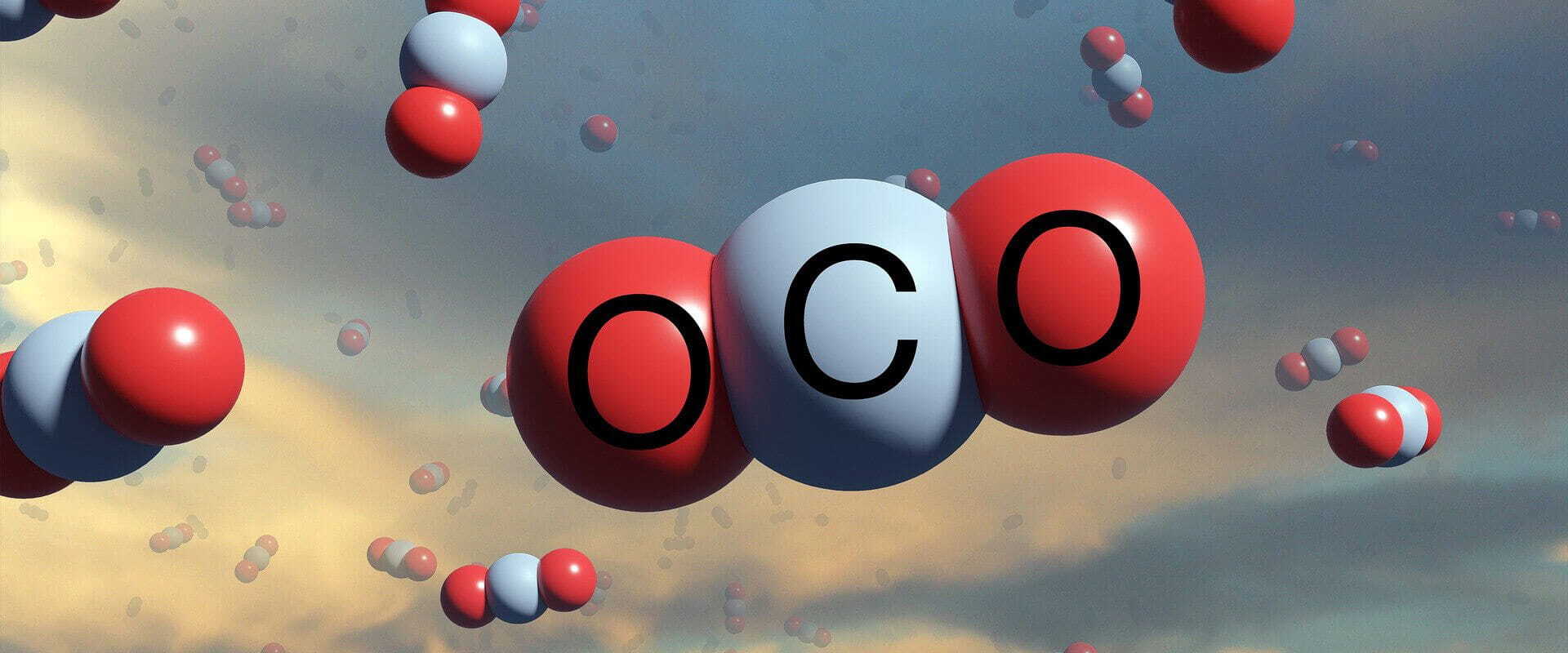
Carbon capture, utilization and storage (CCUS) is a collection of technologies that enable the mitigation of carbon dioxide (CO2) emissions from large point sources, such as power plants, refineries and other industrial facilities, or the removal of existing CO2 from the atmosphere. The captured CO2 can then be used, transported, or stored.


Behind the Science

The mobility and behaviour of CO2 in the subsurface has led to the identification of new carbon storage plays that are very different to those in the oil and gas world. A migration loss model leads to composite trapping through multiple mechanisms including: pore-scale capillary forces, dissolution trapping, cap rock rugosity and storage complex tortuosity. Modelling shows that such a saline aquifer play is extremely robust and that even large volumes have very low risk of migration out of the storage site. Even very minor heterogeneities such as small variations in grainsize will significantly divert CO2 migration – this can be used to advantage in storage sites. Legacy well penetrations are one of the principal leakage risks and will require much work by well engineers to identify and remediate. CCS projects across the world are rapidly developing beyond concept stage and there are optimistic discussions of projects including Endurance and Northern Lights in the UK and Norwegian sectors of the North Sea and Morecambe Net Zero in the Irish Sea.


In the News

In October 2024, the British government pledged nearly £22bn for projects to capture and store carbon emissions from energy, industry and hydrogen production. Sir Keir Starmer, who visited the north-west of England with Chancellor Rachel Reeves and Energy Secretary Ed Miliband to confirm the projects, said the move would ‘reignite our industrial heartlands’ and ‘kickstart growth’. Read more here

Meanwhile, in the USA, on 30 December, 2024, the U.S. Environmental Protection Agency (U.S. EPA) issued four Class VI permits for carbon dioxide (CO2) injection wells in California. These permits are the first such permits approved for California and the first for the EPA’s Pacific Southwest Region. Read more here

Find out more

GeoLogica are running a number of CCUS courses in 2025.

Reservoir Characterisation and Subsurface Uncertainties in Carbon Stores is a brand-new field trip with CCS expert and renowned tutor Richard Worden. Based in northwest Cheshire, the course will give participants the opportunity to see some of the rocks at outcrop that are planned UK CO2 storage sites.

Seals, Containment and Risk for CCS and Hydrogen Storage is a virtual class that examines the nature and properties of seals as they relate to containment for permanent storage of CO2 and cyclical storage of hydrogen and/or compressed air. Taught be Richard Swarbrick, it is a 3-day course comprising a mix of lectures, case studies and exercises.

Geochemical Effects of CO2 on Reservoir, Seals and Engineered Environments During CCS is a 5-day virtual course with Richard Worden. The reactions of CO2 with different reservoir rocks and top-seals, and their constituent minerals, and the cement and metal work used in the construction of wells are central to this course. Exercises will be used throughout the course; these will include calculations, largely based on spreadsheets, and quizzes will be used to test knowledge development.

‘Because it’s there’ – A geological tale to celebrate Mallory, Irvine and Odell

By Lance Morrissey

It’s a cold a wintry day in Moray, with a brisk, northwest wind blowing snow showers inland from across the Moray Firth. As a keen outdoorsman, periodic visitor to the mountains and geologist, my mind wanders back to the heroic age of Himalayan exploration and discovery, post First World War, which saw British men battling against Everest. Their aspirations to physically reach the summit were coupled with an intrigue for scientific discovery, including geological curiosity. For those who follow mountaineering, this year marks the 100th anniversary of the 1924 British Mount Everest Expedition that saw George Mallory and Andrew ‘Sandy’ Irvine losing their lives on their famous summit attempt.  

Mallory and Irvine’s final climb is, of course, steeped in mystery – did the duo reach the summit or not? If they did, it was nearly 30 years before the successful ascent and descent by Edmund Hillary and Tenzing Norgay in 1953. Speculation as to whether the two boys from Birkenhead (as Mick Conefrey refers to them in his new book Fallen) summited is abounding, with a multitude of books, articles, YouTube videos and publications all picking apart the evidence and ultimately drawing different conclusions. I’m not a betting man, but if I were, I’d say that Mallory’s determination and proven climbing ability, coupled with Sandy’s youth and strength, was enough to propel them to the summit, and that the pair sadly succumbed to a fall when returning to their departure camp, probably in darkness and in a state of exhaustion. Mallory had always promised to leave a photograph of his beloved wife Ruth at the summit – perhaps it is still there frozen in time… 

Mallory’s body was found in 1999 by Conrad Anker, and this year we saw the partial remains of Irvine discovered by a National Geographic team. The pictures from the 1924 expedition reveal men of strength and durability, recovering from the horrors of the First World War, with a passion for adventure, albeit in some of the harshest conditions that exist on Earth. I must admit that the whole summit mystery has become a bit of an obsession of mine and a trek to see Everest with my own eyes is something I’d like to do, if my lungs allow! However, the climbing secrets and ghosts that Everest holds cannot, for a geologist, overshadow the geological wonders that the mountain preserves, which is something that links us back to the 1924 expedition itself.   

Noel Odell was the 1924 expedition oxygen officer in addition to being a geologist and, not only was he the last person to photograph Mallory and Irvine alive (as they were checking their oxygen apparatus at Camp 4), but he was also the last person to see them during their final ascent (as they moved along or near the northeast ridge towards the summit). Noel himself was an accomplished mountaineer and, during that expedition, climbed twice to over 8000m without oxygen. Away from mountaineering and time spent in the army during both World Wars, he worked as a geologist with spells in the mining and petroleum industry, as well as in academia. Odell was one of the first to study the geological structure of Everest, noting the presence of sedimentary rocks towards it summit and metamorphic strata at its base.   

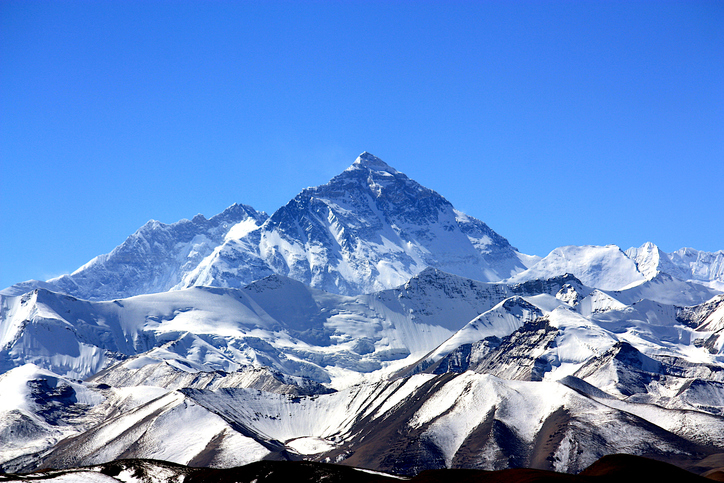
From a geological perspective, the mighty Everest sprang from the collision of the Indian and Eurasian plates, with the resultant Himalayan range beginning to rise about 50 MYA. The mountain is made up of a variety of rock types, including metamorphic rocks of the Rongbuk Formation at its base, overlain by sedimentary and metamorphic rocks of the North Col Formation, including the famous yellow band of marble, and finally the summit pyramid comprises dark grey, fossil-rich Ordovician limestones – the Qomalanga Limestone. Odell published a few papers on the geology of Everest, perhaps his best known is from 1925 and is entitled ‘Observations on the rocks and glaciers of Mount Everest’. For those interested, there are also some wonderful clips online of an interview with Noel where he speaks about his Everest experiences – a classic English gent! 

Back in Moray, the icy north wind is a shock as I step outside to the log store for more wood for the stove. I can only imagine what grit, determination and strength those Everest pioneers possessed. Not only had they fought for king and country in scenes unimaginable in the modern world, but they then turned to the Himalayas to endure further challenges in the brutal cold and punishment of high-altitude mountaineering. That great quote from Mallory – ‘Because it’s there’, when asked why he wanted to climb Everest by a reporter in America, resonates with the spirit of the day and the essence of early mountaineering, telling a story of a mountain and men, of geology and time. 


Meet the Expert: 5 Minutes with Katriona Edlmann

We sat down with Katriona Edlmann ahead of her upcoming GeoLogica course: The Hydrogen Landscape – Production, Policy and Regulgation


What’s your field and specialisation?

My research has focused on the sustainable utilisation of the subsurface for low carbon energy applications. So, this will include things like carbon capture and storage, energy storage, particularly hydrogen storage, unconventional hydrocarbons and geothermal operations. And then, for my own work, I design and build experimental equipment that recreates the subsurface conditions, effectively creating a window into the subsurface from the laboratory. It means we can look at what changes are going to happen in the subsurface rocks and fluids during any of these low-carbon energy applications. For example, I can look at what geochemical changes might be induced when hydrogen is injected into a porous depleted gas field. We can use these experiments to unpick the underlying controls, such as how pressure might influence the rate of reaction. These experiments will really help us select the best storage sites and manage them most effectively to avoid negative impacts on storage integrity during the storage operations.

Tell us a bit about your teaching journey.

I started as a PhD tutor while still doing my own PhD, and I’ve loved that part of my academic role ever since. I really enjoy teaching classes, but I prefer it when we can be interactive (with the students). One of the aspects of teaching that I really enjoy, therefore, is working with students on their dissertation projects, where I get to see them grow in confidence and watch them embark on their exciting careers after graduation.

I’m a fellow of the Higher Education Authority and I did a postgraduate certificate in academic practice to really develop my teaching and reflect on and improve my practice. So, I’m constantly learning from the students.

I don’t know what else to say about this one… I just really enjoy it!

What is your favourite memory from fieldwork or field training?

That’s an easy one! When I was doing my master’s degree with Heriot-Watt [University], we did a field trip to the Book Cliffs in Utah, which is HEAVEN for a geologist. Just being there was phenomenal – the exposure is extraordinary – but during the day we happened to come across a fresh rockfall that had revealed some dinosaur footprints, and we were seeing those for the first time since they had been imprinted in the mud all those millions of years ago. And that was, from an emotional point of view, just spectacular.

And, at the end of the day, while drinking beer at a microbrewery (which are so good in Utah!), we were treated to a very impressive, particularly bright fly-past from the Hale Bopp comet. That was fantastic.

Being someone who spends most of my time in the lab, I also want to add here the fact that not all geologists regularly work out in the field and not all geologists actually like being out in the field. Some of my absolute favourite moments have been in the lab! When you’ve drawn something on a piece of paper, then designed it, built it, it works exactly as it should and you gain new insights or perhaps see something that you weren’t expecting to see – THAT to me is as fantastic, as rewarding, as any fieldwork.
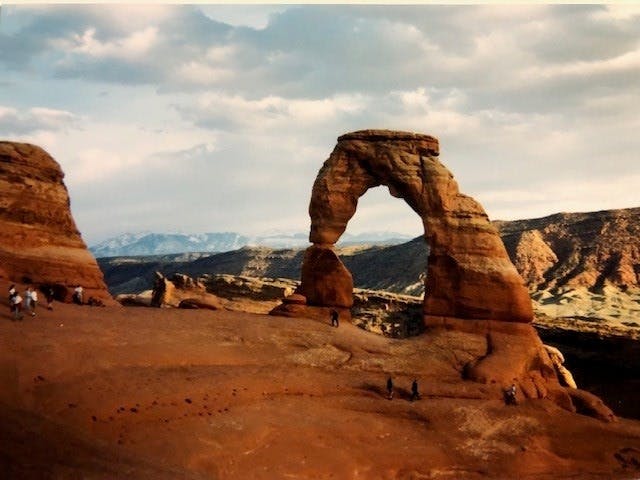
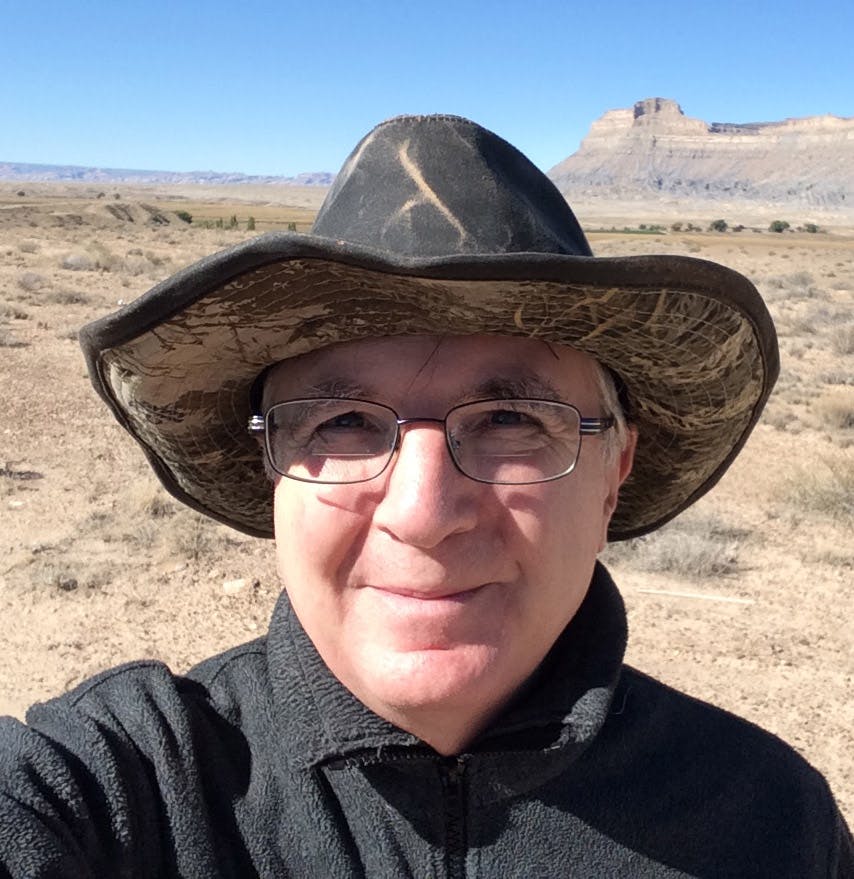
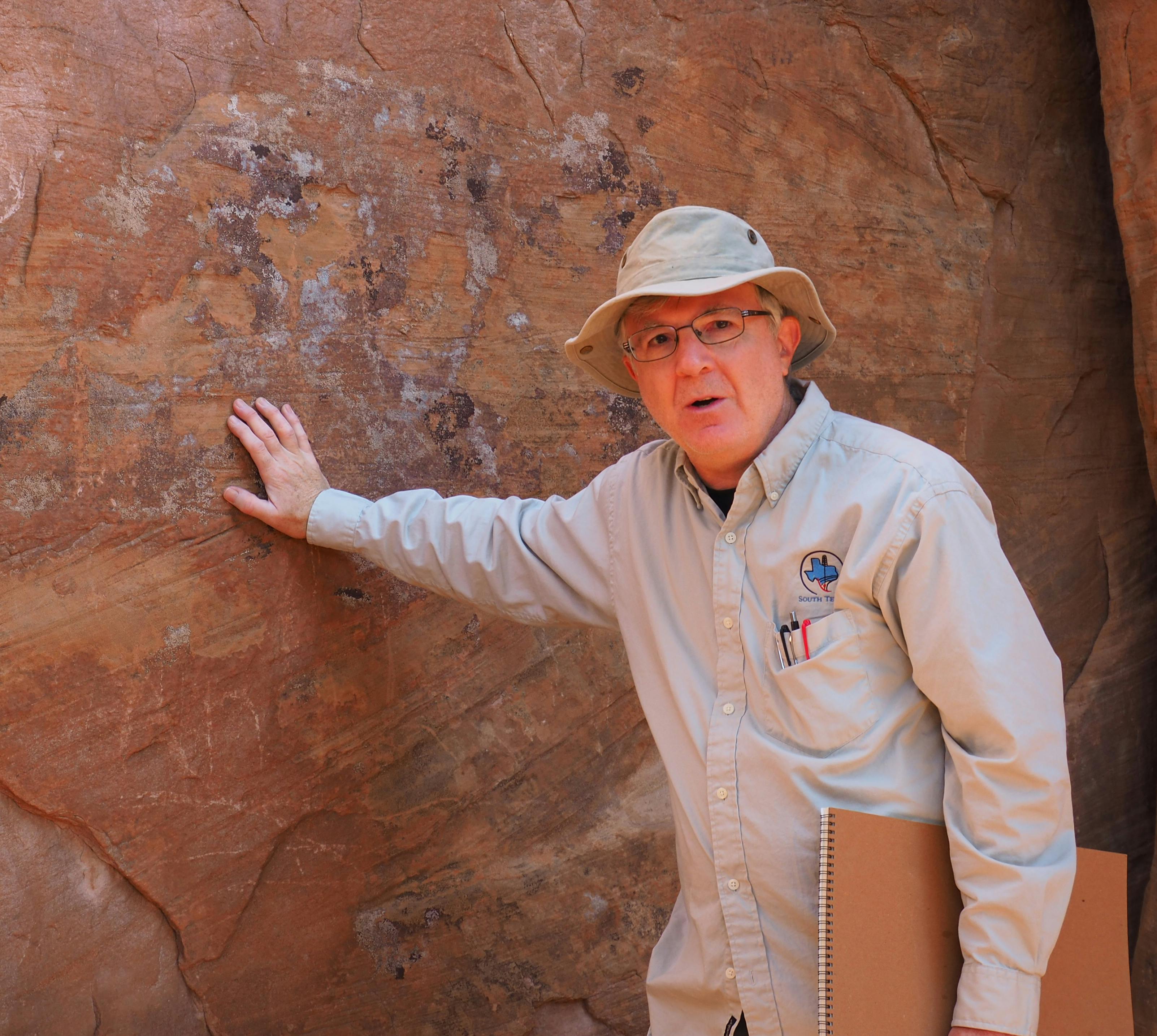
A photo from one of Katriona's favourite outcrop visits, to Arches National Park, Utah

(Image: A photo from one of Katriona’s favourite outcrop visits, to Arches National Park, Utah)


Tell us about your upcoming course with GeoLogica – what is it about and who is it for?

As we pivot to a world away from fossil fuels and move to more sustainable energy solutions, which we absolutely need to do, hydrogen is increasingly becoming recognised as a very important part of this future low-carbon energy system. It provides essential energy storage to support increased capacity for renewable energy. We’re looking to switch the energy balance from the current 70–80% fossil fuels and 20–30% renewable electricity to the opposite of that: 70–80% renewable, 20–30% another energy vector, which is most likely to be hydrogen.

My course will really highlight the role that hydrogen can play in supporting our journey to net zero – how it can support increased renewables and how it can decarbonise or tackle some of those harder-to-electrify sectors, such as industrial heat or heavy-duty transport. My hydrogen masterclass dives into the complexities and opportunities for hydrogen, looking at production, geological storage and the intricacies of the operational engineering and its integration into the energy system. It offers theoretical knowledge and practical insights.

In terms of who the course is aimed at, I would say it’s suitable for geologists, geophysicists, engineers, regulators and policymakers – anyone, really, with an interest in the emerging hydrogen economy.

We cover everything from the basics through to the more complex. The aim is for you to have a wider appreciation of the role of geoscience within the hydrogen economy and the contribution that hydrogen can make to the energy transition.

Tell us a fun fact about yourself that most people don’t know

I really like restoring old cars. So, I spend an awful lot of my time looking after my 1984 Citroen 2CVthat I am managing to keep going on the road. She has recently passed her MOT with no defects so I’m feeling pretty chuffed about that. She’s getting a bit rusty now but we’ll get there – my job for the winter!

What is the biggest challenge facing the sector today from your perspective?

From where I sit, there has certainly been a shift in awareness that we need to cut our emissions from energy. However, translating that into action is really challenging. For me, I think the most important thing we need to do is bring the public with us –change public perception– highlighting the community benefits that can come from hydrogen storage and taking away that element of fear or uncertainty.

null

What would be your advice to geoscientists who are just starting their careers?

So, I’m the careers coordinator for geosciences [at the University of Edinburgh] and I ran a careers event yesterday because a lot of the big environmental consultancies start their graduate recruitment in November–December for the following September. There are plenty of opportunities out there but it’s really just a case of understanding how you can connect with people. I suppose, therefore, the main piece of advice I give to anybody starting their career is to begin to build that professional network; join LinkedIn, join organisations, attend conferences (especially the free industry ones) and connect with your peers and with professionals who are working in that field. Don’t be frightened to reach out to someone – what’s the worst that’s going to happen? They might ignore your request but, equally, they may get back in touch with you, and once you’ve got that, it’ll open the door to job opportunities or possibilities for collaboration.

Secondly, this field is changing particularly quickly. Three years ago, nobody would have even heard of you if you’d said you worked in hydrogen, whereas now, they can’t get enough people working in hydrogen. So, from a geoscience point of view, keep up-to-date with current research and attend workshops, conferences and webinars. Maintaining that up-to-date and broad knowledge base and network will help.

Lastly, just try always to remember why you started [geoscience] in the first place. Keep passionate about the subject you do and remain adaptable in that ever-changing job market.

Give us your best/worst geology joke?

This is so bad.

Q: Did you hear about the geologist who was reading a book on helium?

No…

A: She couldn’t put it down.

That’s terrible

You asked for it!

The Hydrogen Landscape – Production, Policy and Regulgation by Katriona Edlmann will be running from 21 – 22 October 2024.
Meet the Expert: 5 Minutes with Richard Swarbrick

We sat down with Richard Swarbrick ahead of his upcoming GeoLogica course: Seals, Containment and Risk for CCS and Hydrogen Storage (E570)

What is your field and specialization?

I’m a geologist. My interest in geology started when I was probably in my early teenage years. I was somewhat influenced by having an older brother – quite a lot older – who was a geologist and who went to do geology in Australia as a Ten Pound Pom. I inherited some of his rocks and some of his books and friends tell me that he influenced me. I was also really interested in geography. I thought that if I went to university to do a geography degree, though, I’d end up teaching geography. So, I chose geology. I could see that it had the potential of a profession, so after getting a First in my geology degree, I went on to do a PhD. My PhD involved mapping southwest Cyprus to try and understand how it fitted into the bigger eastern Mediterranean picture, particularly its relationship to the uplifted ocean crust (the Troodos mountains in the middle of Cyprus). I had a great time. I had a van and big water container and some food, a tent and mapping equipment. Off I went on my own for a week. I’d return to town, spend a night in a youth hostel, collect mail, collect more food and water and then go back into the field. I did that over three field seasons for a total of eight months and mapped the whole of southwest Cyprus in quite a lot of detail. You won’t be able to do it on your own anymore for safety reasons, but it was great fun.  

Tell us a bit about your teaching journey.

After 10 years in the oil industry, I realized that I loved working in the industry but I didn’t enjoy living in London. I knew I was going to be in London for most of my career and I just hated commuting. I took an opportunity to go to Durham University as a mid-career move into an applied geology area and I spent thirty years teaching and researching. My research was linked to understanding subsurface pressures, which was poorly known from a geological point of view. It was generally seen as an engineering challenge rather than something that needed understanding from a geological point of view. From there I started professional development courses teaching small groups of professionals. My first teaching assignment was with JAPEC (the Joint Association of Petroleum Exploration Course) run by the Geological Society and the PESGB. Very soon after that, I was commandeered to work for Nautilus and had an extensive period teaching quite a lot of Nautilus courses in Europe, USA and SE Asia. 

I thoroughly enjoy working with small groups of professionals who are really interested in the topic, and who themselves have quite a lot of personal experience to bring to the table. We have lots of discussions, which are particularly good if there are geologists and engineers present, since each learns from the other – after all, the petroleum industry is very much a multidisciplinary area of science. More recently, I’ve become much more interested in the energy transition and helping people understand how subsurface pressures can be applied to carbon dioxide sequestration, hydrogen storage, and compressed air storage and recovery, to find new ways of dealing with the climate change challenge. 

What is your favourite memory from fieldwork or field training?

When I was working for Mobil, I really wanted to work in frontier exploration, and I asked for a posting in an area where frontier exploration was underway. I was transferred from the London office to the Dallas office and worked for the Alaska division there. The Alaska division was looking for new oil and gas opportunities in basins where previously there had been nothing other than a stratigraphic well drilled, purely to find out what the rocks were. So, I became involved in some of the very first oil and gas exploration wells in new basins where there was no infrastructure, not even any meteorological records. It was very exciting. One of the things I did at the same time was attend a field exercise collecting geochemical samples in the Arctic National Wildlife Refuge in the last year in which the Alaskan authorities and the federal authorities would allow people to do such work. We were helicopter supported, we lived in a tent and we collected geochemical samples across the Arctic National Wildlife Refuge right on the Alaska North Slope, overlooking the Brooks Range. The Arctic ice shelf was just offshore. It was extremely exciting. There were polar bears, midges, moose, elk; it was a landscape that I’d never experienced before – tundra – and had geological and ice features that I’d never seen. It was just the most extraordinarily visual and exciting opportunity to see a region that is very little visited – to see it from the air, to see it from the ground up and then to be able to take all that back and try and fit it together from a geochemical and geological point of view was extraordinarily exciting. It was a great bit of outdoor field work combining my love of the outdoors with my passion for geology. 

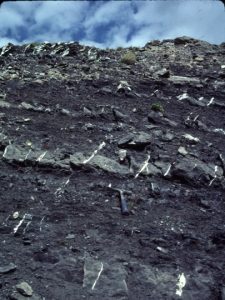
Organic sediments, North Slope, Alaska.

Tell us about your upcoming course with GeoLogica – what is it about and who is it for?

So, the course is intended to give geoscience and engineering professionals a feel for how rocks and fluids behave in the subsurface, with specific reference to the containment of CO2, hydrogen and compressed air at a suitable storage site. For example, how and when might CO2 leak into the ceiling rocks of the container, and at what rate. Is it through the pore network of the seal, or could it be by generating new pathways, such as hydraulic fractures or via chemical reactions? Another element of the training will be to address what the changes are that take place when injecting hydrogen into a storage site repeatedly. What is the effect of putting hydrogen in, increasing the stresses inside the container, then reducing those stresses, and repeating the pattern over and over again? What are the maximum volumes that can be stored safely? And in this context ‘safely’ means with no leakage or, as a minimum, such a slow rate of leakage as to be acceptable to regulatory authorities.  

In terms of who might attend the course, geoscientists will find it especially relevant, with their background and the knowledge they need to define rock behavior. I would also argue that engineers, particularly those who are responsible for modelling reservoirs for storage sites and injection programs, will find it very relevant. The course will link very closely to their discipline area. The style of training and my background will allow engineers to engage with the material without having to have a detailed geological background.  


Calcite cement – indications of fluid flow.

Tell us a fun fact about yourself that most people don’t know.

In 1972 I took at gap year working on a tin-mining project in Niger, Southern Sahara, before starting my geology degree. Outwards, I made my passage on a cargo boat of the Palm Line from Liverpool to Lagos. Months later, I returned overland across the Sahara Desert by buying lifts to Algiers, then hitching back through Europe. Budget £100. Returned with 50 pence! 

What would be your advice to junior geoscientists starting their careers today?

I think my advice to anybody graduating with a degree or a further degree in geology would be to look very carefully at what’s going to be needed when there is no oil and gas. If we accept that all the oil and gas that has been discovered now is probably sufficient to see us through energy transition, then the question to answer is, ‘Where does geology fit into the new framework of the energy industry, particularly of energy storage?’ I would recommend graduates look very critically at mining or the source of rare earths and metals.

I also think there is a shortage of skilled hydrologists – we know water is an essential part of life, but it’s going to be far more challenging in the future with changes in weather and the loss of the glaciers in upland areas. Understanding underground fluid distribution and, hence, where the best aquifers are and how they could be accessed is going to be incredibly valuable. 

Give us your best/worst geology joke?

Question: What is a geologist’s favorite accompaniment to their morning coffee?
Answer:  Rock e-rode!

New Professional Partnership

GeoLogica and Redlands Fault Geological Consulting partner to provide new and innovative courses to industry.

GeoLogica is delighted to announce a partnership with Redlands Fault Geological Consulting (redlandsfault.com). Combining GeoLogica’s technical, logistical and health and safety experience with Redlands Fault’s expertise is an exciting opportunity to provide the highest-quality training to the modern energy industry.

Redlands Fault was founded by Russell K. Davies, who has over 33 years’ experience working for the oil and gas industry, in exploration and development, and technology consulting services for research and development. He is a leading global expert in fault seal analysis where the concepts are applied to oil and gas but are also directly relevant to carbon capture and containment. After a career with Shell and ARCO, Russell founded and managed the US subsidiary of Rock Deformation Research Ltd (RDR). Following RDR’s acquisition by Schlumberger in 2014, Russell was appointed global advisor for Schlumberger, during which time he worked on many oil and gas projects worldwide. More recently Russell has been involved in subsurface projects working on new energy systems and carbon mitigation measures. Since the launch of his consultant company, Redlands Fault Geological Consulting, Russell has been working with clients on high-level structural geological challenges in trap and seal analysis, natural fracture characterization and structural modelling.

GeoLogica’s team has over 80 years’ combined experience in designing, managing and delivering training to the energy industry worldwide. With a passion for sharing knowledge and a dedication to excellence, GeoLogica are excited to collaborate with like-minded individuals and companies.

The first collaborations between Redlands and GeoLogica will be in-person courses scheduled for 2024: Trap and Seal Analysis – Theory and Application in Houston; and Structural Styles and Fault Characterization in Exploration and Production in the field in Moab, Utah.

Meet the Expert: 5 Minutes with Howard Feldman

We sat down with Howard Feldman ahead of his upcoming GeoLogica course: Introduction to Clastic Facies

What’s your field and specialisation?

My PhD was originally in palaeontology, but I spent decades in the petroleum industry where I specialized in stratigraphy, a little bit in carbonates, but mainly siliciclastic stratigraphy, siliciclastic facies and sedimentology.

Tell us a bit about your teaching journey.

I’ve been teaching since I was in grad school in the 80s, so you know, that kind of dates me! I taught for a year at Clemson University in South Carolina, then occasionally at the Kansas survey, but when I got to Exxon, they just threw me into teaching since I was an experienced hire. I taught many classroom and field courses at Exxon every year for 26 years. I can’t even tell you how many I taught.

I really like the Exxon approach to teaching: you’d give a presentation or lecture, then present a data set to work as an exercise to emphasize the direct business application of those concepts. I think that approach to teaching is particularly valuable, so that’s the way I teach now.

What is your favourite memory from fieldwork or field training?
Well, I have a strong memory of my very last bit of fieldwork before I left the Kansas survey. I was just learning the first principles of sequence stratigraphy and what incised valleys were. There was an outcrop that I’d been to a couple times with one of my colleagues – it was just a metre-thick marine shale. I was also working in the subsurface in that area and I was using the principles of sequence stratigraphy to show that there were limestone beds that were truncated by sandstone-filled incised valley. I called up my colleague and told him that we needed to go back to the outcrop because there had to be a soil there – the valley interfluve should have a soil or some evidence of subaerial exposure. He really laid into me because we had already been to the outcrop and it had been a pretty hellacious outcrop to get to. It was also the middle of August in Kansas so it was very hot. I told him I was going anyway, and he came along not wanting me to go alone. It was a long slog down the middle of the stream through lots of brush and stuff, and we turned the corner and looked at the outcrop and we both immediately saw the paleosol! The lesson there is that you don’t see things that you’re not looking for. The more models you have in your mind and the more open you are to alternative interpretations, the better you’re going to be at making observations. It’s really important to continue to read the literature, and continue to learn new models because they suggest observations you might not have thought to make.

Describing core, which is one of my specialties, isn’t just about a methodical engineering-type approach. To record the sedimentary structures you have to have an open mind. You have to be open to seeing things and to making observations that you might not otherwise have thought to make. And, as you describe core, you should constantly be testing alternative models of what you think is the depositional and stratigraphic architecture and how can you use that to make a prediction of what you should see next. But to do that, you have to have in your mind a vast toolkit of depositional and stratigraphic models, and the larger that toolkit is, the better you’ll be at your job.

One of Howard's favourite outcrops: An incision in the Castlegate Sandstone in Tusher Canyon, Utah

(Image: One of Howard’s favourite outcrops – An incision in the Castlegate Sandstone in Tusher Canyon, Utah)


Tell us about your upcoming course with GeoLogica – what is it about and who is it for?
My course is for any geoscientist or engineer who needs to know something about clastic facies and the implications for reservoir architecture. I start from a very basic level, assuming essentially no knowledge about how clastic facies work. From that basic level, we move on pretty quickly into how you can make observations and subsurface predictions.

The course focuses on making observations in core, so I go through all the depositional environments, including contourites, and all the standard depositional settings, and we look at a lot of core photos. We’ll progress through all of the different environments with an emphasis on making interpretations from core, and using those interpretations to make predictions about what’s happening in the subsurface.

Tell us a fun fact about yourself that most people don’t know

When I was in grad school, I had a fellowship for my master’s and PhD, but I ran out of funding because it was taking me too long and so I had to get a job. The job I took on was measuring and analyzing kidney stones, and so I’ve measured, analyzed and photographed thousands and thousands of kidney stones!

What is the biggest challenge facing the sector today from your perspective?

I think the biggest challenge today is the global impact of burning hydrocarbons. I think we absolutely need to switch away from petroleum, but I don’t see it happening in the next few decades. There are steps we can take to get us to a transition and one of those steps is being more efficient at finding hydrocarbons that burn cleaner. I think there’s still a place for petroleum but I think we have to have our eyes open about the impact on the world, and we also have to have our eyes open to what the alternatives are and what we can do to solve that problem.

null

What would be your advice to geoscientists who are just starting their careers?

Well, it’s an entirely different economic environment than when I entered the petroleum industry. The environment today from a business perspective and from a world perspective is so different; it’s much more challenging.

But putting that aside, my advice is don’t stop learning. I knew so many people working in petroleum whose depositional or structural models dated back to their last days in grad school. And you know you can’t do that if you want to be good. You need to keep up with the literature, and you need to find a way to discriminate the literature so you know what’s worth looking at. You need to keep learning all the time and keep your mind open to new concepts and new ideas. It’s great to learn new things from new projects – every time you’re in a new project, you learn new things – but you have to do more than that, and there’s just no alternative to reading the literature.

But it is also important to get out into the field and go on field trips. Sometimes even going to the same outcrops but with a new person with new perspectives can open your eyes. There are always new interpretations of classic outcrops. One of my professors used to say that the best geologist is the one who has seen the most rocks, and I think that is absolutely true!

Give us your best/worst geology joke?
So there was a guide at the museum who was taking people through the exhibit on the dinosaurs. And throughout his talk, he kept saying that the dinosaurs died 65 million and two years ago.

At the end I asked him, “Why are you saying 65,000,002 years ago? How can you be so sure?”

He replied, “Well when I got my training I was told the dinosaurs died out 65,000,000 years ago… but that was two years ago!

Introduction to Clastic Facies by Howard Feldman will be running from 30 October – 02 November 2023.

Meet the Expert: 5 Minutes with Richard Jones

We sat down with Richard Jones ahead of his upcoming GeoLogica course: An Introduction to Geospatial Workflows

What is your specialisation?

I’m a structural geologist, though I’ve lectured and run workshops in a number of other things such as programming and artificial intelligence, especially natural language processing and also in geospatial technologies as well.

How long have you been teaching?

I’ve been teaching and consulting in one form or another for the last 30-35 years

Can you recall a favourite memory from the field?

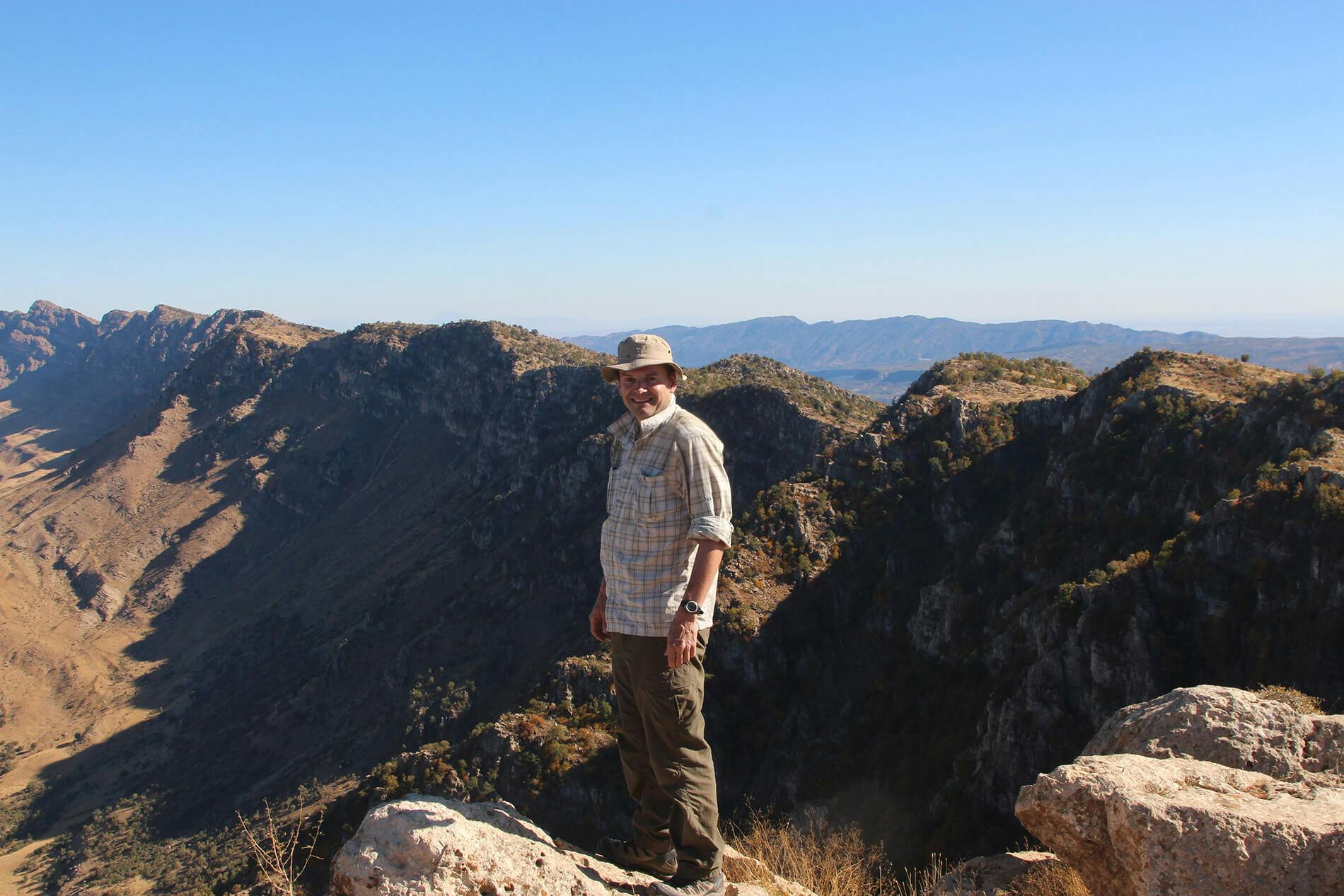
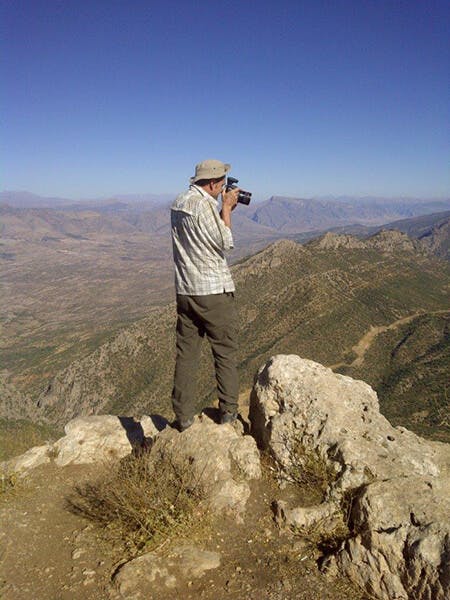
I’ve been to several places which have blown my mind over the years, but to give just one I’ll say the Zagros mountains in North-Eastern Iraq. Staggeringly beautiful scenery and amazing geology. Because the geology is so young, it’s topography- forming. So when you’re standing on top of a mountain in Kurdistan you can see all around you the geology and the structural geology, and the structure is forming the topography. So that’s very special for a structural geologist and it’s very beautiful. I’ve been there for many, many months over a 10-year period and so many times I’ve sort of pinched myself and thought, “my God, I’m being paid for this!”. What a privilege.

Richard Jones in the Field

Tell us about your upcoming course with GeoLogica. What is it about and who is it for?

So the next one up is E510 – An Introduction to Geospatial Workflows. This is an introductory course for people who would like an overview of Geo-informatics, for people who want or need to use spatial data, particularly in the context of the Geo energy transition. So it’s aimed at both post-grad students soon to go out into the workplace and professional geoscientists who are looking to expand their skill set and learn to use spatial data in spatial workflows.

Tell us a fun fact that most people don’t know about you.

I used to be a very keen runner and orienteer – I’ve run in the World Orienteering Championships and in the World Hill Running Championships.

And…hmm… what would be obscure enough? I’ve been in the winning team for Jukola & Tiomila – the curious can look into what they are!

What would be your advice to junior geoscientists starting their careers?

Oh that’s indulgent – that makes me feel old and important and worldly wise!

H.H. Read said, “The best geologist is the one that’s seen the most rocks.” And of course if you take that literally, it’s not necessarily 100% true, but it conveys a really important message. So “Get up from the computer and go out and see some real rocks” would probably be the best advice I could ever think of.

Don’t let the technology dictate the science. Make sure the technology serves science. That’s another tremendously important one.

And what else…? Just be passionate about geology. Geology’s super important to society – be proud of the role that geology plays in society.

Tell us your best (worst) geology joke.

Q: How fast does a fault move?

A: A Mylonite!

Richard Jones taking a photo in the Field

Richard will be teaching E510 An Introduction to Spatial Workflows from 04 – 06 September 2023.

GeoLogica Ltd appoints Kelly Opre as COO

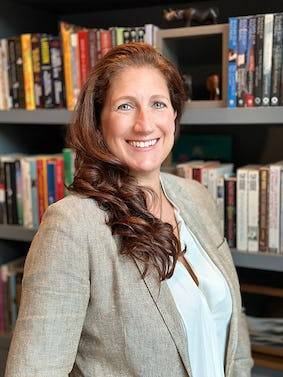
GeoLogica is delighted to announce the appointment of Kelly Opre as Chief Operating Officer. An experienced business leader, Kelly will fill this newly created position and assume responsibilities immediately.

As a leading provider of world class training for the modern energy industry, GeoLogica is committed to expanding its offer of high-quality training for current and future energy needs in the USA. Kelly will be joining GeoLogica to lead that expanded provision.

“With our plans for business development this is exactly the appointment the company was looking to make,” said Mark Hammond, Chair of GeoLogica. “Kelly will bring a wealth of experience and capability to the role and with her leadership we are confident our offer of world class training will continue to meet the needs of companies today and into the future.”

Kelly was most recently at Hess Corporation, where she held positions in Global New Business Development, Contracts and Negotiations, and Strategic Planning.

Kelly Opre

“I am excited to join the GeoLogica organization,” said Kelly Opre on her appointment. “I believe my skills will complement those of the team and allow GeoLogica to become the leading training provider in the fast-evolving energy landscape.”

Kelly received a Bachelor of Science in Geology from Texas A&M University and a Master of Science in Geoscience from Texas Tech University. She currently serves as Chairman of the Board for the charitable organization Texas Center for the Missing.

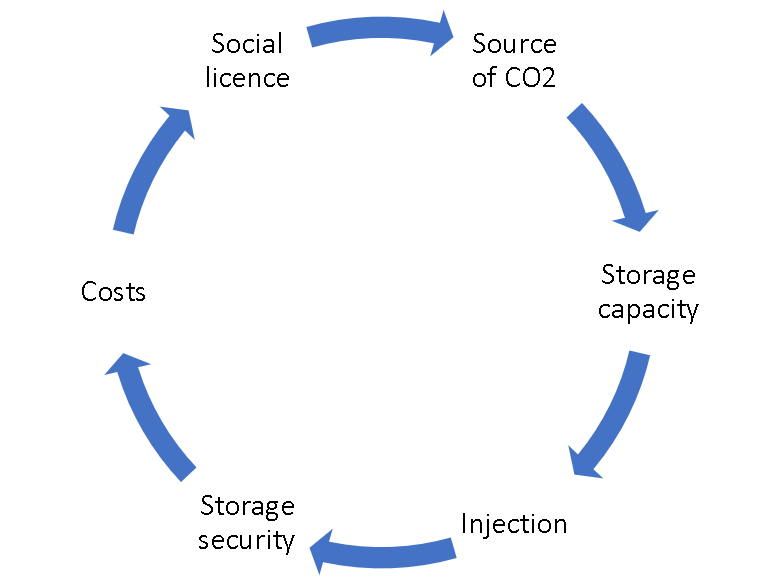
Turning the CCS Project Wheel: Be guided by a GeoLogica training course

With over a dozen courses exploring the likes of CCS plays and reservoir characterisation, reservoir risk analysis, project engineering, business drivers and policy and regulation, GeoLogica has a course suitable for you or your team. 

In addition to our online and classroom events, for 2023 we are also delighted to offer two UK-based field courses that have direct geoscience relevance to UK-based CO2 storage projects in the pipeline.

ccs project wheel

CCS is happening! As I write, CO2 is about to be injected from the Nini platform in the Danish North Sea as part of Project Greensand, the world’s first cross-border offshore CO2 storage project facilitated by INEOS and partners. The NSTA in the UK is primed to award offshore storage licences in early 2023, after receiving interest from nineteen companies in areas off the coast of Aberdeen, Liverpool, Lincolnshire and Teeside. With this clearly defined need, combined with the will and skills to move CCS projects forward, what remains of this decade will undoubtedly see major growth in C02 storage.

At GeoLogica we have been developing a distinct group of courses aimed at up-skilling organisations and individuals who are transitioning to or are already involved with CCS projects. There is clearly more to CCS than storing CO2 underground and our broad spectrum of CCS-focused courses offer a variety of learning opportunities to address the geoscience, economic and social challenges. As with all subsurface projects, the requirement to ‘problem solve’ remains a key driver and stimulus for training within an organisation, in order to equip employees with the necessary skills for success.

For more information on specific upcoming CCS courses, click on the links below:

2-4 May Systems to Classify, Categorise and Report Geological CO2 Storage Capacity with Bob Harrison

11-15 September Geologic Carbon Storage for Geoscientists and Engineers with Alex Bump and Seyyed Hosseini

18-22 September Reservoir Characterisation for Carbon Capture and Underground Storage, Devon and Dorset, UK with Gary Hampson and Matthew Jackson

2-6 October Carbon Capture – Reservoir Storage and Risk Elements: Insights from the Field, NE England with Richard Jones and colleagues

13-17 November Carbon Capture and Storage Masterclass with Richard Worden

4-8 December Subsurface Pressures for Injection of Fluids and Gases with Richard Swarbrick

Reconnecting with Colleagues and Peers: In-person training with GeoLogica for 2023

Online courses remain an important part of the GeoLogica portfolio but, after the last few years of forced isolation, it is exciting to be able to return to the classroom and we are thrilled to announce a number of in-person courses as part of our 2023 scheduled training programme.

With our breadth of experience in the training sector, we know the value of in-person events, both in the classroom and in the field – the collaboration of working as a team and the excitement of meeting new people in the industry.

Field-based training is widely recognised as one of the best methods of learning, as well as providing invaluable team bonding and ideas exchange between peers. The experiential and hands-on nature of field work, coupled with practical exercises and supporting lectures, creates a powerful and stimulating learning environment. In keeping with our desire to create the best learning experiences, GeoLogica has four field classes scheduled in 2023. These include two new and innovative courses that examine how outcrop geology can inform understanding of carbon storage reservoirs.

In addition to these scheduled events, we have a broad portfolio of field courses available and continue to develop new ideas.

Our current scheduled in-person training includes:

Field-based Training:

Sand-rich Turbidite Systems: From Slope to Basin Plain, Pyrenees, Spain: 10–15 September 2023

Reservoir Characterization for Carbon Capture and Underground Storage, Devon and Dorset: 18–22 September 2023

Carbon Capture – Reservoir Storage and Risk Elements: Insights from the Field, NE England: 2–6 October 2023

Reservoir Characterization of Deepwater Systems, San Diego, California: 26 November – 1 December 2023

Classroom-based training:

Workflows for Seismic Reservoir Characterization, London: 9–12 October 2023

Predictive Sequence Stratigraphy, Houston: 23–26 October 2023

Practical Seismic Interpretation, Houston: 13–16 November 2023

All GeoLogica courses can be tailored to an individual company’s requirement, if needed, and we have many possible field and classroom courses in our portfolio.

GeoLogica looks forward to seeing you in person in 2023!