World-class training for the modern energy industry

Fundamentals of Petroleum Systems: Source, Maturation and Migration (G120)

Tutor(s)

Rene Jonk: Director, ACT-Geo Consulting and Training; Honorary Professor, University of Aberdeen 


Overview

This hands-on course enables attendees to enhance their skills and critically evaluate all aspects of hydrocarbon charge, including source presence, maturation, migration, commodity type and timing. Lectures and exercises focus on characterization and prediction of hydrocarbon charge adequacy using core, well log and seismic data. Global examples, cover a range of basin and depositional settings, will be discussed and used in the exercises.


Duration and Logistics

Classroom version: A 3-day course comprising a mix of classroom lectures and discussion (50%), and hands-on exercises with subsurface datasets (50%). The lecture materials will be provided in digital format and participants will be required to bring a laptop or tablet computer to follow the lectures and exercises. Exercises manuals will be printed for each student to enhance learning by interpreting using pencil on paper.


Level and Audience

Fundamental. This course is intended for geoscientists, reservoir engineers and petrophysicists who want to understand the basic concepts of petroleum systems.


Objectives

You will learn to:

  1. Characterize source rock presence from cores, well logs and seismic and learn to predict source adequacy and risk from first principles.
  2. Understand the controls on source rock maturation and describe fundamental controls on maturation and maturation timing using burial history charts.
  3. Assess the fundamental controls on hydrocarbon migration and apply the principles of primary and secondary migration to predict hydrocarbon charge pathways and risk migration adequacy for plays and prospects.
  4. Assess commodity implications from source rock type and maturity.

Structural Styles and Tectonics: Advanced Interpretation and Evaluation Workshop (G118)

Tutor(s)

Douglas Paton: Director, TectoKnow.


Overview

The workshop is a follow on from the introductory course G111 and will focus on developing the concepts and skills presented therein. It will go into more detail on the structural styles for each tectonic setting and outline the uncertainty in sub-surface data that has to be considered.


Duration and Logistics

Classroom version: A 4-day course comprising a mix of lectures and exercises. The manual will be provided in digital form and participants will be required to bring a laptop or tablet computer to follow the lectures.


Level and Audience

Intermediate. The course is aimed at more experienced subsurface geoscientists who want to focus on the structural uncertainties in data, at all scales.


Objectives

You will learn to:

  1. Appraise the impact of normal fault identification and fault mapping on reservoir understanding.
  2. Gauge the limitations of seismic imaging for reverse faults, their temporal variation and impact on reservoir presence and distribution.
  3. Validate strike-slip deformation on seismic sections and reconstruct the 3D and 4D evolution of strike-slip systems.
  4. Evaluate negative and positive structural inversion and its impact on hydrocarbon systems and basin fill.
  5. Manage the impact of deformation close to or beyond seismic resolution with respect to subsurface prediction and modeling.
Structural Geology: Key Concepts for Exploration and Production (G111)

Tutor(s)

Douglas Paton: Director, TectoKnow.


Overview

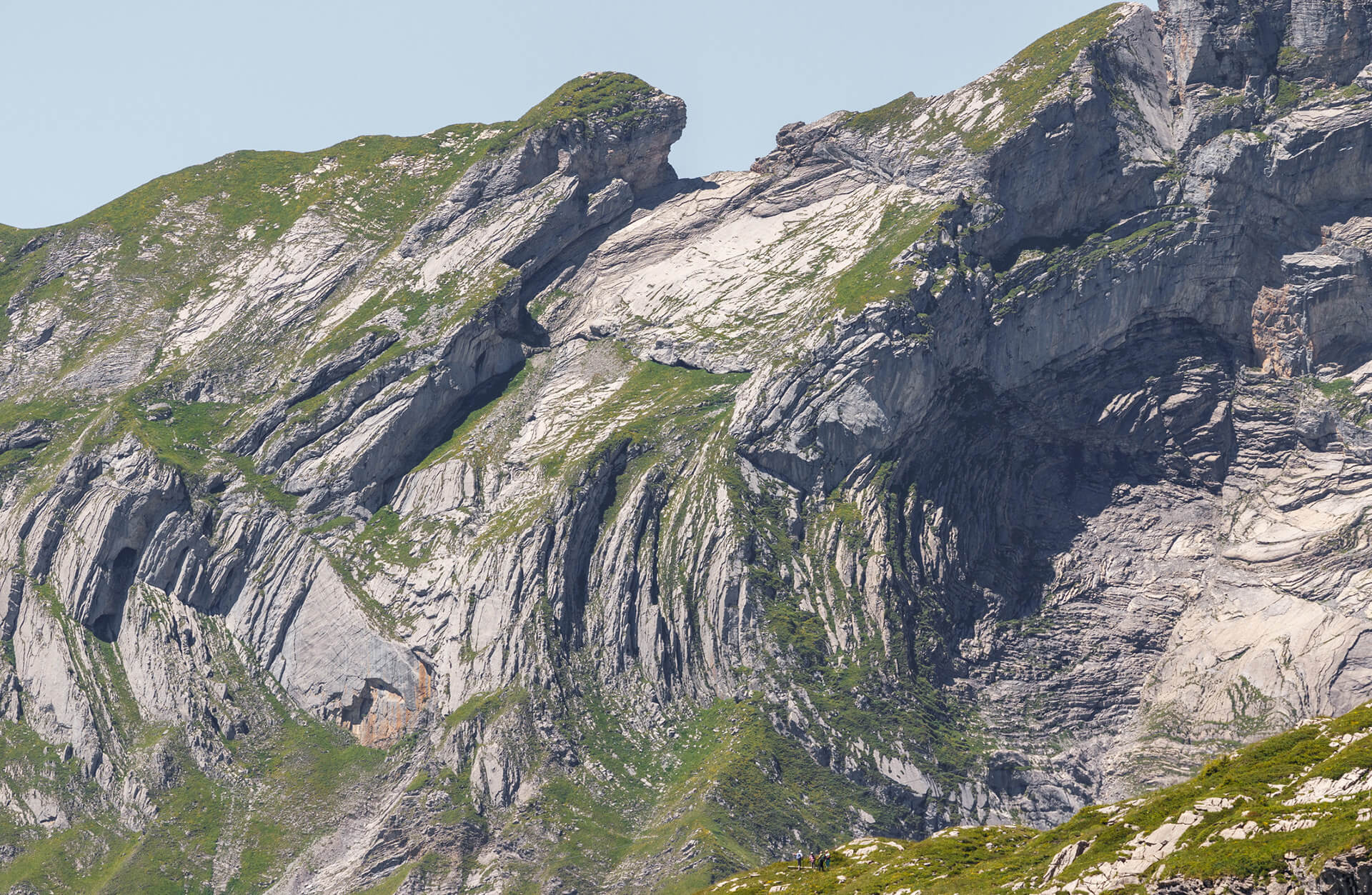
The workshop will be practically based, supplemented by a number of group thought experiments. It will cover an introduction to the fundamentals of structural geology and its impact on hydrocarbon distribution and prediction. It will then outline, with examples, the essential geometric components expected in normal faults / rift basins, reverse faults / contractional environments, inversion / multi-phase settings, and salt and strike-slip influenced systems.


Duration and Logistics

Classroom version. A 4-day course comprising a mix of lectures, case studies and exercises. The manual will be provided in digital format and participants will be required to bring a laptop or tablet computer to follow the lectures and exercises.


Level and Audience

Fundamental. The course is aimed at new hires who need a thorough introduction to the fundamentals of structural geology.


Objectives

You will learn to:

  1. Understand the fundamental importance of structural geology in modelling the subsurface.
  2. Appreciate the concept of structural styles and why it is essential to aid the interpretation of subsurface and outcrop data.
  3. Assess input data required for resource modelling and appreciate its limitations.
  4. Apply relevant and appropriate models to areas of limited data or zones of complexity and capture the implications of the inherent uncertainty.
  5. Apply relevant techniques and understanding to enhance resource prediction in extensional, compressional and multi-phase settings, including salt.
  6. Appreciate the importance of developing a structural robust understanding for any energy transition resource model.
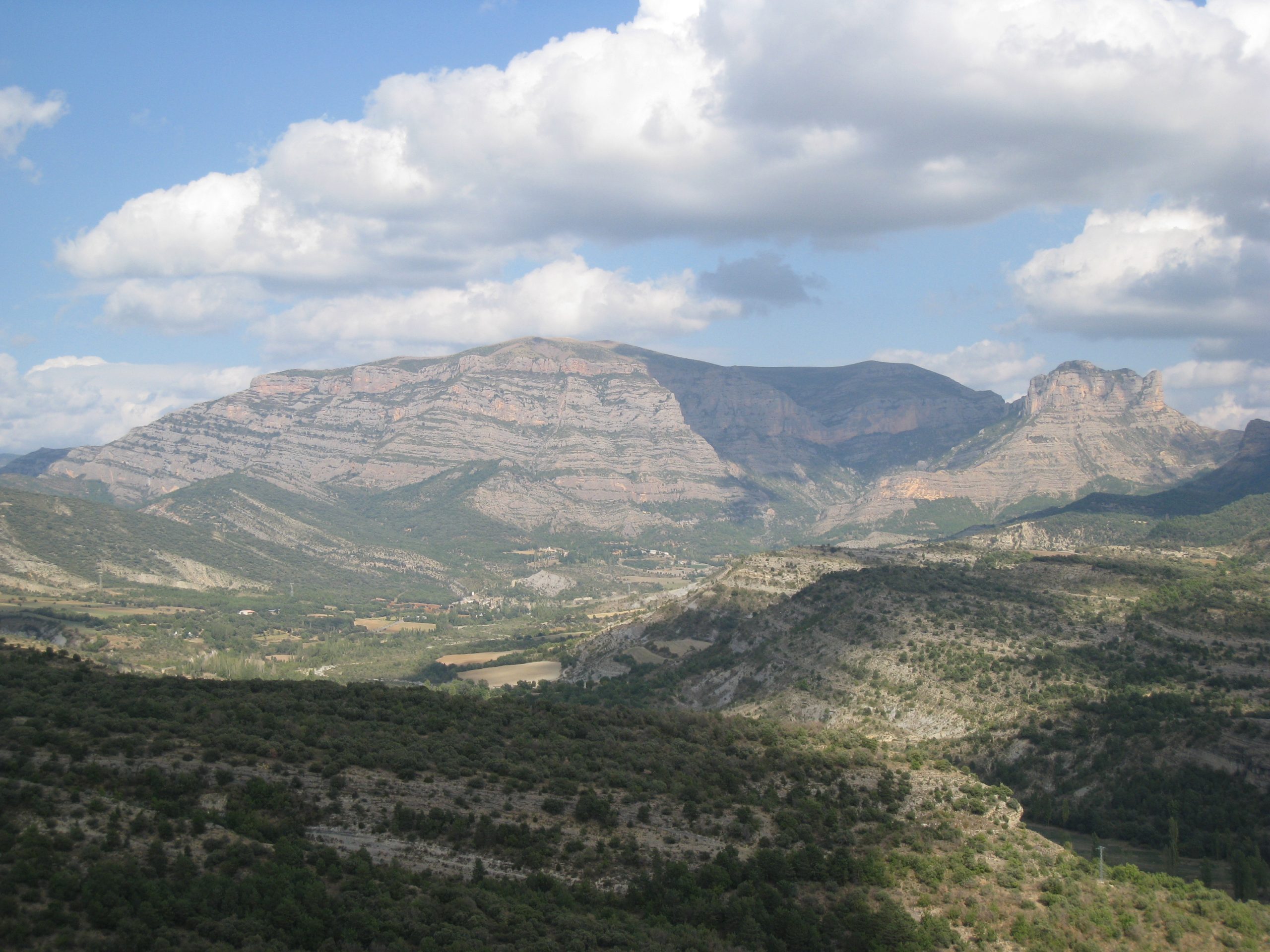
Basin-Scale Stratigraphy (Source-to-Sink): Basins of the Pyrenean Foreland, Spain (G117)

Tutor(s)

Rene Jonk: Director, ACT-Geo Consulting and Training; Honorary Professor, University of Aberdeen.

Overview

Well-exposed outcrops of the Pyrenean Foreland Basin (PFB) in northern Spain offer a unique opportunity for source-to-sink analyses across thrust and foreland basin settings. This course demonstrates regional linkages of continental to marine environments and teaches fundamentals of play-scale reservoir, source and seal mapping and prediction. We utilize 3D outcrop models, detailed biostratigraphic data and subsurface examples to enhance learning through making maps and predictions. The course presents sequence stratigraphic models across continental, shelfal and deep-water settings in order to understand the external controls on sediment flux from the proximal to distal environments.

Duration and Logistics

A 6-day field course, based in the Pyrenees, with the itinerary dependent on the technical objectives of the group and timeframe. 60-80% of the time will be spent in the field, making active observations and undertaking field exercises, in combination with some classroom exercises and lectures as well as the option for viewing core.

Level and Audience

Intermediate. The course is specifically designed for reservoir engineers, geologists and geophysicists interested in analysing a range of clastic reservoir types from a variety of depositional settings. The field course will examine the reservoir attributes of a wide range of sand-prone deposits focusing on the reservoir quality and property distribution as well as larger scale correlation and gross architecture of distinct stratigraphic units. In addition, play-scale prediction of reservoir, source and seal elements will be covered and play-based evaluation techniques will be discussed and practiced.

Exertion Level

This class requires an EASY exertion level. Access to the outcrops is easy with many being road cuts. The longest walk is approximately 3 km over scrubby land. The field area sits at an altitude of up to 1000 m and the weather can be warm with daily highs over 25 degrees Celsius.

Objectives

You will learn to:

  1. Review facies associations in siliciclastic depositional systems.
  2. Predict external controls on sediment flux from continent to basin.
  3. Study the effects of compressional tectonics and the interaction of tectonics and sedimentation.
  4. Assess proximal to distal environments of deposition (EoD) and link them in space and time.
  5. Employ sequence stratigraphic models to continental, shelf and deep-water settings.
  6. Build stratigraphic frameworks across various scales and EoD.
  7. Predict occurrence of basin-scale play elements.
  8. Place local interpretations into regional context for predictions away from well control.
  9. Examine where sediment is stored in shelf environments, as well as when and how sediment is transported to deep water.

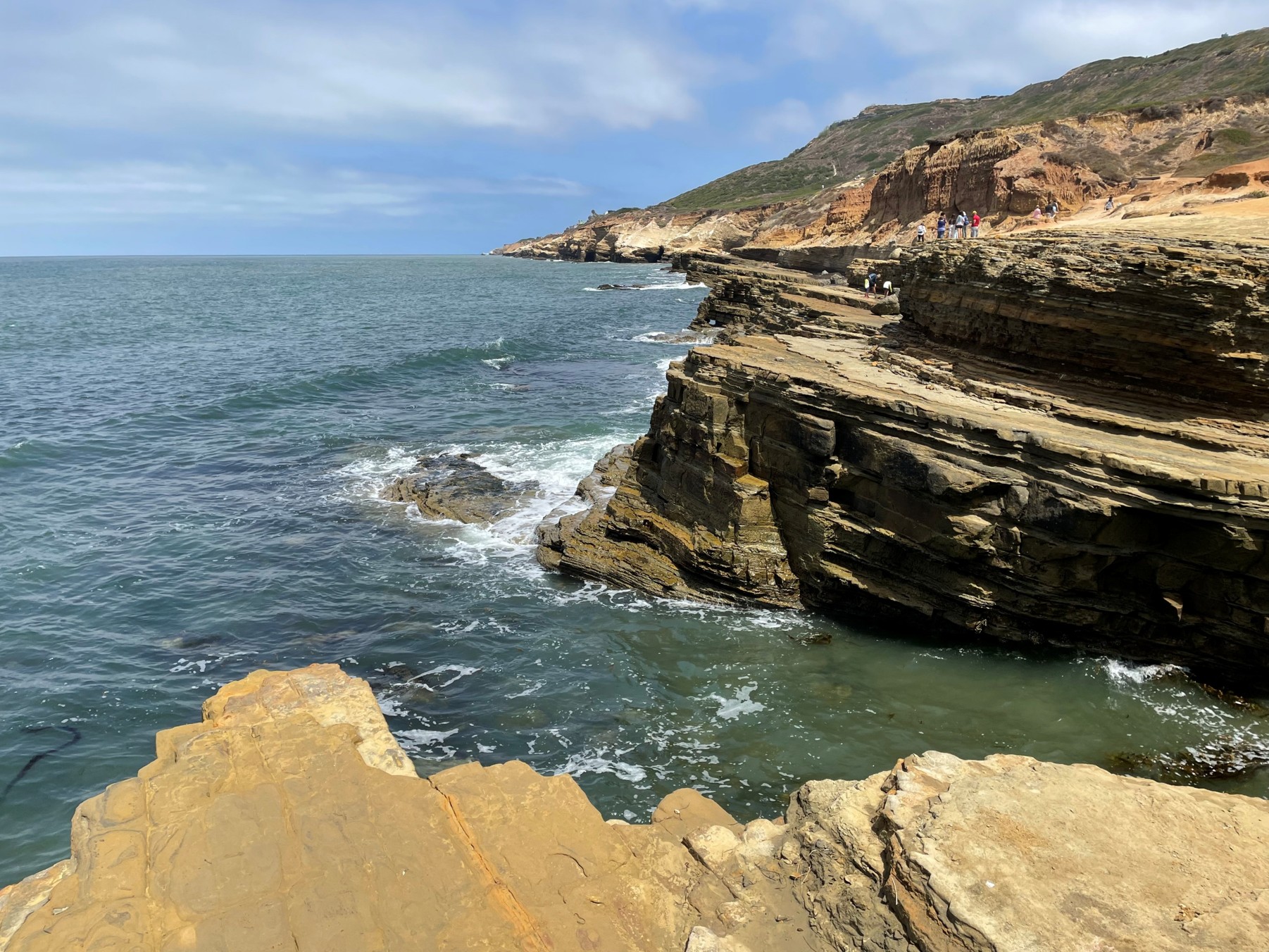
Deepwater Clastics: Source-to-Sink Studies in the Exploration of Turbidite Reservoirs, San Diego, California (G103)

Tutor(s)

Zane Jobe: Research Professor, Colorado School of Mines and the Director of the Geology Center of Research Excellence (CoRE).

Overview

The course will visit spectacular outcrops along the California coastline just north of San Diego. Field work will follow a source-to-sink approach and will focus on specific deepwater architectural elements, including canyons, slope channels, channel-lobe-transition-zones and lobes. The course will provide insights into exploration and development themes and challenges in deepwater depositional systems, with direct analogs to Gulf of Mexico reservoirs.

Duration and Logistics

A 6-day field course based in La Jolla, California. Training will take place through in-class presentations, field observations, printed exercises and discussions in the field. Transport will be by coach.

Exertion Level

This class requires a MODERATE exertion level. Access to the coastal cliff outcrops is via sandy beaches with walks no more than 3km (1.9 miles). Field stops are all at approximately sea level and some are tide dependent. There are some steep steps to negotiate to reach some beach sections.

Level and Audience

Intermediate. The course is aimed at geoscientists, engineers, petrophysicists, geophysicists and managers who are working deepwater reservoirs or would like to improve their knowledge of these systems.

Objectives

You will learn to:

  1. Characterize the sedimentary processes and facies of turbidite systems and mass-transport deposits, and the broad nature of submarine depositional architecture.
  2. Evaluate submarine-channel systems, including scales/dimensions, axis-to-margin architecture, evolution, heterogeneity and potential baffles/barriers to flow.
  3. Predict connectivity in channelized systems from their seismic-geomorphic and well-log expression.
  4. Assess submarine canyon forming-and-filling processes, including mass wasting, bypass, sandy and muddy fill, and up-dip trapping mechanisms.
  5. Illustrate the importance of source-to-sink studies in the exploration of turbidite reservoirs.
  6. Evaluate submarine lobe/sheet systems, including scales/dimensions, axis-to-fringe architecture, compensational stacking, hierarchy and heterogeneity (e.g. hybrid-event-beds).
  7. Analyze channel-lobe-transition-zone deposits and supercritical-flow bedforms.
  8. Assess faulting in lobe deposits and impacts on connectivity.
  9. Appraise the facies variability in proximal/axial and distal/fringe lobe deposits, and the implications for connectivity between these sub-environments.

Introduction to Log Analysis and Petrophysical Characterization (G104)

Tutor(s)

Joe Landry: President, Petrophysical Solutions Inc.

Overview

This course will review basic interpretation techniques from conventional logs with a focus on key reservoir properties.

Duration and Logistics

Classroom version: A three-day classroom course comprising a mixture of lectures and exercises. The course manual will be provided in digital format.

Level and Audience

Fundamental. This course is designed for those without any experience or familiarity with logs.

Objectives

You will learn to:

  1. Introduction and review of key rock properties and terminology used.
  2. Understand the wellbore environment and how this can affect the data acquired.
  3. Review data types and acquisition technologies.
  4. Understand log types and evaluate appropriate display scales.
  5. Evaluate and QC log data.
  6. Review the Archie equation and how it is used to determine water saturation.
  7. Understand the limitations and pitfalls of the described interpretation techniques particularly with respect to deepwater reservoirs in the Gulf of Mexico.

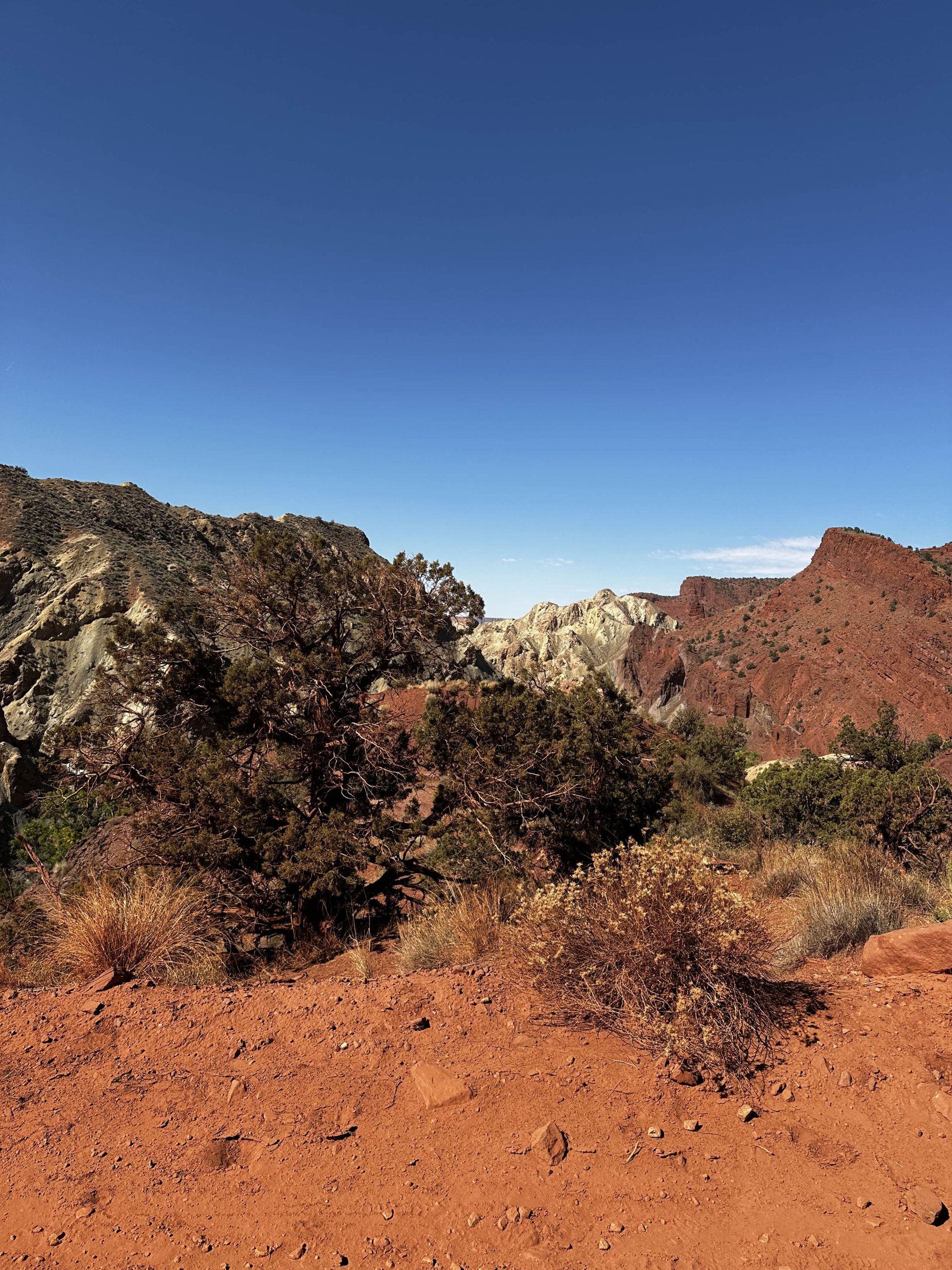
The Geology of the Paradox Basin and Implications for Deepwater Gulf of Mexico Exploration, Moab, Utah (G095)

Tutor(s)

Kate Giles: Lloyd A. Nelson Professor, University of Texas at El Paso; Consulting Geologist.

Overview

The primary technical goal is to provide a widely applicable introduction to the interrelationship between sedimentation and structural geology with a particular focus on salt tectonics and salt-sediment interaction. The geology is examined with reference to deepwater exploration themes with the Gulf of Mexico.

Duration and Logistics

A 4-day field course starting and finishing in Grand Junction, Colorado, comprising a mixture of lectures, field work and exercises.

Level and Audience

Intermediate. This course requires a basic understanding of geoscience and will suit those working in the geoscience, geotechnical and engineering fields. The aim is to facilitate knowledge and experience exchange among the participants, so is open to those from a very wide range of experience levels.

Exertion Level

This course requires a MODERATE exertion level. There will be hikes to outcrops of up to 6.5km (4 miles) round trip. Some of these will encounter uneven and rocky ground with some short, steep inclines. The climate in southern Utah is typically warm to hot and dry with temperatures up to 37.5°C (100°F) and the elevation is between 1,250–1,500m (4,000–5,000 ft).

Objectives

You will learn to:

  1. Describe the regional stratigraphy and principal structural features of the Paradox Basin, Utah.
  2. Characterize and interpret controls on Paradox Basin salt-related structures and key features of passive diapiric systems, including halokinetic sequences, caprock development, non-evaporite stringers / inclusions, welds, megaflaps, counter-regional faults, radial faults and burial wedges.
  3. Examine stratal geometries and halokinetic sequences and how these relate to intervals of salt inflation / evacuation and sediment flux.
  4. Assess the controls on basin fill architecture, fluid flow and deformation within the Paradox Basin and compare this to analogous salt basins worldwide.
  5. Understand the importance of salt basins to the energy industry for hydrocarbon production.

Slope-Channel Depositional Systems: Brushy Canyon Formation, SE New Mexico and West Texas​ (G091)

Tutor(s)

Art Saller: Independent Geological Consultant.

Overview

This field course is designed for geoscientists and engineers exploring and developing deepwater clastic reservoirs anywhere in the world. The course examines excellent (classic) exposures showing depositional facies and stratal geometries developed in deepwater slope and channel environments and their controls on reservoir presence, quality and production. Outcrop description and exercises with subsurface data are integrated into the course. Analog fields from West Africa, Gulf of America/Mexico, southeast Asia and the Permian Basin are discussed on outcrops.

Duration and Logistics

A 6-day field course beginning and ending in El Paso, Texas. Most training will take place through observation and discussion in the field.

Level and Audience

Advanced. The course is aimed at geoscientists, petrophysicists, reservoir engineers and production engineers working deepwater siliciclastic reservoirs. Basic principles are presented on the first morning to bring participants to a common level of understanding. Outcrop viewing, description and exercises will give even advanced level participants improved understanding of these systems.

Exertion Level

This class requires a DIFFICULT exertion level. The outcrops are in west Texas and southeast New Mexico, where the weather is arid with hot summers and cool winters. This trip is run in spring or fall when temperatures are more moderate, although hot, cold or wet weather is possible. Daily temperatures can range from 5–30°C (40–90°F). The course includes a hike of around 6 km/4 miles with an ascent of 400m (1300 ft), and shorter hikes, frequently over very steep and uneven ground. Transport on the course will be by coach. Most of the driving is on black-top roads, with some driving on graded dirt roads.

Objectives

You will learn to:

  1. Visualize the seismic-scale geometries of major slope channel systems including incised upper slope valleys, amalgamated mid-slope channel-complexes, and middle to lower slope channel-levee complexes for use in subsurface interpretation.
  2. Assemble a predictive model for those different sand geometries relative to slope position.
  3. Describe different deep-water (turbidite) facies and understand variations in their distribution and reservoir characteristics in different architectural elements (channel, levees, splays).
  4. Relate outcrop and core scale variations of deepwater sands to wireline log characteristics within channel complexes to help interpret facies in logs.
  5. Predict how turbidites and their characteristics change laterally which can be applied to static and dynamic reservoir models for appraisal and development.
  6. Assess thin turbidite sand beds and understand where they occur deep-water systems and how their continuity can vary from relatively limited areal continuity in levees to sheets in thin-bedded basin floor fans.
  7. Evaluate variation in grain size and lateral continuity of sand bodies, understand why they can cause large variations in permeability, production rates and oil recovery.
  8. Relate characteristic of outcrops to analogous oil fields along the West African margin, Gulf of America/Mexico, southeast Asia and the Permian Basin
 

Understanding Seismic Data: Time, Depth and Geology (G082)

Tutor(s)

David Kessler: President, SeismicCity Inc.

Ron Kerr: Seismic Processing Consultant.

John Byrd: President, ByrdGEO; Adjunct Professor of Geology, University of Utah.

Overview

This course is designed to provide seismic interpreters, managers, geophysicists and geologists with a broad understanding of seismic imaging and processing. Emphasis will be placed on an understanding of industrial methods and workflows, differentiation of signal from artifacts, and connecting seismic data to geological settings for prospect evaluation and generation. The limited amount of quantitative seismic theory that is included is linked to the fundamentals of seismic data acquisition and processing, imaging, model building and interpretation through the incorporation of case studies. The eight course sessions continually build on the material from previous sessions and are tied to the underlying geology.

Duration and Logistics

A 4-day in-person classroom course, consisting of lectures and exercises. A digital manual will be provided for the course.

Level and Audience

Intermediate. The course is intended for seismic interpreters and geologists involved in the use and evaluation of seismic data.

Objectives

You will learn to:

  1. Outline the principal strengths and limitations of depth imaging.
  2. Assess the uncertainties of depth imaging and strategies to reduce these.
  3. Establish the fundamentals of marine- and land-based seismic from acquisition to pre-processing.
  4. Examine the processing steps leading to post- and pre-stack time migration, and post-stack depth migration.
  5. Evaluate various migration parameters used in the application of pre-stack depth migration and how they affect the PSDM image.
  6. Gauge the accuracy of time to depth conversion by application of pre-stack depth migration, as well as seismic to well tie and residual depth correction.
  7. Demonstrate the fundamental differences between depth and time migration and the improved imaging results when depth migration is utilized to resolve lateral velocity variations.
  8. Evaluate the link between the pre-stack depth image and the underlying geological settings.
  9. Analyze the complex structural geometries associated with salt tectonics and their significant associated imaging challenges.
  10. Differentiate signal from artifacts.
  11. Assess the construction of geological models utilizing our common understanding of velocity estimation, anisotropic parameters and different geologic settings.
  12. Connect seismic data to geological settings for prospect evaluation and generation.

Carbonate Depositional Systems: Reservoir Sedimentology and Diagenesis (G105)

Tutor(s)

Paul Wright: Independent Consultant.

Overview

This course is aimed at those with little or no previous experience with carbonate rocks as reservoirs or aquifers. A broad introduction to carbonate systems is presented, with multiple case examples interspersed throughout the course, in order to illustrate the different types of carbonate deposition, stratigraphy and diagenesis. Besides reviewing the essential components and origins of such rocks, it also illustrates how key characteristics are identified from seismic data and the issues relating to flow behaviour. Participants will attain a broad understanding of carbonate rocks – their components, depositional models and diagenetic variation – to better assist in the prediction of carbonate reservoirs from seismic to pore scale.

Duration and Logistics

Classroom: A 4.5-day in-person classroom course. Digital course notes and exercise materials will be distributed to participants before the course.

Virtual version: Nine 3.5-hour interactive online sessions. Digital course notes and exercise materials will be distributed to participants before the course.

Level and Audience

Fundamental. The course is intended for geoscientists (geologists and geophysicists) and petroleum engineers with little or no experience of carbonate reservoirs.

Objectives

You will learn to:

  1. Understand and describe the principal carbonate sediment components and systems of carbonate classification.
  2. Describe the primary controls on carbonate deposition temporally and spatially, and discuss the contrasts between the controls on siliciclastic deposition.
  3. Describe the main types of carbonate platform, their variability, scale, main seismic features and distribution of likely reservoir units.
  4. Demonstrate sequence stratigraphic aspects of carbonate build-ups, their differing response to SL change compared to clastic sediments and discuss their seismic characters.
  5. Review principal types of likely reservoir facies (platform interior, carbonate sands, reefs, slope systems and chalks), their recognition, architecture, sequence stratigraphy and porosity types.
  6. Identify the diverse pore types in carbonates and how these relate to reservoir quality.
  7. Understand how the development of primary and secondary porosity has varied through geological time and how these changes impact reservoir quality.
  8. Explain how the variety of diagenetic environments affects primary and secondary porosity in carbonate rocks and understand the implications for reservoir quality.
  9. Understand the uses of the main techniques for deciphering diagenetic sequences in carbonates.
  10. Discuss the principal modes of formation of dolomites and the predictive uses of different dolomite models.
  11. Understand the diverse origins of palaeokarstic macroporosity, its subsurface recognition, and different strategies for developing palaeokarstic systems for geothermal energy and hydrocarbon reservoirs.