World-class training for the modern energy industry

De-risking Carbonate Exploration (G008)

Tutor(s)

Paul Wright: Independent Consultant.

Overview

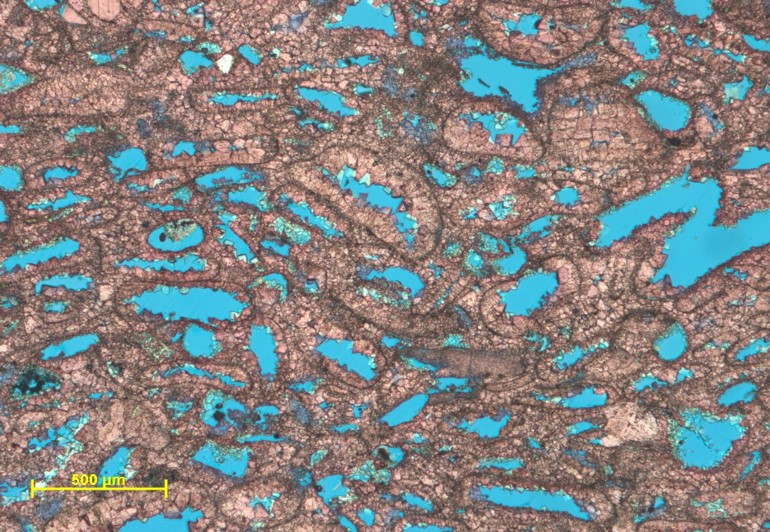
This is a ‘what you really need to know about carbonates’ course, in order to attempt to de-risk carbonate prospects. Carbonate rocks are complex; however, there are basic principles that provide a framework in which such complexity may be rendered understandable. The course focuses on large scale rules, risks, uncertainties, strategies and workflows, with a heavy emphasis on seismic facies. It does not focus on appraisal or development aspects.

Duration and Logistics

Classroom version: A 4-day classroom course comprising a mix of lectures (75%) and exercises (25%). The manual will be provided in digital format and participants will be required to bring a laptop or tablet computer to follow the lectures and exercises.

Virtual version: Eight 3-hour interactive online sessions presented over 8 days. A digital manual and exercise materials will be distributed to participants before the course. Some reading and several exercises are to be completed by participants off-line.

Level and Audience

Advanced. This course is really aimed at explorationists with at least a basic knowledge of carbonates but will also prove useful to more experienced geoscientists by providing a synthesis of recent advances in understanding carbonate reservoirs, supported by potentially highly practical methodologies for framing uncertainties for reservoir presence.

Objectives

You will learn to:

  1. Frame likely carbonate plays in relation to a given stratigraphic age and basin type.
  2. Identify the main types of carbonate platform as seen from seismic data, de-risk certain types of features and assess the likely presence of key seismic facies.
  3. Evaluate for a given interval and platform type the likely reservoir facies (platform interior, carbonate sands, reefs, slope systems and chalks) and assess the likelihood of reservoir presence.
  4. Understand how the development of primary and secondary porosity has varied through geologic time and how these changes impact upon reservoir quality.
  5. Appreciate the principal modes of formation of dolomites and the predictive uses of different dolomite models.
  6. Understand and identify the diverse origins of palaeokarstic macroporosity, associated risks and the different strategies for developing palaeokarstic reservoirs.
Progressive Deformation in the Arbuckle and Wichita Mountains: Implications for Mid-Continent and Resource Plays, Oklahoma (G083)

Tutor(s)

Kevin Smart: Manager, Earth Science Section, Space Science and Engineering Division, Southwest Research Institute.

David Ferrill: Institute Scientist, Space Science and Engineering Division, Southwest Research Institute.

Overview

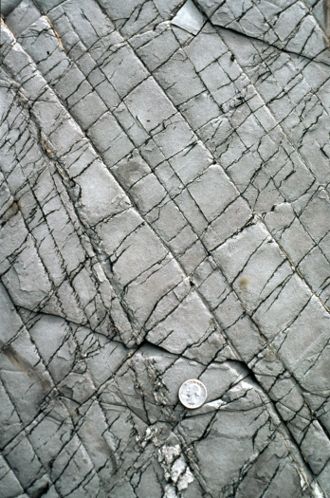
This field seminar will explore natural deformation in Paleozoic rocks in and around the Wichita and Arbuckle uplifts in southern Oklahoma. Investigating mechanical stratigraphy and the regional tectonic setting provides the context for understanding deformation features, such as joints, shear fractures, folds, faults and stylolites. Outcrop observations will be tied to the deformation conditions under which they developed, and related to the subsurface (cores, logs and stress data), to illustrate the critical importance of understanding deformation in the subsurface, including both pre-existing natural deformation and as analogs for deformation produced by induced hydraulic fracturing.

Duration and Logistics

A 5-day field course, comprising a mix of field exercises (85%) and classroom work (15%). The course will start in Lawton, Oklahoma, and end near Ardmore, Oklahoma.

Level and Audience

Intermediate. The course is aimed at geoscientists, petrophysicists, reservoir engineers and production engineers working in mechanically layered, deformed rocks in Oklahoma or other relatively gently deformed sedimentary foreland basins. It will be of particular interest to any geoscientists, petrophysicists and engineers working in unconventional reservoirs, including those in the Anadarko Basin.

Exertion Level

This course requires an EASY exertion level. Fieldwork is in southern Oklahoma, where the climate can be variable according to the season. Transportation is by SUVs. Most driving is on black-top roads, and most outcrops are adjacent to roads or within inactive quarries with uneven ground, where long strenuous hikes are not needed to access the exposures.

Objectives

You will learn to:

  1. Identify small-scale deformation features that are common in the SCOOP/STACK plays of the Anadarko basin and other unconventional reservoirs.
  2. Interpret stress conditions and stress evolution from small-scale deformation features.
  3. Characterize mechanical stratigraphy based on lithostratigraphy and rock strength information.
  4. Relate deformation styles to the tectonic setting of southern Oklahoma.
  5. Assess the role of mechanical stratigraphy, stress conditions and pre-existing deformation features on rock behavior, including fracture prediction in unconventional and conventional reservoirs.
  6. Consider, in general terms, the behavior of lithological units under different well completion strategies.
  7. Evaluate geomechanical issues for common petroleum and unconventional resource applications such as well design, borehole stability and hydraulic fracturing.

Salt Tectonics of the Gulf of Mexico (G092)

Tutor(s)

Mark Rowan: President, Rowan Consulting, Inc.

Overview

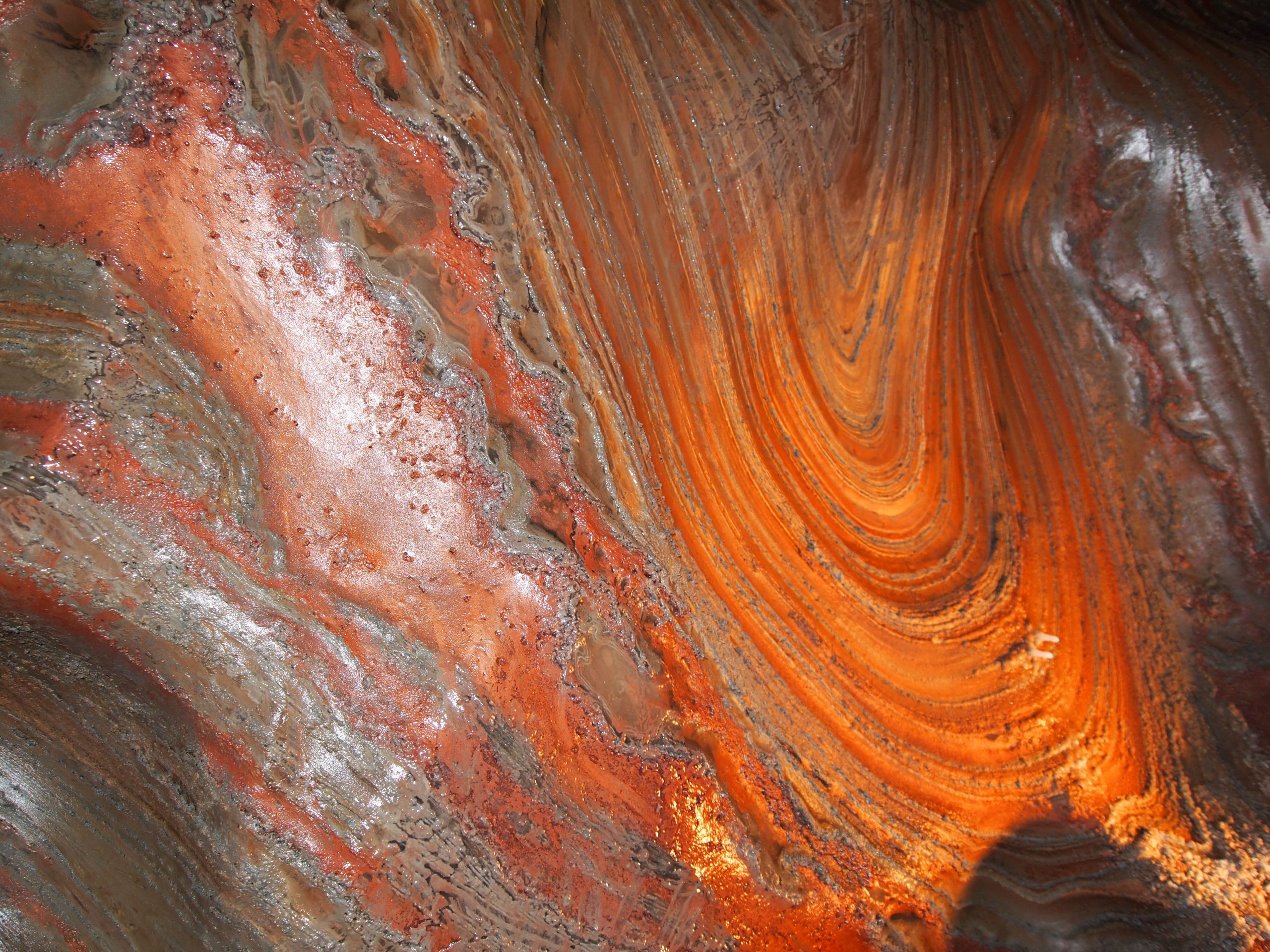
The objective of this 3-day course is to provide geoscientists with a detailed explanation of those aspects of salt tectonics applicable to the northern and southern Gulf of Mexico (GoM) salt basins. It consists primarily of lectures, with examples from the GoM and other basins, that are supplemented by practical exercises. The emphasis is on fundamental mechanics and processes, structural geometries and evolution, salt-sediment interaction and the implications for hydrocarbon exploration and production.

Duration and Logistics

A 3-day in-person classroom course, comprising a mix of lectures (75%) and seismic exercises (25%). The manual will be provided in digital format and participants will be required to bring a laptop or tablet computer to follow the lectures and exercises.

Level and Audience

Intermediate. The course is intended for geoscientists working the Gulf of Mexico and is also applicable to salt basins around the world.

Objectives

You will learn to:

  1. Understand the implications of layered-evaporite sequences for velocity-model building and seismic interpretation.
  2. Describe how halite differs from other lithologies and how that impacts deformation in salt basins.
  3. Characterize the ways in which extension, contraction and differential loading trigger salt flow and diapir initiation / growth.
  4. Interpret typical salt and stratal geometries associated with salt evacuation and diapirism.
  5. Predict how drape folding around passive diapirs impacts stratal geometries, faulting and reservoir distribution in diapir-flank traps.
  6. Understand why and how allochthonous salt forms and how salt sheets / canopies evolve.
  7. Assess the effects of salt on various aspects of the petroleum system, including trap formation, reservoir presence, hydrocarbon maturation and migration and seal.

Geology for Non-geologists (G088)

Tutor(s)

Jonathan Evans: Director, GeoLogica; Chair of Trustees, Lyme Regis Museum.

Overview

The aim of this course is to provide an overview of the fundamental geological topics relevant to the modern energy industry. Focus will be placed on petroleum geoscience and the basics of petroleum exploration, but the course will also cover geothermal systems, carbon capture and storage, and hydrogen energy.

Duration and Logistics

Classroom: A 2-day course comprising a mix of lectures, case studies and exercises. The manual will be provided in digital format and participants will be required to bring a laptop or tablet computer to follow the lectures and exercises.

Virtual version: Four 3.5-hour interactive online sessions presented over 4 days. Digital course notes and exercises will be distributed to participants before the course.

*A day in the field can be included where logistics allow, to observe a variety of rock types and for participants to gain a better understanding of key geological themes.

Level and Audience

Fundamental. The course is largely aimed at non-geologists who are interested in knowing more about the fundamentals of geology and how these relate to the modern energy industry.

Objectives

You will learn to:

  1. Describe the fundamental principles of geology, including different rock types, geological time and stratigraphy.
  2. Understand the basics of petroleum geoscience, including the formation of oil and gas.
  3. Review the different types of reservoir rocks and their properties, including porosity and permeability.
  4. Recognize how we search for oil and gas, including using seismic and other data.
  5. Understand how we drill for oil and gas and how we acquire information from wells, such as log and core data.
  6. Recognize what technical staff in companies do and how they work together.
  7. Describe the basic principles of carbon capture and storage and how it is being adopted worldwide as a climate change mitigation tool.
  8. Understand the basics of geothermal energy, what it is and how it can be used.
  9. Appreciate how hydrogen energy can be used and stored underground.
 

Trap and Seal Analysis: Theory and Application (G090)

Tutor(s)

Russell Davies: Director, Redlands Fault Geological Consulting LLC.

Overview

This course introduces the concepts and methods in trap and seal analysis, particularly in relation to fault characterization, including fault mapping and fault seal, as applied to cross-fault flow resistance in traps for hydrocarbons and carbon containment in subsurface reservoirs. The course additionally includes the analysis of caprock (top seal) for predicting seal capacity and evaluating risks associated with capillary and mechanical controls. Overall, the course emphasizes the importance of an integrated approach to trap and seal analysis in subsurface reservoirs. The lectures introduce fundamentals and advanced concepts for faulting and flow for the prediction of fault behavior in subsurface traps and the concepts discussed are applied in simple exercises to reinforce learning.

Duration and Logistics

Classroom version: A 4-day classroom course, comprising a mix of lectures (65%) and hands-on exercises (35%). The manual will be provided in digital format and participants will be required to bring a laptop or tablet computer to follow the lectures and exercises.

Virtual version: Five 4-hour interactive online sessions presented over five days. Digital course notes and exercise materials will be distributed to participants before the course. Some exercises may be completed by participants off-line.

Level and Audience

Intermediate. The course is intended for geoscientists (geologists and geophysicists) and petroleum engineers, so they can apply these principles in their subsurface projects.

Objectives

You will learn to:

  1. Analyze fault geometries and architecture, apply this knowledge to make robust fault interpretations.
  2. Assess fault rock types and properties and likely impacts on fluid flow across and along faults.
  3. Conduct juxtaposition seal analysis and employ triangle diagrams.
  4. Apply algorithms, such as SGR and CSF, for predicting clay contents across faults.
  5. Assess the relationship between threshold pressure and fault seal capacity against the clay content predicted across fault surfaces.
  6. Characterize faults as potential migration and leakage pathways.
  7. Evaluate the geomechanical and capillary properties of top seal units.

Salt Tectonics – From Concepts to Application (G020)

Tutor(s)

Mark Rowan: President, Rowan Consulting, Inc.

Overview

This course covers all aspects of global salt tectonics. It discusses the origin and nature of evaporite basins and provides instruction on the essential elements of salt mechanics, diapirism, salt-related structural styles and salt-sediment interaction. Covered material ranges from fundamental concepts and practical application, to the influence of salt on petroleum systems. Lectures are complemented by exercises interpreting a variety of seismic data, illustrating characteristic structural styles and evolutionary development of salt basins.

Duration and Logistics

Classroom version: A 4-day classroom course comprising a mix of lectures (75%) and seismic exercises (25%). The manual will be provided in digital format and participants will be required to bring a laptop or tablet computer to follow the lectures and exercises.

Virtual version: Eight 3-hour interactive online sessions presented over 8 days. A digital manual and exercise materials will be distributed to participants before the course. Some reading and several exercises are to be completed by participants off-line.

Level and Audience

Advanced. The course is intended for geoscientists who wish to strengthen their skills in evaluating salt basins around the world.

Objectives

You will learn to:

  1. Understand the implications of layered-evaporite sequences for velocity-model building and seismic interpretation.
  2. Describe how halite differs from other lithologies and how that impacts deformation in salt basins.
  3. Characterize the ways in which extension, contraction and differential loading trigger salt flow and diapir initiation / growth.
  4. Evaluate how salt impacts deformation in different tectonic environments, including rift basins, divergent margins and convergent-margin fold-and-thrust belts.
  5. Interpret typical salt and stratal geometries associated with salt evacuation and diapirism.
  6. Predict how drape folding around passive diapirs impacts stratal geometries, faulting and reservoir distribution in diapir-flank traps.
  7. Understand why and how allochthonous salt forms and how salt sheets / canopies evolve.
  8. Assess the effects of salt on various aspects of the petroleum system, including trap formation, reservoir presence and quality, hydrocarbon maturation and migration, and weld seal.

Seismic Structural Interpretation and Analysis Workshop (G005)

Tutor(s)

Peter Hennings: Consulting Geologist and Research Scientist and Lecturer, UT Austin, Texas.

Overview

The course addresses interpretation of 2-D and 3-D seismic reflection data for unraveling the geometry and kinematic evolution of crustal structures, principally in sedimentary rocks. Topics include understanding how structures manifest themselves in seismic data and approaches to effective interpretation and kinematic analysis. Structural systems addressed include extensional, fold and thrust belts, salt tectonics and inversion. Applied topics include interpretation and analysis approaches, determination of geologic and basin history, fault system analysis, fault permeability structure and geomechanical evaluations, such as in situ stress determination and application to induced seismicity risking. Practical exercises are based on global seismic datasets and are reinforced by active in-class discussion.

Duration and Logistics

Classroom version: A 5-day classroom course, comprising a mix of lectures (40%), analysis of case studies (30%) and integrated exercises (30%). The manual will be provided in digital format and participants will be required to bring a laptop or tablet computer to follow the lectures and exercises.

Virtual version: Ten 3.5-hour interactive online sessions presented over 10 days. A digital manual and exercise materials will be distributed to participants before the course. Some reading and several exercises are to be completed by participants off-line.

Level and Audience

Fundamental. The course is intended for geoscientists who wish to strengthen their seismic interpretation and analysis skills by applying key interpretation techniques and strategies to a wide range of structural types and application goals.

Objectives

You will learn to:

  1. Understand the manifestation of 3-D structures in reflection seismic data.
  2. Develop effective structural interpretation perception – learning to think ‘kinemechanically’.
  3. Generate interpretations with geometric admissibility and kinematic compatibility.
  4. Understand imaging scale, artefacts and interpretation pitfalls.
  5. Gain experience in interpretation and analysis in all structural regimes.
  6. Understand how faults form, grow, interact, reactivate and impact fluid flow.
  7. Gain an introductory understanding of geomechanics as applied to interpretation.
  8. Become acquainted with fault stress analysis and fault seal risking.

Engineering of Resource Plays for Technical Professionals (G003)

Tutor(s)

Yucel Akkutlu: Professor, Texas A&M University.

Overview

This course presents the terminology, methodology and concepts of drilling, completion and reservoir engineering as applied to unconventional resource plays, including oil-rich shales, gas shales and coal-seam gas. It will cover the latest practices as well as discuss future directions in unconventional resource engineering. Case studies are used to illustrate particular challenges presented by these plays. The environmental impacts on air and water resources are considered. Participants will learn to become more effective members of multi-disciplinary resource evaluation teams by developing a solid understanding of appropriate engineering concepts and terminology.

Duration and Logistics

Classroom version: A 3-day course comprising a mix of lectures (70%), case studies (20%) and exercises (10%). The manual will be provided in digital format and participants will be required to bring a laptop or tablet computer to follow the lectures and exercises.

Virtual version: Five 4-hour interactive online sessions presented over 5 days, including a mix of lectures (70%), case studies (20%) and exercises (10%). A digital manual and hard-copy exercise materials will be distributed to participants before the course.

Level and Audience

Intermediate. The course is designed for technical professionals and managers who want to understand the role of the engineer in resource play projects. In particular, geoscientists, petrophysicists and drilling, completion and stimulation engineers would benefit from the course.

Objectives

You will learn to:

  1. Discuss aspects of reservoir, drilling, completion and stimulation engineering with engineering members of unconventional project teams.
  2. Contrast engineering approaches to conventional and unconventional projects.
  3. Assess resource estimates, production forecasts and economic evaluations for unconventional plays.
  4. Review the sampling procedures adopted by reservoir engineers.
  5. Predict the hydrocarbon phase change in reservoirs.
  6. Assess the demand for and disposal of water associated with fracturing and producing unconventional reservoirs.
  7. Assess the impact of unconventional projects on air quality.
  8. Discuss recent advances in the optimization of resource plays.

Modeling and Development Planning in Carbonate Reservoirs, Provence, France (G034)

Tutor(s)

Mark Bentley: TRACS International Consultancy and Langdale Geoscience.

Overview

Using analogue outcrops in the Luberon and Cassis area of southern France, this course develops workflows for static and dynamic modeling in carbonate reservoirs, covering in particular the issues of conceptual reservoir characterization, the handling of scale and the representation of fracture detail in cellular models. The analogue section chosen is a direct analogue for Shuaiba/Kharaib Middle East reservoirs, including high and low energy areas of rudist platforms, inner and outer shelves, and chalks. The modeling principles are transferable to other carbonate environments.

Duration and Logistics

7 days; field activities and exercises (100%); the outdoors will be used as a classroom.

Level and Audience

Advanced. A course for technical professionals working in integrated teams who are planning development activities in carbonate reservoirs (reservoir engineers, geoscientists, petrophysicists) and all involved in reservoir and simulation modeling.

Exertion Level

This class requires an EASY exertion level. Provence is quite comfortable in the late summer to fall, with temperatures of 10-25°C (50-80°F) and occasional rain showers. The field locations are all easily accessible requiring only a short walk from the transport. The longest walk is approximately 0.5km (0.3 mile) along a road section. There will be one boat trip (weather dependent) to view key cliff exposures that can only be seen from offshore (1-2 hours duration).

Objectives

You will learn to:

  1. Describe a carbonate reservoir in terms of essential reservoir elements and the architectural arrangement of those elements.
  2. Evaluate reservoir property distributions for those elements in a form suitable for input to static/dynamic reservoir modeling.
  3. Judge the scale at which a static/dynamic modeling exercise should be conducted, including any need for multi-scale modeling.
  4. Prepare rules of thumb for effective property modeling in carbonates at a range of scales.
  5. Assess fracture systems in carbonates and explain the options for modeling them (explicit DFN vs implicit effective properties).
  6. Apply the concept of representative elementary volumes (REV) to fractured and unfractured carbonates.
  7. Discuss optimal development planning for an oil reservoir based on the outcrops seen during the course.
  8. Catch up with current research activities in carbonate reservoirs.

Reservoir Characterization of Deepwater Systems: Ross Formation, County Clare, Ireland (G023)

Tutor(s)

Rene Jonk: Director, ACT-Geo Consulting and Training; Honorary Professor, University of Aberdeen.

Overview

Given the high cost of exploration and development of deepwater reservoirs, it is essential to have an accurate pre-drill prediction of reservoir architecture and properties, and to integrate post-drill assessments of reservoir heterogeneity away from well penetrations. The outcrops of the Ross Formation offer a unique opportunity to observe seismic-scale exposures of a deepwater fan system with characteristics similar to the producing fields in West Africa, Brazil and the Gulf of Mexico, to name a few. The size and quality of the exposures allow the participants to observe the main building blocks of fan systems. Lobes and distributary channels can be observed from proximal to distal settings, with excellent exposures of vertical stacking and 2-D arrangements of these elements.

Duration and Logistics

A 7-day field course comprising a mix of field activities with exercises (60%) and classroom lectures with exercises (40%). Exercises emphasize practical applications and will focus on description of deepwater lithofacies, stratal geometries and recognizing key stratigraphic surfaces. The course is based in Kilkee Bay, Ireland, with participants flying in and out of Shannon, Ireland.

Level and Audience

Advanced. This course is intended for geoscientists, petrophysicists, engineers and managers who are seeking to gain a comprehensive understanding of deepwater reservoirs.

Exertion Level

This class requires an EASY exertion level. Access to the coastal outcrops is relatively easy and there will be walks of up to 2km (1.2 miles) most days, all at sea level. The longest walk on the class is approximately 3.2km (2 miles), with no ascent or descent over 50m (160 feet). Summer weather can be cool and wet, or warm and wet, with a daily temperature range of 4–24°C (40–74°F). Transport will be by van on paved roads.

Objectives

You will learn to:

  1. Interpret and map different archetypes of deepwater reservoirs using cores, well-logs and seismic lines, from exploration to production business scales.
  2. Define trap configurations and perform risk assessment for stratigraphic traps.
  3. Estimate reservoir presence risk and predict N:G.
  4. Interpret environments of deposition (EoDs) and related reservoir architecture, lithofacies associations and diversity.
  5. Evaluate reservoir geometry and connectivity in different EoDs, integrating with production data.
  6. Define depositional geometries of turbidites in seismic-scale outcrops.