World-class training for the modern energy industry

Principles of Subsurface Energy Storage (G564)

Tutor(s)

Kevin Taylor: Professor in Energy Geoscience, The University of Manchester.

Overview

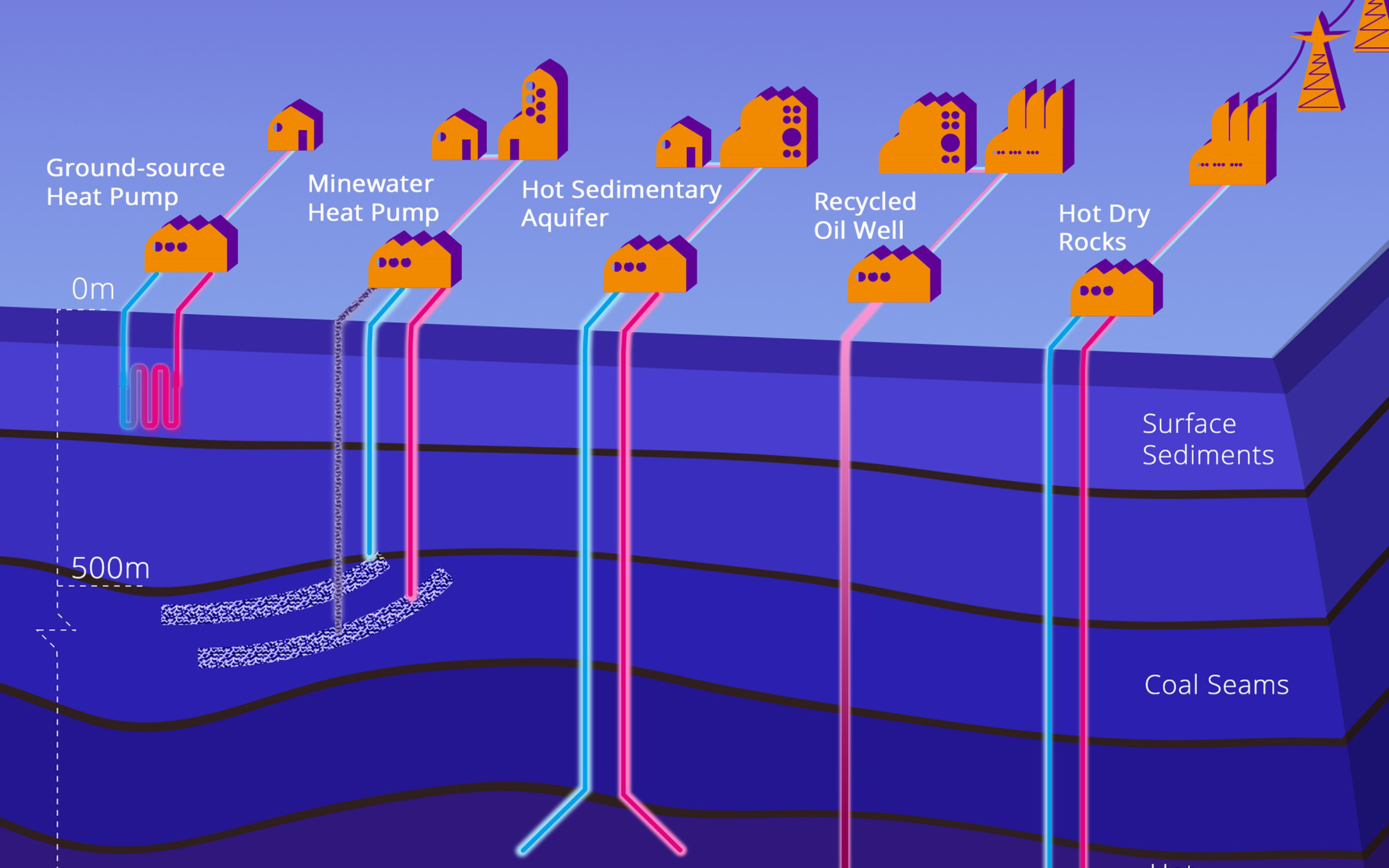
The aim of this course is to give an overview of the requirement, and the range of subsurface solutions, for energy storage. It will cover the key aspects of energy supply and demand, the role that subsurface energy storage can play in addressing this, and the key role that subsurface energy storage will play in decarbonizing energy as a key part of the energy transition. We will cover the fundamental geological, technical, environmental and societal aspects of hydrogen storage, compressed air storage, natural gas storage and heat storage. We also will briefly cover emerging solutions, such as chemical subsurface storage and geo-batteries.

Duration and Logistics

Classroom version: A 1-day course comprising a mix of lectures, case studies and exercises. The manual will be provided in digital format and participants will be required to bring a laptop or tablet computer to follow the lectures and exercises.

Virtual version: Two 3.5-hour interactive online sessions. Some short exercises (e.g. handling some basic data, estimating energy storage capacity, etc.) will be undertaken within the course. In-course questions / polls will be included. A digital manual and exercise materials will be distributed to participants before the course.

Level and Audience

Fundamental. The course is aimed at technical staff from a wide range of backgrounds, and an understanding of specific subsurface geoscience / engineering will not be assumed. The subject matter will be covered from first principles and will be of interest to staff from a range of backgrounds, including geological, engineering and commercial.

Objectives

You will learn to:

  1. Understand the nature of energy demand and supply within the context of the energy transition and the necessity for energy storage.
  2. Recognize the different ways in which energy can be stored in the subsurface, including natural gas storage, hydrogen storage, compressed air storage and heat storage.
  3. Appreciate the specific geological and technical requirements for different energy storage solutions, along with examples of where these are being deployed.
  4. Appreciate the challenges around subsurface storage, including fluids, gas and geomicrobiology aspects.
  5. Be able to frame subsurface energy storage within environmental, social and governance (ESG) considerations.

An Introduction to Clastic and Carbonate Depositional Systems (G064)

Tutor(s)

Jon Noad: Senior Palaeontologist at Stantec and President of Sedimental Services.

Overview

The aim of this course is to provide an overview of clastic and carbonate depositional settings. Different systems will be analysed in terms of their sedimentary structures, architecture and subsurface character. The first section will focus on clastic settings including aeolian, fluvial and shallow marine and especially the nature of the preserved sand bodies in the subsurface. The second section will explore the diverse topic of carbonate depositional settings, including the ranges of carbonate textures and facies that can be preserved and the different types of porosity. Each section will incorporate case studies, exercises and core examples.

Duration and Logistics

Classroom version: 3 days including a mix of lectures and exercises. The course manual will be provided in digital format and participants will be required to bring along a laptop or tablet to follow the lectures and exercises.

Virtual version: Three, 3.5 hour online sessions presented over 3 days. Digital course notes and exercises will be distributed to participants before the course.

Level and Audience

Fundamental. The course is largely aimed at geoscientists who are working on subsurface projects where a wide-ranging understanding of both clastic and carbonate depositional systems is required.

Objectives

You will learn to:

  1. Recognise different clastic environments of deposition including fluvial, aeolian deltaic and shallow marine.
  2. Recognise different sedimentary structures and sedimentary architectures.
  3. Understand the types of sand bodies and associated stacking patterns that are preserved in clastic depositional settings.
  4. Describe the heterogeneities in subsurface clastic reservoirs that can impact fluid flow.
  5. Appreciate how carbonates are classified and different carbonate settings are identified.
  6. Frame the main types of carbonate platform types and corresponding deposits.
  7. Understand the wide range of carbonate textures and facies that make up carbonate reservoirs.
  8. Recognise the different types of porosity and the impact of these on reservoir quality.

Lessons from Energy Transitions: Future Integrated Solutions that Sustain Nature and Local Communities, NE England, UK (G557)

Tutor(s)

Gioia Falcone: Rankine Chair of Energy and Engineering, University of Glasgow.

Bob Harrison: Director, Sustainable Ideas Ltd.

Overview

This course considers the past and future energy transitions in the northeast of England, and their impact and legacy on the region’s industrial sector, local communities and nature conservation. It is hoped that lessons learnt from the past experiences in the region will help a sustainable energy transition. The course will cover CCS, hydrogen generation, wind and nuclear power, geothermal energy and the repurposing of legacy assets.

Duration and Logistics

A 6-day field course with site visits supported by classroom sessions. The course will be based in the town of Hartlepool, County Durham, to provide easy access to nearby coastal and inland locations.

Level and Audience

Fundamental. The course is intended for professionals working in energy transition, nature conservation and community engagement; those responsible for policy on energy and conservation matters; and energy sector investors.

Exertion Level

The course requires an EASY exertion level. Outcrops include coastal sections and inland exposures all with easy access. There will be some walks along beaches and easy paths through dunes with a maximum distance of around 5km (3 miles) or less.

Objectives

You will learn to:

  1. Describe and explain the overall potential of the region for integrated solutions with the context of the present energy transition.
  2. Characterize the locations of potential projects and explain technical factors that affect these and their feasibility.
  3. Describe how wider factors can affect feasibility of the projects including the environmental and social impacts.
  4. Evaluate strategic choices for local and regional policy makers, as well as landowners and investors.
  5. Make predictions and assessments of other regions in the UK for the potential development of similar projects.

Plays, Prospects and Petroleum Systems, Wessex Basin, Dorset, UK (G054)

Tutor(s)

Jonathan Evans: Director, GeoLogica; Chair of Trustees, Lyme Regis Museum.

Overview

This course will illustrate the processes of play analysis and prospect evaluation using the geology of the Wessex Basin and outcrops of the Jurassic Coast of Devon and Dorset. The course will assess the elements of a working petroleum system including reservoir, source, seal and trap in the context of the Wytch Farm oilfield. Participants will have the opportunity to study a wide range of clastic and carbonate depositional systems, in addition to varying structural concepts, and visit two producing oil fields.

The manual will be provided in digital format and you will be required to bring a laptop or tablet computer to the course.

Duration and Logistics

A 5-day field course comprising fieldwork (70%) and classroom exercises (30%). The course will be based in Weymouth and transport will be by coach.

Exertion Level

This class requires an EASY exertion level. Outcrop access is easy with short walks of 1-2 km mostly across sandy beaches. Some field stops have more irregular terrain, in the form of pebbly and rocky beaches.

Level and Audience

Fundamental. The course is intended for junior-mid level geoscientists who are working in exploration as well as development and want a broad overview of key petroleum systems concepts or the chance to revise the key themes. The course would also be of value to reservoir engineers wanting to appreciate the role of, and subsurface data analysed by, the geological team.

Objectives

You will learn to:

  1. Understand the elements required in a working petroleum system and the concept of play analysis.
  2. Create play fairways maps based on fieldwork and published data.
  3. Examine the process of prospect evaluation and volumetric assessment including probability of success.
  4. Rank prospects based on the different play elements.
  5. Perform simple resource assessment and exploration risk analysis.
  6. Identify source rocks, how they form and what makes a good source rock.
  7. Compare different reservoir rocks, including sandstones and chalk, to work out how they were deposited and what controls the key reservoir properties of porosity and permeability at different scales.
  8. Describe different seals and flow barriers both above and within the reservoir intervals.
  9. Work with different types of subsurface data, as part of a team, and measure what scale of information they provide e.g. seismic, well logs, core, well tests, production tests.
  10. Analyse a series of local prospects and establish the geological chance of success.
  11. Assess the stages of a subsurface project from exploration through to development and production.
  12. Appreciate the different drilling and production technology in relation to the different reservoir types and project requirements.

Geothermal Energy: Resources, Projects and Business Aspects (G529)

Tutor(s)

David Townsend: CEO, TownRock Energy.

Overview

This course explores the key themes of geothermal energy from the fundamentals of what a geothermal resource is and what it can offer, through to project examples and the business case. The course will explore a variety of geothermal resource types and current EU-based project examples, in addition to environmental considerations, legislation and future innovations and emerging technologies.

Duration and Logistics

Classroom version: A 2-day course comprising a mix of lectures, case studies and exercises. The manual will be provided in digital format and participants will be required to bring a laptop or tablet computer to follow the lectures and exercises.

Virtual version: Four 3.5-hour interactive online sessions presented over 4 days. A paper by the course presenter will be distributed to participants before the course, and materials for an interactive cashflow modelling exercise will be distributed during the course.

Level and Audience

Fundamental. The course is aimed at those individuals looking to transition to geothermal projects and/or who are new to the geothermal industry

Objectives

You will learn to:

  1. Understand the basics of geothermal resources and their use and applications.
  2. Recall the fundamental characteristics of geothermal resources and reservoirs.
  3. Appreciate the European potential for geothermal projects and case studies representative of the current state of active projects, as well as some case studies of unsuccessful projects.
  4. Describe the fundamentals of a geothermal project business case, including identifying the relevant stakeholders, the project development timeline and the risks and mitigations.
  5. Assess the financial framework of a geothermal project and how to create a business model and de-risk these projects.
  6. Assess the potential environmental impacts of geothermal developments.
  7. Understand how emerging technologies can be included as part of a geothermal project and how these could rewrite the way geothermal business models are developed in the future.

Carbon Capture – Reservoir Storage and Risk Elements: Insights from the Field, NE England, UK (G550)

Tutor(s)

Richard Jones: Managing Director, Geospatial Research Ltd.

Overview

This course is framed around demonstrating the principles of CO2 storage capacity and risk elements of a prospective CCS play. Starting from basic geoscience principles, the course focuses on reservoir capacity estimation, injectivity and containment risks. The principles will be illustrated using well-exposed outcrop examples from NE England including clastic reservoirs from a variety of depositional settings (typically Carboniferous, Permo-Triassic, or Jurassic), sealing lithologies (mudrocks and evaporites) and structural controls on reservoir connectivity and containment (fractures, juxtaposition and fault zone complexity).

Duration and Logistics

A 5-day field course with fieldwork and practical sessions supported by classroom lectures. The course will be based in the historic city of Durham in NE England with easy access to coastal and inland locations in the counties of Durham, Northumberland and Yorkshire.

Level and Audience

Fundamental: The course is intended for subsurface scientists, including geologists and engineers, with a knowledge of petroleum geoscience, who are working on or new to, CCS projects.

Exertion Level

The course requires an EASY exertion level. Outcrops include coastal outcrop sections and inland exposures all with easy access. There will be some walks along beaches and easy paths to get to the outcrops with a maximum distance of around 5km (3 miles) or less, elevations vary from sea level to up to 500m (1600 ft). Temperature variations in late spring and summer are typically between 10 and 25°C (50–80°F).

Objectives

You will learn to:

  1. Characterize a variety of reservoir types (considering potential impacts of stratigraphic, depositional and structural heterogeneities, porosity and permeability) with respect to their suitability for carbon capture and storage.
  2. Estimate reservoir capacity through stratigraphic and structural analysis, and porosity estimation.
  3. Understand fluid transport parameters – injection/flow rate and reservoir permeability.
  4. Assess containment potential for CO2 (evaporitic and shale seals, faults and fractures).
  5. Evaluate fracture networks with respect to storage capacity, injection rates and containment risk.

Integrating Teams on the Rocks of the Wessex Basin, Dorset, UK (G056)

Tutor(s)

Jonathan Evans: Director, GeoLogica; Chair of Trustees, Lyme Regis Museum.

Overview

Proper integration of teams and disciplines is increasingly important in the modern energy industry. Ensuring all staff, technical, managerial and non-technical, understand the roles, concepts and language used by various disciplines as well as their requirements for data is critical for cooperation, collaboration and business success. This short course uses field observations and discussion at outcrops within the Wessex Basin to facilitate a deeper understanding of others’ roles as well as providing a refresher/reminder of the fundamental importance of rocks and the data they can provide to energy provision. The Wessex Basin provides a classic example of a working petroleum system with easily accessible outcrops to illustrate source rocks, reservoirs and trapping structures. In addition, the area also provides insights into new energy and carbon reduction methods that rely on a solid understanding of the subsurface.

Duration and Logistics

A 2-day field course in Dorset. For in-house provision the course can be extended or shortened depending on a company’s requirements.

Exertion Level

This class requires an EASY exertion level. Hikes are generally 1-2 km in length, on sandy and rocky beaches, coastal paths and with some irregular terrain.

Level and Audience

Fundamental. The level of the trip however, can be tailored to cater for the target audience: subsurface teams, integrated project teams or raising awareness for a generalist audience.

Objectives

Your team will learn to:

  1. Appreciate what elements are required for a working Petroleum System.
  2. Identify source rocks, how they form and what makes a good source rock.
  3. Compare different reservoir rocks, including sandstones and chalk, to work out how they were deposited and what controls the key reservoir properties of porosity and permeability at different scales.
  4. Understand what different types of subsurface data measure and what scale of information they provide e.g. seismic, well logs, core, well tests, production tests.
  5. Describe different seals both above and within the reservoir intervals.
  6. Understand the Petroleum Geology of the Wessex Basin including the giant Wytch Farm oilfield.

An Introduction to Climate Science (G523)

Tutor(s)

Chris Stokes: Professor, Department of Geography, Durham University.

Overview

This course provides an introduction to climate science, with a particular focus on the physical science of climate change across a range of timescales – past, present and future. The course will begin with an overview of the modern climate system, then examine the science of climate change, including the patterns and causes both in the past and at present. A particular focus will be on recent ‘global warming’ and some of the observed changes in the atmosphere and ocean, together with some of the most serious impacts of a warming planet. This will include observed changes in the cryosphere (glaciers, permafrost, sea ice) and associated sea level rise, but will also cover some of the human health impacts, including extreme weather events such as drought and heatwaves, and efforts to address the current climate ‘emergency’ (e.g. the Paris Climate Agreement). The course will end with a consideration of how climate science is communicated and the role of the media, including discussion of some of the major misconceptions / controversies around anthropogenic climate change.

Duration and Logistics

Classroom version: A 1.5-day course comprising a mix of lectures, case studies and exercises. The manual will be provided in digital format and participants will be required to bring a laptop or tablet computer to follow the lectures and exercises. 

Virtual version: Three 3.5-hour interactive online sessions presented over 3 days. A course handbook and exercise materials will be distributed to participants before the course. Some reading and exercises are to be completed by participants off-line and in preparation for sessions.

Level and Audience

Fundamental. The course is intended for industry professionals and those interested in climate science from both the public and private sectors, or with a personal interest in understanding climate change. It is suitable for penultimate-year undergraduate university students and above.

Objectives

You will learn to:

  1. Understand the physical science underpinning past, present and future climate change, including the attribution of recent warming to human activities.
  2. Understand how and why global climate has changed and will change, and be able to assess uncertainties.
  3. Describe the key impacts of climate change on various physical systems (e.g. the oceans and cryosphere), the linkages between them and their relevance to human activities.
  4. Understand how climate change impacts extreme weather events and human health.
  5. Evaluate and interpret various climate and paleoclimate datasets, including future climate scenarios and their associated uncertainties.
  6. Critically evaluate the various misconceptions and controversies around ‘global warming’, including the role of the media and efforts to communicate climate science.
  7. Assess the effects and importance of mitigation scenarios (such as the Paris Climate Agreement) on global climate change and the role of the IPCC (Intergovernmental Panel on Climate Change).

Challenges for the Social and Economic Impact Assessment of GeoEnergy Transition Projects (G539)

Tutor(s)

Eddie Smyth: Director, Intersocial Ltd.

Alistair Donohew: Director, Kovia Consulting Ltd.

Overview

Geoenergy projects typically create social, environmental and economic effects, which can range from job creation to the resettlement of communities. Ideally all potential effects are considered during the siting and development of projects to optimize the overall impact. However, the way that projects are assessed can vary and this training will provide a comparative review of international and UK methodology and practice.

Level and Audience

Fundamental. The course is aimed at post-graduate geoscientists, as well as regulators, consultants and developers. Impact assessment practitioners will also find the course instructive.

Duration and Logistics

Classroom version: A half-day course comprising a mix of lectures, case studies and exercises. The manual will be provided in digital format and participants will be required to bring a laptop or tablet computer to follow the lectures and exercises.

Virtual version: One 3.5-hour interactive online session. Digital course notes and exercise materials will be distributed to participants before the course. Some exercises may be completed by participants off-line and there will be links provided to useful additional and applied learning.

Objectives

You will learn to:

  1. Understand the physical, social, environmental and economic context of geoenergy projects.
  2. Understand the range of impacts of geoenergy projects and how they can be interrelated and how different groups and receptors can be affected by them.
  3. Explain impact assessment methodologies and how they can shape geoenergy project development and delivery.
  4. Describe the range of impact assessment practices at UK and international level.
  5. Explain clear challenges for geoenergy projects, as well as for those assessing them.

Carbon Capture and Storage: The Geoscience Fundamentals (G540)

Tutor(s)

Richard Worden: Professor in the Department of Earth Ocean and Ecological Sciences, University of Liverpool, UK.

Overview

This course will provide participants with the fundamental geoscience concepts of Carbon Capture and Storage (CCS) projects; namely subsurface CO2 storage volumetrics, CO2 flow in the subsurface away from injector wells, the goal of safe and permanent storage of CO2 and cost-benefit issues linked to aquifer depth, well design, etc. The course is aimed at non-specialist staff so basic geoscience concepts will be explained throughout. The need for CCS will be laid out with evidence as to why geoscientists know it can be effective at mitigating greenhouse gas emissions. The course will deal with CO2 as a fluid phase and how much can be stored in the subsurface. It will deal with how quickly CO2 can be injected and the factors that influence injection rate. The range of consequences of injecting large volumes of CO2 into the subsurface will also be covered, including the risk of minor Earth tremors. The range of possible CO2 leakage mechanisms will be presented, and the course will conclude with a consideration of monitoring strategies and risk assessment approaches.

Duration and Logistics

Classroom version: A 1-day course comprising a mix of lectures, case studies and exercises. The manual will be provided in digital format and participants will be required to bring a laptop or tablet computer to follow the lectures and exercises.

Virtual version: Two 4-hour interactive online sessions presented over 2 days. Digital course notes and simple exercise materials will be distributed to participants before the course. Some exercises may be completed by participants off-line if desired.

Level and Audience

Fundamental. Intended for a non-specialist audience (technical assistants, engineers, geoscience support staff) to raise awareness of the geoscience background to CCS – how it works, possible consequences of injecting large volumes of fluid into the deep subsurface, monitoring strategies and key risks associated with it. The geoscience subject matter is covered from basic principles to make it accessible to non-specialist staff. Basic numeracy will be assumed but most exercises will be based on spreadsheet-based calculations using prepared Excel files. There will be opportunities for discussion about key topics in breakout groups, with feedback to the class. Simple group exercises will be used to illustrate key points.

Objectives

You will learn to:

  1. Appreciate why CCS is needed to cut global carbon emissions.
  2. Develop an understanding of the role of geoscience in CCS and the role of CCS in CO2 emissions reductions.
  3. Appreciate what CO2 injection projects have occurred so far and how they differ from industrial CCS planned in the UK.
  4. Understand how and why CCS works, including basic geological concepts about rocks, fluids in those rocks and the key physical properties of rocks involved in CCS projects.
  5. Understand CO2 as a fluid in the subsurface and how it differs from water, oil and natural gas.
  6. Build an appreciation of how much CO2 can be stored in both old (depleted) oil and gas fields and saline aquifers, and understand the benefits of depleted hydrocarbon fields vs saline aquifers.
  7. Develop a basic understanding of the flow properties of porous rocks and the rate at which CO2 can be injected through a well during CCS, including an appreciation of the role of heterogeneity on the success of CCS projects.
  8. Understand the range of detrimental and beneficial effects that CO2 can have on the host aquifer, from geomechanical to geochemical.
  9. Grasp the critical importance of the role of top-seal and fault-seal properties and how they influence CO2 storage, from risk of fracking, or induced seismicity, to mineral dissolution.
  10. Understand the ways that CO2 could escape from planned CCS sites.
  11. Develop an awareness of the range of monitoring strategies that could be employed to ensure safe and long-term storage of CO2.