


Tutor(s)
Howard Johnson: Shell Professor of Petroleum Geology, Head of the Petroleum Geoscience and Engineering Section, and Director of Petroleum Geoscience, Imperial College London.
Overview
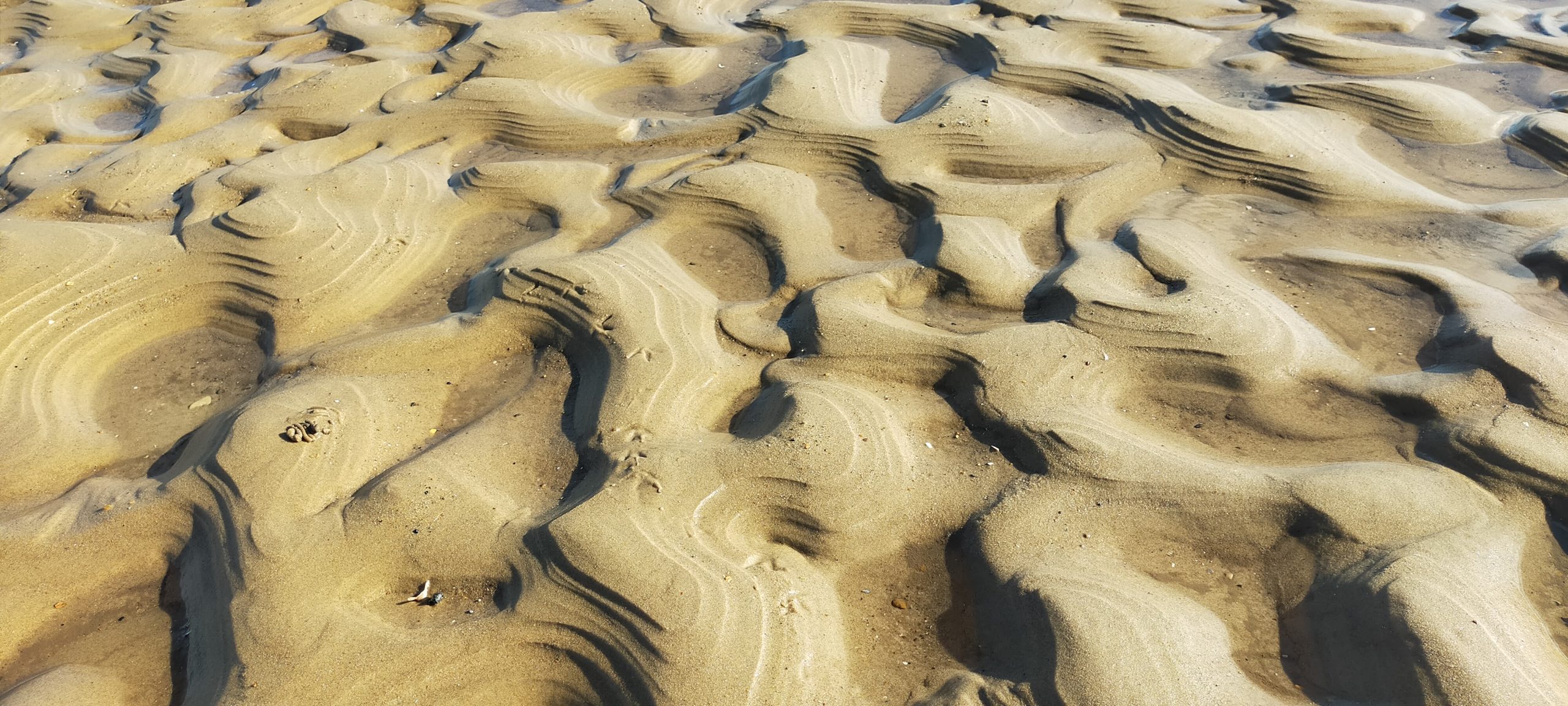
Tide- and wave-influenced marginal marine hydrocarbon reservoirs offer a range of subsurface interpretation and development challenges. This course will use both modern and ancient systems to analyze the architecture, internal characteristics, distribution and reservoir quality of a variety of sand-dominated deposits. Modern deposits of the North Norfolk coastline will be used to explore the range of depositional processes operating and the resultant spatial distribution and internal attributes of potential reservoir units. These will be compared with Lower Cretaceous outcrops preserving a range of tidal-influenced and marine embayment deposits. Focus will be placed on the key development challenges in these marginal marine clastic systems.
Duration and Logistics
A 5-day field course comprising a mix of fieldwork, classroom lectures and practical sessions. Classroom learning and field observations will be supported and reinforced by exercise work. The course will be based in Hunstanton with easy access to the coastal field area. Transport will be by coach.
Level and Audience
Intermediate. The course is intended for geologists and reservoir engineers with a knowledge of petroleum geoscience who are working on marginal marine reservoir systems, particularly those preserving evidence of tidal influence.
Exertion Level
This field course requires an EASY exertion level. The first field day is in a quarry at Leighton Buzzard and involves a walk of about 2km (1.25 miles) to the main quarry face. The remaining field locations on the Norfolk coast are accessed by walks of less than 3.5km (2 miles) along flat sandy beaches and tidal channels that may be muddy and slippery in parts.
Objectives
You will learn to:
- Interpret the depositional processes and environments that occur in fluvial-, tide- and wave-influenced clastic coastal depositional systems and relate these to the recognition of their ancient equivalents.
- Relate individual modern environmental systems to the larger regional-scale, including modern and ancient marine embayment and coastal barrier systems.
- Consider the range of geological controls on the reservoir architecture of clastic coastal deposits and relate this understanding to prediction of reservoir sand presence, geometry and rock properties.
- Analyze shallow marine sands in outcrop, with particular focus on internal heterogeneity, including potential permeability barriers and baffles.
- Assess the broader scale outcrop setting, in terms of the basinal depositional framework and use this understanding to inform prediction of reservoir distribution.
- Place clastic coastal depositional systems into their sequence stratigraphic significance, including addressing reservoir occurrence in transgressive and regressive settings.
- Use the modern and ancient examples discussed in the classroom and observed in the field to consider implications for exploration and development, particularly with regards to the subsurface reservoirs of the North Sea.