

Tutor(s)
Mark Bentley: TRACS International Consultancy and Langdale Geoscience.
Overview
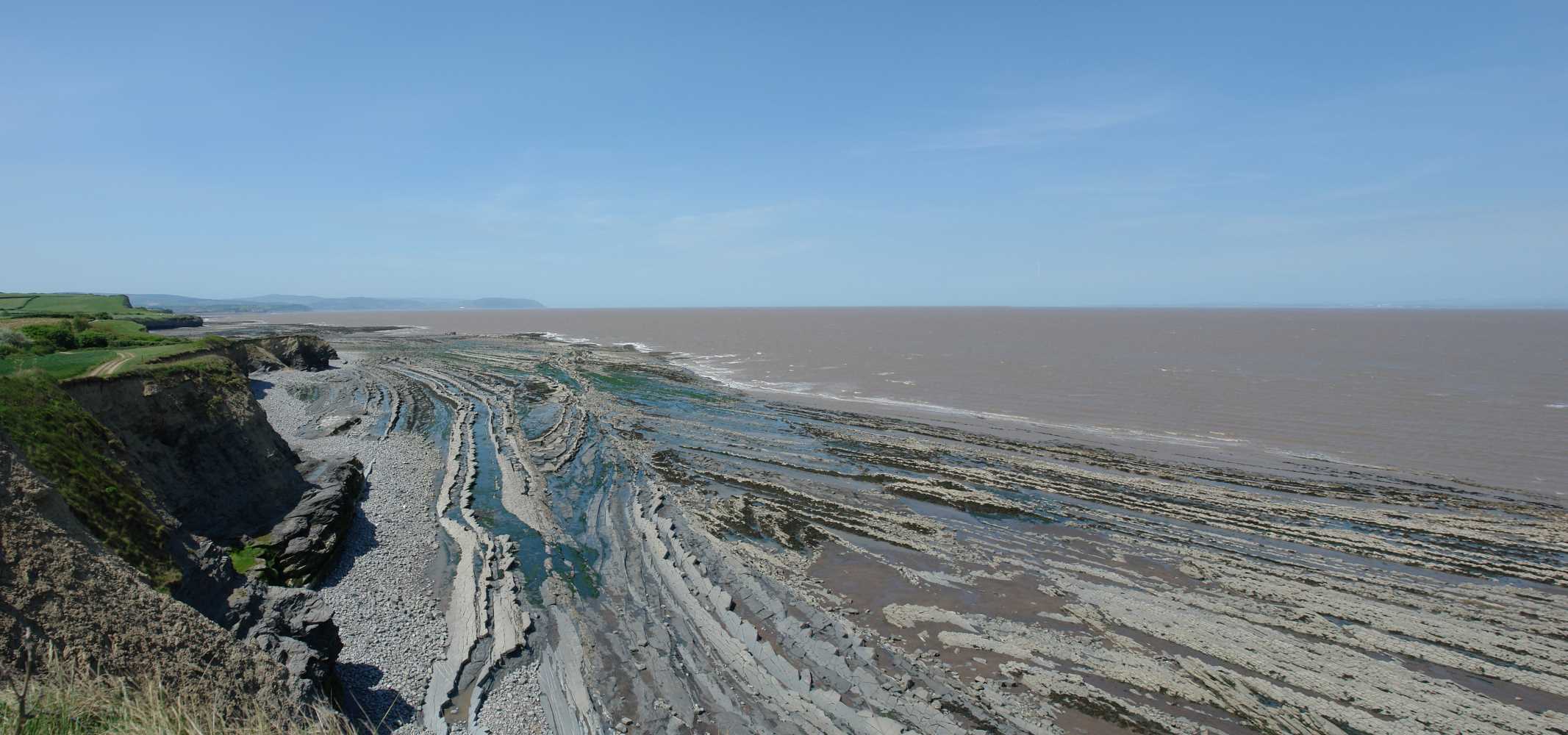
This course will explore superb exposures of fault and joint systems within the Triassic/Lower Jurassic of the East Bristol Channel and Central Somerset Basins, focusing on 3-D seismic scale fault systems, including a variety of fracture geometries, fabrics and networks. Field analysis will be supported by materials on stress, strain and fracture development, as well as an analysis of both seal potential and flow potential. Key challenges regarding predicting fracture volumetrics and the challenges of fault seal will be addressed, including how to bridge the gap between outcrop detail and seismic structures and how to represent fractures in reservoir models, whether they be sealing or conductive to flow.
Duration and Logistics
5 days; a mix of field visits (50%) and classroom lectures with exercises (50%).
Exertion Level
This class requires an EASY exertion level. Somerset is quite comfortable in the spring and early summer, with temperatures of 5–20°C (40–65°F) and occasional rain showers. Field stops require short walks along coastal paths, beaches and wave cut platforms. The longest walk is <4km (2.5 miles). Field stops are all at approximately sea level and some are tide dependent. Transport will be by coach.
Level and Audience
Fundamental. The course is designed for geoscientists, petrophysicists, reservoir engineers and well engineers. Ideally structured for groups working in multi-discipline, asset-based teams with structurally complex reservoirs wishing to understand fracture properties and their impact on fluid flow.
Objectives
You will learn to:
- Characterize fracture systems and geometries in the subsurface.
- Quantify fault properties, including sealing capacity and threshold pressure.
- Quantify open natural fracture properties.
- Address modeling challenges for fracture type and fracture property distribution.
- Represent fractures (both faults and joints) in reservoir simulations.
- Evaluate risk and uncertainty associated with fracture modeling.
- Evaluate the impact of fractures on well planning and seal integrity.