World-class training for the modern energy industry

Exploring Modern Depositional Systems in the Field

Most of our depositional systems field courses focus on the analysis of lithified units but in some cases, it is possible to include modern sediments and explore the range of depositional processes operating and the resultant spatial distribution and internal attributes of potential reservoir units.  Two of our courses offer such an opportunity, with one able to include local outcrops and the second using core to showcase ancient examples.

G070: Modern and Ancient Tide- and Wave-influenced Depositional Systems: Subsurface Uncertainties in Shallow Marine Reservoirs, SE England, UK

Tide- and wave-influenced marginal marine hydrocarbon reservoirs offer a range of subsurface interpretation and development challenges. This course uses both modern and ancient systems to analyze the architecture, internal characteristics, distribution and reservoir quality of a variety of sand-dominated deposits. Modern deposits of the North Norfolk coastline are used to explore the range of depositional processes operating and the resultant spatial distribution and internal attributes of potential reservoir units. These will be compared with Lower Cretaceous outcrops preserving a range of tidal-influenced and marine embayment deposits. Focus is placed on the key development challenges in these marginal marine clastic systems.

G030: Modern and Ancient Carbonate Lakes of the Western U.S.: Lessons for Interpreting the Cretaceous Pre-Salt Reservoirs in the South Atlantic, Utah, Nevada and California

The pre-salt “microbialite” reservoirs of offshore Brazil and West Africa (such as the Barra Velha Formation of the Santos Basin) are highly problematic reservoirs. While there are no modern or ancient analogs for the Barra Velha and its equivalents, the modern rift basin lakes in western U.S. can be used to demonstrate a range of issues relevant to understanding the reservoirs. This course combines field visits with classroom lectures and core examination, and throughout the course comparisons are made with the pre-salt reservoirs from the South Atlantic to provide a forum for discussion to aid understanding of these reservoirs.

Both of these courses can be delivered off-the-shelf or customized to incorporate your data sets, case studies and specific technical requirements.  We can also arrange similar courses covering fluvial and aeolian depositional systems. For more information on what we can offer please visit our Services and Course Library pages.

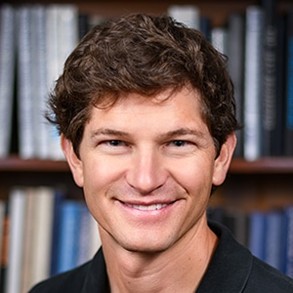
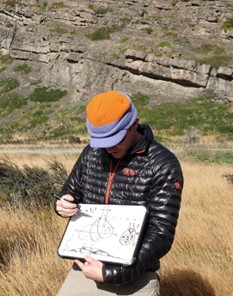
Meet the Expert: 5 Minutes with Zane Jobe

We sat down with Zane Jobe to talk about teaching and fieldwork adventures!

What is your field and specialization?

I am a sedimentary geologist, specializing in deep-marine depositional environments, both modern-seafloor and ancient (outcrop and subsurface) analogs for reservoirs.

Tell us a little about your journey into teaching

I led my first field trip as a graduate student in southern Chile, and really enjoyed the process of helping others discover what I found exciting! I was lucky during my 7 years in industry to revamp Shell’s field training program and lead several field trips every year. 

Tell us about a favourite memory from fieldwork or field training?

I have lots of “Type II fun” stories (i.e., not fun at the time but upon later reflection are rewarding), mostly involving the wind and sideways snow in southern Chile. The one that comes to mind is a grueling hike up a steep slope in the howling wind, but at the top finding a small sheltered spot where we could toss hand-sized rocks up into the wind and watch them disappear over the ridge!   

Tell us what do you find is the key to making your courses successful?

Integrating the subsurface that participants are familiar with (e.g., a particular field) into the field training to translate the learnings from a specific outcrop into something that is actionable. 

Tell us a fun fact about yourself that most people don’t know

I am terrified of clowns!

What is the biggest challenge facing the sector today from your perspective?

The advancement of 3D critical thinking skills, which is best learned in the field (and to a lesser extent, using virtual field trips) – the lack of funding and opportunities for professionals and students to get in the field to learn these skills is worrying.

What would be your advice to junior geoscientists starting their careers today?

Because many folks will be in development and operational/execution roles, I think it is important to advocate for opportunities to integrate larger-scale datasets in an exploration context in order to hone those 3D and 4D spatial-reasoning skills. Oh, and learn QGIS and python! 

Do you have a geology joke?

Ha, no clean ones, but I am famous for telling field partners “let’s just go over there up that ridge, it’ll only take ten minutes”

Meet the Expert: 5 Minutes with Rene Jonk

We sat down with Rene Jonk to talk all things geoscience training!

What is your field and specialization? 

I would say I cover a range of geoscience (stratigraphy, petroleum systems, structural geology) disciplines broadly and like working with all data types (outcrop, core, logs and seismic), so it’s hard to claim a specific specialization!

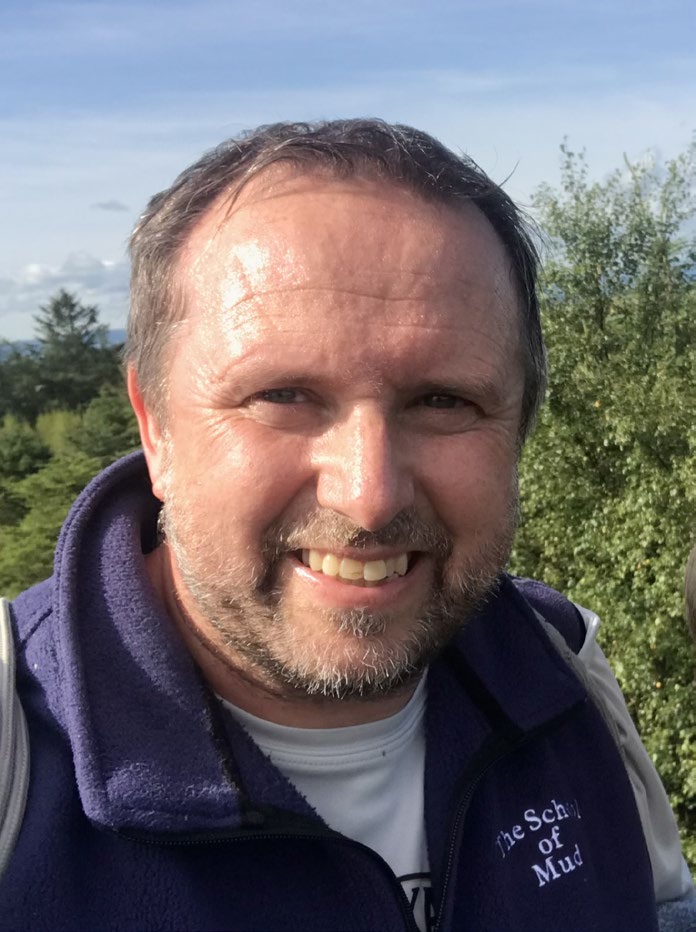
I spend a significant amount of time looking and thinking about the mud side of any geology story, as that is critical to understanding most subsurface problems holistically.  So perhaps I am known a bit as a “mud guy” to some in the community.

Tell us a bit about your journey into teaching

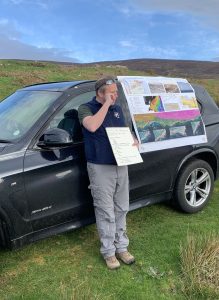
My dad was a geography teacher and from an early age I was fascinated watching him (and other teachers I interacted with at school) deliver taught content in different styles and manners in the classroom and also outdoors. I realized visual props (maps, sections, drawings) were a powerful teaching aid, as was showing/learning by doing.

I always was excited to try my hand at “teaching” at various stages of my career, from tutoring one-on-one for high-school math/physics, through being a lab assistant for undergraduate geology curriculum to designing and delivering classroom and field-based training while at ExxonMobil and Apache.

I was fortunate to come across great teachers over my career and learned many teaching styles from them. In the end though, everyone has their own delivery style, and I continue to improve mine, with a large focus on learning-by-doing and making a class as interactive as possible.

Tell us about a favourite memory from fieldwork or field training?

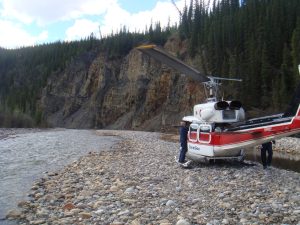
Wow! There are so many! Difficult to high-grade just one of them! A great experience I had was doing remote fieldwork in the Mackenzie Mountains of Canada; being dropped by helicopter for two weeks away from “civilization”. As you can imagine, the logistical and safety aspects of such an expedition take on quite a bit of time and effort. We planned for all sorts of possible calamities, including dealing with injury while remote, adverse weather, equipment malfunction, bear encounters etc. But in the end, one of the biggest safety issue we had was the destruction of our expensive down sleeping bags by small rodents (shrews or voles) who presumably used it to make their burrows more comfortable! It just goes to show that there are always unplanned components in field-based activities to flexibly deal with on-the-spot!

Tell us what do you find is the key to making your courses successful?

Making a training course interactive, lectures that include “showing-by-doing” and having plenty of exercise materials that allow participants to practice in a “safe” (no wrong answers!) environment is important. Additionally, I will always customize delivery based on the interactions and questions students ask, there are always more lecture materials, exercises and stories that can be pulled into a delivery!

Tell us a fun fact about yourself that most people don’t know

I love music and musical instruments. I play the trumpet, guitar and harmonica (not all at the same time!). I haven’t had as much time to devote to this since having kids, but perhaps that will come back into the fold again as the kids get older. I have noticed many geologists have a passion for music and instruments as well and it is always a good conversation starter or even better, an opportunity for a bit of a jam session.

What is the biggest challenge facing the sector today from your perspective?  

There is no denying the general field of geoscience is facing the toughest outlook at least over the duration of my career. Many educational programs are closing all over the world and there have been a lot of job redundancies, particularly in the oil and gas industry, over the last 10 years.

I think a big challenge we have is making the case for the value of geoscience in surface and subsurface problems the world is facing and will continue to face in the future. We seem rather inept as a community to articulate the value of the discipline to company leaders, politicians, other related technical disciplines or the general public for that matter.

I also worry about the (mis)use of AI workflows in “by-passing” critical subsurface evaluations of noisy and ambiguous data. Or even considering the right question and analytical workflow to follow to tackle a problem or make a prediction. In the end, subsurface evaluations are all about making predictions, and I feel the ability that geoscientists have in that realm are being lost and forgotten.

What would be your advice to junior geoscientists starting their careers today?

I do not tend to provide much in the way of “advice”, everyone has their own preferences and tendencies (“you do you”) and it is not for me to suggest I know what someone should or shouldn’t do. But if I had to give one piece of advice it is to maintain your professional network from being a student onwards. Hopefully that is relatively easy, as you study something you love with people you share that passion with! Find a professional society that shares your interests and passions and become an active member and volunteer to help out with events.

Do you have a geology joke?

I had the privilege of working and delivering training with some witty geoscientists, so there are many jokes and one-liners!

One of my favourite one-liners is “clinothems are like dinosaurs, thin on one end, thick in the middle and thin at the other end”. A great way to visualize! I heard that one from one of my mentors, Kevin Bohacs. Not sure if it’s a Kevin-original or he heard it from one of his mentors back in the day!

Spotlight On CCS

In a Nutshell

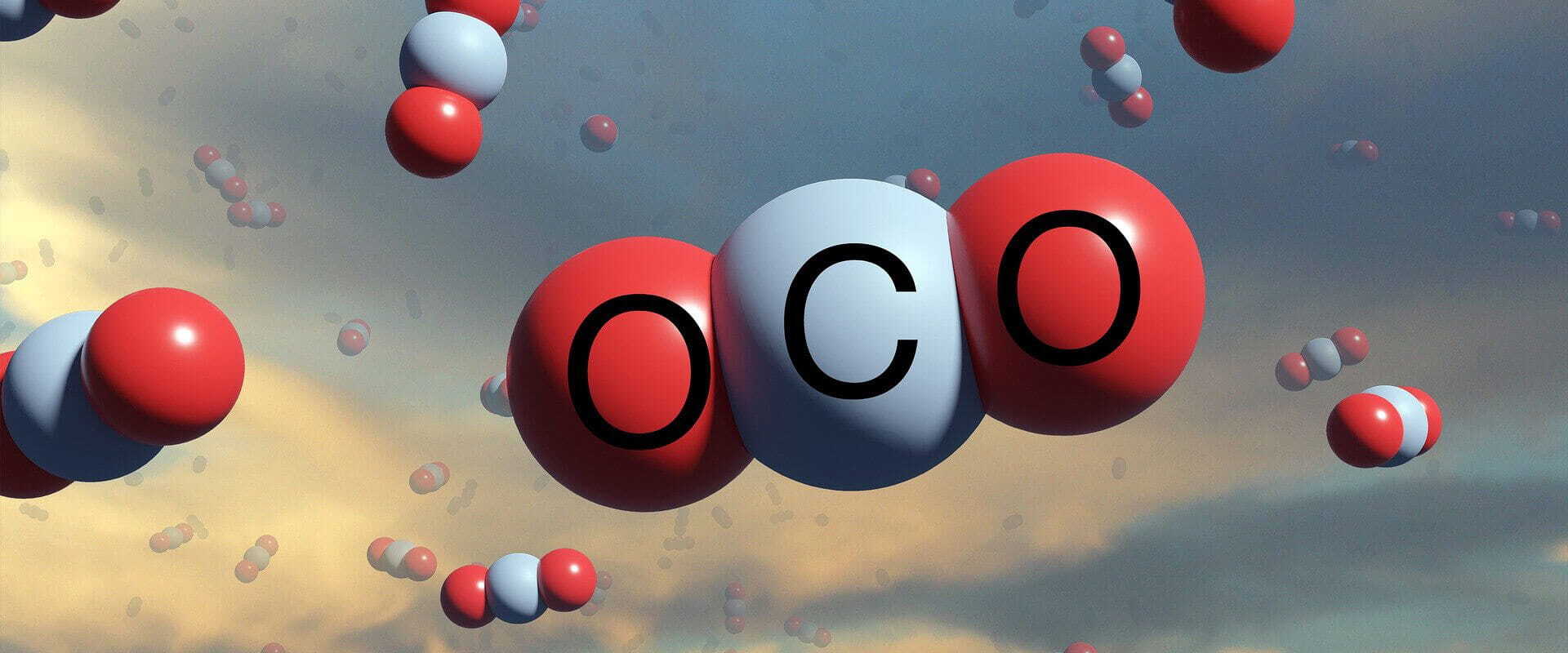
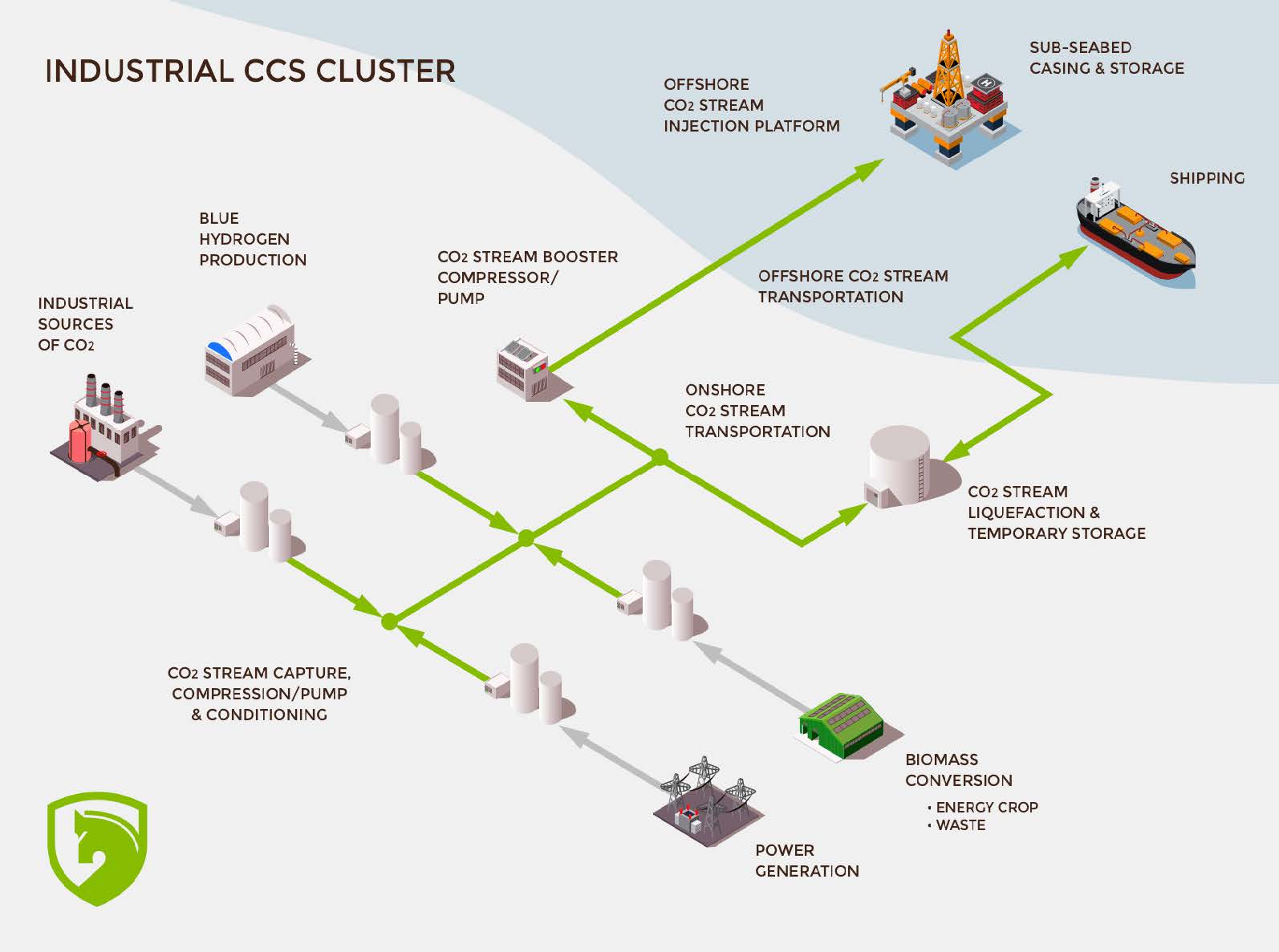
Carbon capture, utilization and storage (CCUS) is a collection of technologies that enable the mitigation of carbon dioxide (CO2) emissions from large point sources, such as power plants, refineries and other industrial facilities, or the removal of existing CO2 from the atmosphere. The captured CO2 can then be used, transported, or stored.


Behind the Science

The mobility and behaviour of CO2 in the subsurface has led to the identification of new carbon storage plays that are very different to those in the oil and gas world. A migration loss model leads to composite trapping through multiple mechanisms including: pore-scale capillary forces, dissolution trapping, cap rock rugosity and storage complex tortuosity. Modelling shows that such a saline aquifer play is extremely robust and that even large volumes have very low risk of migration out of the storage site. Even very minor heterogeneities such as small variations in grainsize will significantly divert CO2 migration – this can be used to advantage in storage sites. Legacy well penetrations are one of the principal leakage risks and will require much work by well engineers to identify and remediate. CCS projects across the world are rapidly developing beyond concept stage and there are optimistic discussions of projects including Endurance and Northern Lights in the UK and Norwegian sectors of the North Sea and Morecambe Net Zero in the Irish Sea.


In the News

In October 2024, the British government pledged nearly £22bn for projects to capture and store carbon emissions from energy, industry and hydrogen production. Sir Keir Starmer, who visited the north-west of England with Chancellor Rachel Reeves and Energy Secretary Ed Miliband to confirm the projects, said the move would ‘reignite our industrial heartlands’ and ‘kickstart growth’. Read more here

Meanwhile, in the USA, on 30 December, 2024, the U.S. Environmental Protection Agency (U.S. EPA) issued four Class VI permits for carbon dioxide (CO2) injection wells in California. These permits are the first such permits approved for California and the first for the EPA’s Pacific Southwest Region. Read more here

Find out more

GeoLogica are running a number of CCUS courses in 2025.

Reservoir Characterisation and Subsurface Uncertainties in Carbon Stores is a brand-new field trip with CCS expert and renowned tutor Richard Worden. Based in northwest Cheshire, the course will give participants the opportunity to see some of the rocks at outcrop that are planned UK CO2 storage sites.

Seals, Containment and Risk for CCS and Hydrogen Storage is a virtual class that examines the nature and properties of seals as they relate to containment for permanent storage of CO2 and cyclical storage of hydrogen and/or compressed air. Taught be Richard Swarbrick, it is a 3-day course comprising a mix of lectures, case studies and exercises.

Geochemical Effects of CO2 on Reservoir, Seals and Engineered Environments During CCS is a 5-day virtual course with Richard Worden. The reactions of CO2 with different reservoir rocks and top-seals, and their constituent minerals, and the cement and metal work used in the construction of wells are central to this course. Exercises will be used throughout the course; these will include calculations, largely based on spreadsheets, and quizzes will be used to test knowledge development.

‘Because it’s there’ – A geological tale to celebrate Mallory, Irvine and Odell

By Lance Morrissey

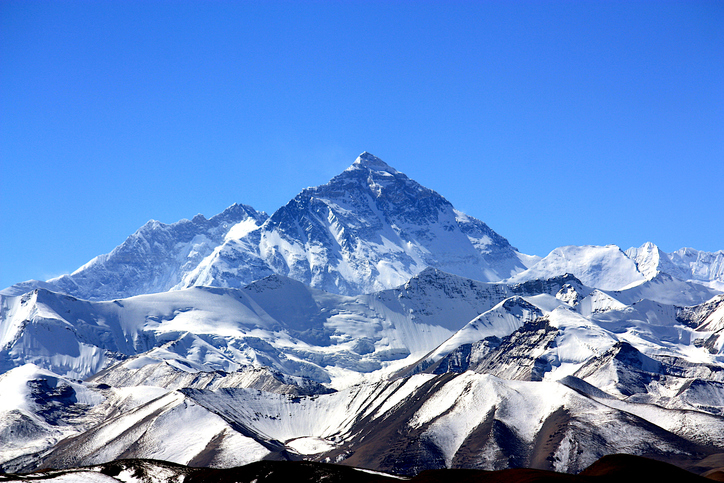
It’s a cold a wintry day in Moray, with a brisk, northwest wind blowing snow showers inland from across the Moray Firth. As a keen outdoorsman, periodic visitor to the mountains and geologist, my mind wanders back to the heroic age of Himalayan exploration and discovery, post First World War, which saw British men battling against Everest. Their aspirations to physically reach the summit were coupled with an intrigue for scientific discovery, including geological curiosity. For those who follow mountaineering, this year marks the 100th anniversary of the 1924 British Mount Everest Expedition that saw George Mallory and Andrew ‘Sandy’ Irvine losing their lives on their famous summit attempt.  

Mallory and Irvine’s final climb is, of course, steeped in mystery – did the duo reach the summit or not? If they did, it was nearly 30 years before the successful ascent and descent by Edmund Hillary and Tenzing Norgay in 1953. Speculation as to whether the two boys from Birkenhead (as Mick Conefrey refers to them in his new book Fallen) summited is abounding, with a multitude of books, articles, YouTube videos and publications all picking apart the evidence and ultimately drawing different conclusions. I’m not a betting man, but if I were, I’d say that Mallory’s determination and proven climbing ability, coupled with Sandy’s youth and strength, was enough to propel them to the summit, and that the pair sadly succumbed to a fall when returning to their departure camp, probably in darkness and in a state of exhaustion. Mallory had always promised to leave a photograph of his beloved wife Ruth at the summit – perhaps it is still there frozen in time… 

Mallory’s body was found in 1999 by Conrad Anker, and this year we saw the partial remains of Irvine discovered by a National Geographic team. The pictures from the 1924 expedition reveal men of strength and durability, recovering from the horrors of the First World War, with a passion for adventure, albeit in some of the harshest conditions that exist on Earth. I must admit that the whole summit mystery has become a bit of an obsession of mine and a trek to see Everest with my own eyes is something I’d like to do, if my lungs allow! However, the climbing secrets and ghosts that Everest holds cannot, for a geologist, overshadow the geological wonders that the mountain preserves, which is something that links us back to the 1924 expedition itself.   

Noel Odell was the 1924 expedition oxygen officer in addition to being a geologist and, not only was he the last person to photograph Mallory and Irvine alive (as they were checking their oxygen apparatus at Camp 4), but he was also the last person to see them during their final ascent (as they moved along or near the northeast ridge towards the summit). Noel himself was an accomplished mountaineer and, during that expedition, climbed twice to over 8000m without oxygen. Away from mountaineering and time spent in the army during both World Wars, he worked as a geologist with spells in the mining and petroleum industry, as well as in academia. Odell was one of the first to study the geological structure of Everest, noting the presence of sedimentary rocks towards it summit and metamorphic strata at its base.   

From a geological perspective, the mighty Everest sprang from the collision of the Indian and Eurasian plates, with the resultant Himalayan range beginning to rise about 50 MYA. The mountain is made up of a variety of rock types, including metamorphic rocks of the Rongbuk Formation at its base, overlain by sedimentary and metamorphic rocks of the North Col Formation, including the famous yellow band of marble, and finally the summit pyramid comprises dark grey, fossil-rich Ordovician limestones – the Qomalanga Limestone. Odell published a few papers on the geology of Everest, perhaps his best known is from 1925 and is entitled ‘Observations on the rocks and glaciers of Mount Everest’. For those interested, there are also some wonderful clips online of an interview with Noel where he speaks about his Everest experiences – a classic English gent! 

Back in Moray, the icy north wind is a shock as I step outside to the log store for more wood for the stove. I can only imagine what grit, determination and strength those Everest pioneers possessed. Not only had they fought for king and country in scenes unimaginable in the modern world, but they then turned to the Himalayas to endure further challenges in the brutal cold and punishment of high-altitude mountaineering. That great quote from Mallory – ‘Because it’s there’, when asked why he wanted to climb Everest by a reporter in America, resonates with the spirit of the day and the essence of early mountaineering, telling a story of a mountain and men, of geology and time. 


Learning Lessons from Carbon Capture and Storage Projects to Date with PACE

By Simon Baker, Managing Director, GeoLogica

I was fortunate to attend a days’ training seminar on CCS jointly run by PACE CCS and GeoLogica in PACE’s offices in London. PACE have enormous experience in the CCS field, having worked on many of the world’s significant projects, designing specifications and software. But the CCS industry is in its infancy – as GeoLogica tutor and Pace’s Managing Director Matt Healey says, “I have 5 years’ experience in CCS which would make me a junior engineer in many other industries.”

The day’s discussion focussed on the issues surrounding the capture and transport of carbon dioxide before it is injected into the subsurface. Matt emphasized the point that capture is perhaps the limiting factor, due to the physical size of the current amine-based capture technology. This was an early eye-opener for me, as my geoscience-bias had caused me to assume the key challenges are understanding the subsurface…

In brief, my key takeaways from the day were:

  • Contrary to some narratives, CCS is not a way for oil and gas companies to continue business as usual. Rather, it is a critical element on the pathway to net zero.
  • CCS plus renewables plus hydrogen will facilitate a cheaper and more rapid transition away from fossil fuels.
  • Capture technology is currently the principal hurdle, in terms of cost and engineering challenges.
  • Not all CO2 is created equally. Different industries produce CO2 with different impurities, which in turn changes the specifications for different projects.
  • Oil and gas companies understand the subsurface and can deliver large projects. However, CCS projects are distinct and O&G companies need to change their project delivery methodology.
  • Governments have a critical role in promoting the development of CCS/renewables/hydrogen hubs, where the new energy ecosystem can develop and thrive.

Challenges remain in the engineering of capture and of transport facilities, but they are surmountable, and technology is advancing. There is an enormous market and opportunities out there that are worth trillions of dollars. Time is short – CCS is essential, not optional.

I’d like to extend GeoLogica’s thanks to Pace CCS for sharing their knowledge, time and facilities for the course. For more information on the course, visit the course page here.


Surfing the Reservoir Model Design Wave: San Diego, California, August 2024

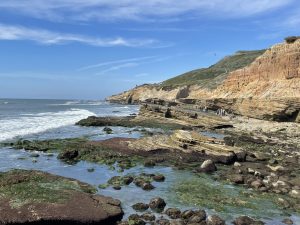
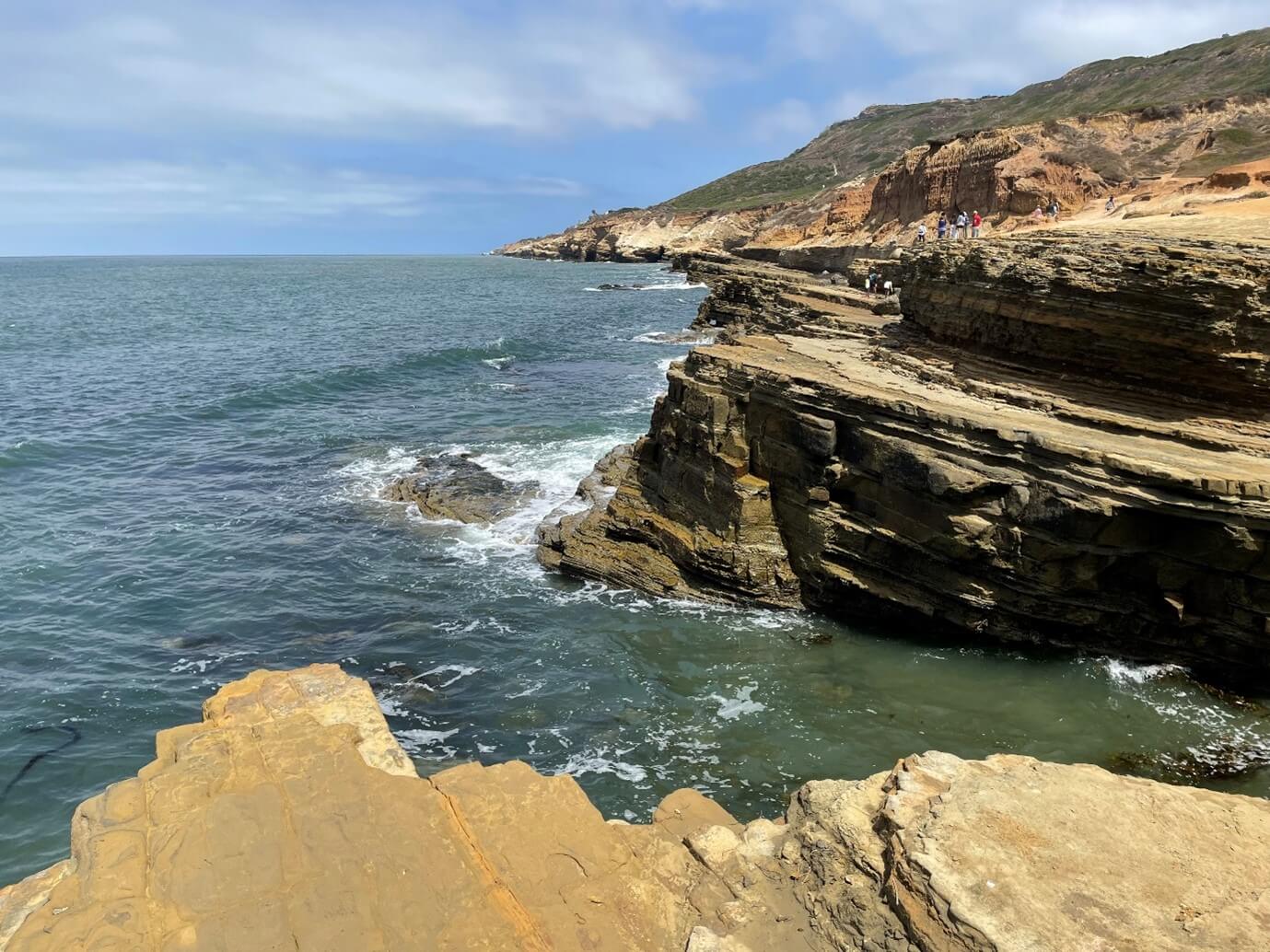
Field work remains at the heart of GeoLogica training, typified by a recent course to the coastal outcrops north of San Diego, California, with one of our client companies. The outcrops were explored with direct application to Guyana deepwater reservoirs, with a focus on reservoir modelling.  

The central theme of the course was reservoir model design, on the premise that it is design rather than software knowledge that typically distinguishes ‘good models’ from ‘bad models’.  The coastal field localities were used as an analogue reference and were viewed from source to sink, with a focus on specific deepwater architectural elements, including canyons, slope channels, channel margins and lobes.  

Considerable time is often dedicated to reservoir model and simulation exercises but the results often disappoint: the time taken to build models is often too long, the models are too detailed and cumbersome, and the final model often not fit-for-purpose. The field course explored the reasons why and the remedies to fix these problems. Lecture sessions concentrated on model purpose, fluid-sensitive selection of reservoir elements, use and abuse of geostatistics, handling of scale and multi-scale, and uncertainty – the joy of the ensemble.  

Many thanks to Mark Bentley for his energy, enthusiasm and time. No software running on this course, just sunshine, stunning coastal deepwater outcrops, opinions and space for discussion.  In Mark’s concluding words, ‘Data ≠ Model ≠ Truth, and good design just needs clear vision.’

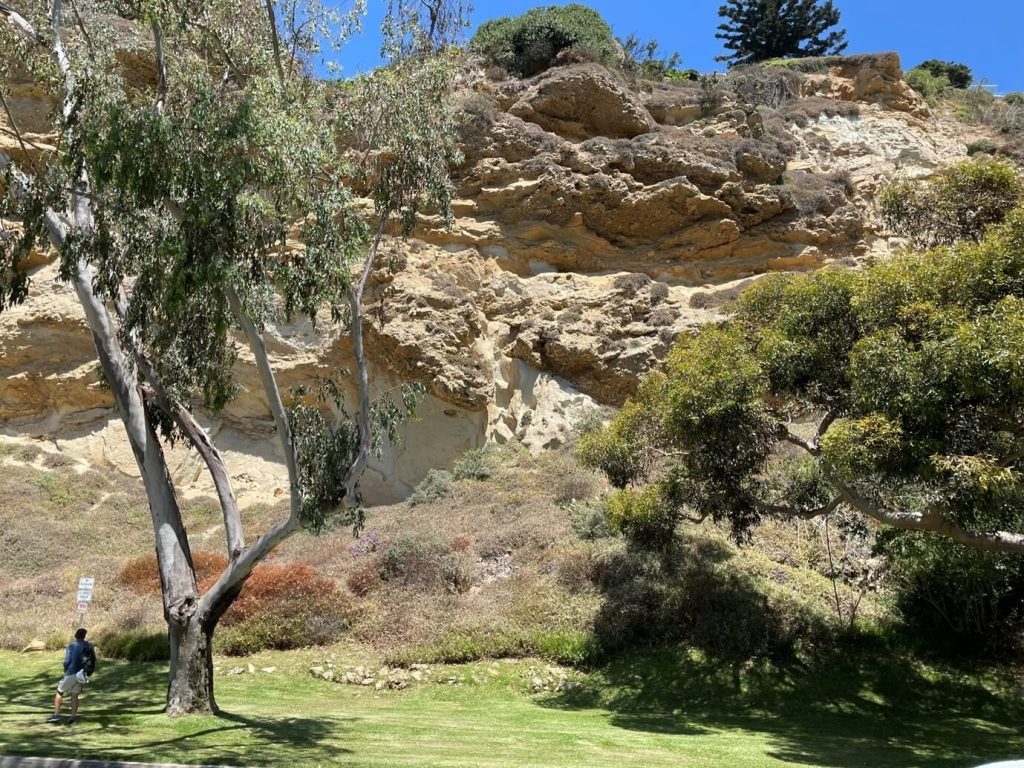
Slope-channel sandstones at Dana Point Harbor


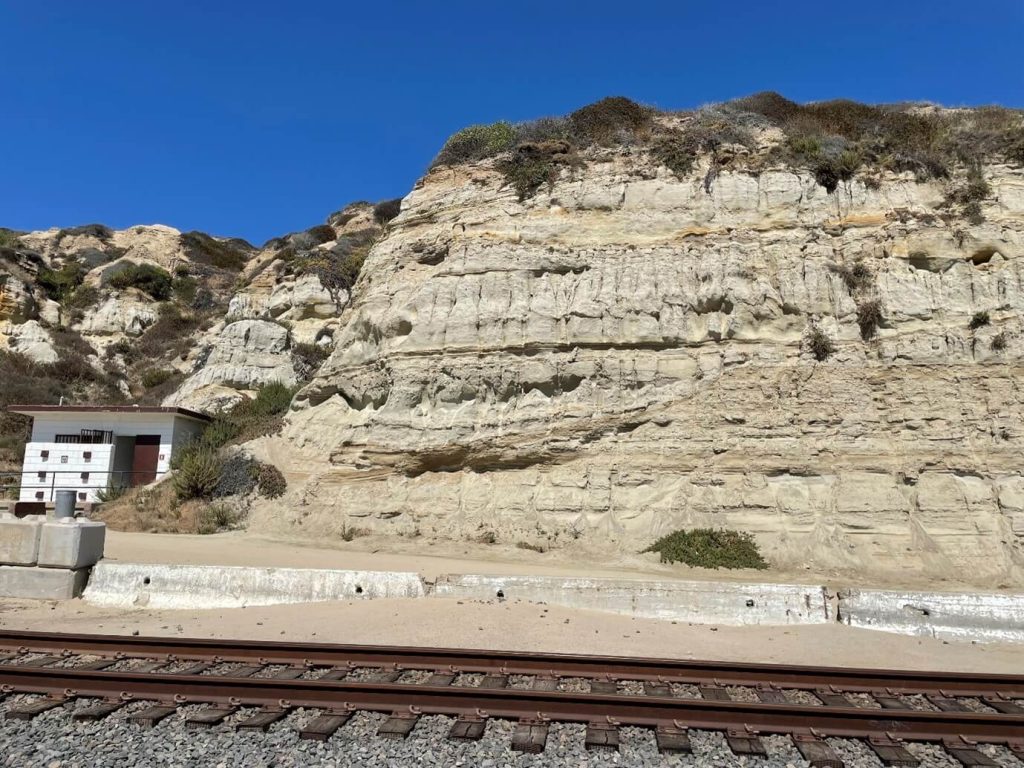
Channel margin at San Clemente


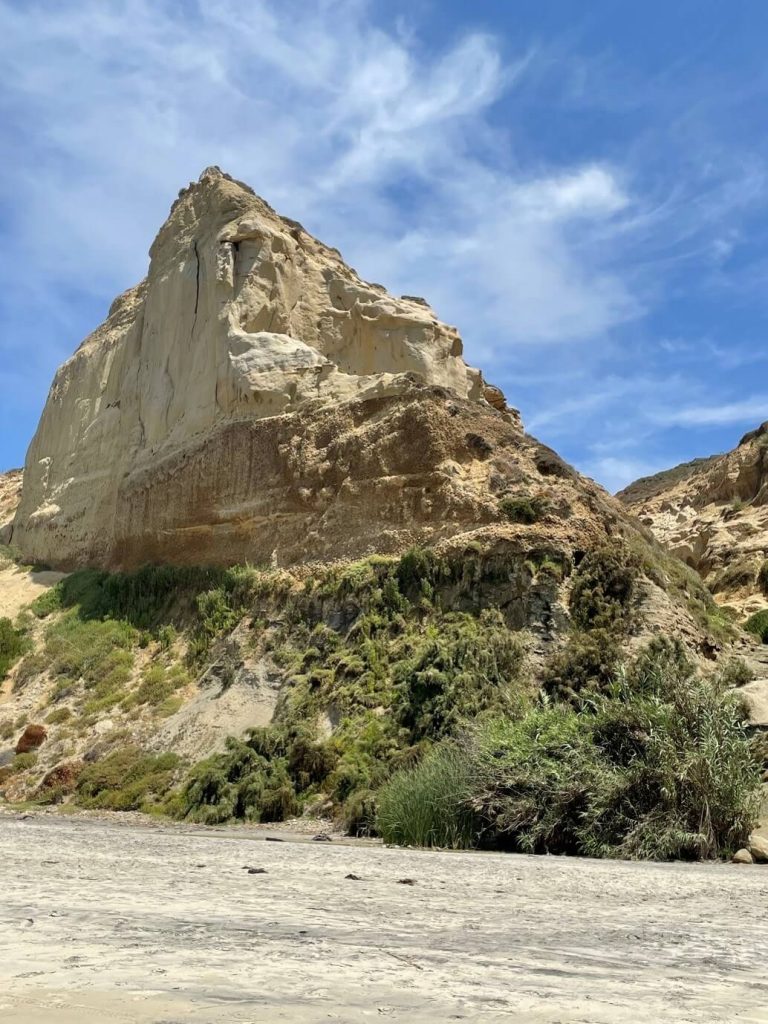
Submarine canyon conglomerates and sandstones at Black’s Beach


Meet the Expert: 5 Minutes with Katriona Edlmann

We sat down with Katriona Edlmann ahead of her upcoming GeoLogica course: The Hydrogen Landscape – Production, Policy and Regulgation


What’s your field and specialisation?

My research has focused on the sustainable utilisation of the subsurface for low carbon energy applications. So, this will include things like carbon capture and storage, energy storage, particularly hydrogen storage, unconventional hydrocarbons and geothermal operations. And then, for my own work, I design and build experimental equipment that recreates the subsurface conditions, effectively creating a window into the subsurface from the laboratory. It means we can look at what changes are going to happen in the subsurface rocks and fluids during any of these low-carbon energy applications. For example, I can look at what geochemical changes might be induced when hydrogen is injected into a porous depleted gas field. We can use these experiments to unpick the underlying controls, such as how pressure might influence the rate of reaction. These experiments will really help us select the best storage sites and manage them most effectively to avoid negative impacts on storage integrity during the storage operations.

Tell us a bit about your teaching journey.

I started as a PhD tutor while still doing my own PhD, and I’ve loved that part of my academic role ever since. I really enjoy teaching classes, but I prefer it when we can be interactive (with the students). One of the aspects of teaching that I really enjoy, therefore, is working with students on their dissertation projects, where I get to see them grow in confidence and watch them embark on their exciting careers after graduation.

I’m a fellow of the Higher Education Authority and I did a postgraduate certificate in academic practice to really develop my teaching and reflect on and improve my practice. So, I’m constantly learning from the students.

I don’t know what else to say about this one… I just really enjoy it!

What is your favourite memory from fieldwork or field training?

That’s an easy one! When I was doing my master’s degree with Heriot-Watt [University], we did a field trip to the Book Cliffs in Utah, which is HEAVEN for a geologist. Just being there was phenomenal – the exposure is extraordinary – but during the day we happened to come across a fresh rockfall that had revealed some dinosaur footprints, and we were seeing those for the first time since they had been imprinted in the mud all those millions of years ago. And that was, from an emotional point of view, just spectacular.

And, at the end of the day, while drinking beer at a microbrewery (which are so good in Utah!), we were treated to a very impressive, particularly bright fly-past from the Hale Bopp comet. That was fantastic.

Being someone who spends most of my time in the lab, I also want to add here the fact that not all geologists regularly work out in the field and not all geologists actually like being out in the field. Some of my absolute favourite moments have been in the lab! When you’ve drawn something on a piece of paper, then designed it, built it, it works exactly as it should and you gain new insights or perhaps see something that you weren’t expecting to see – THAT to me is as fantastic, as rewarding, as any fieldwork.

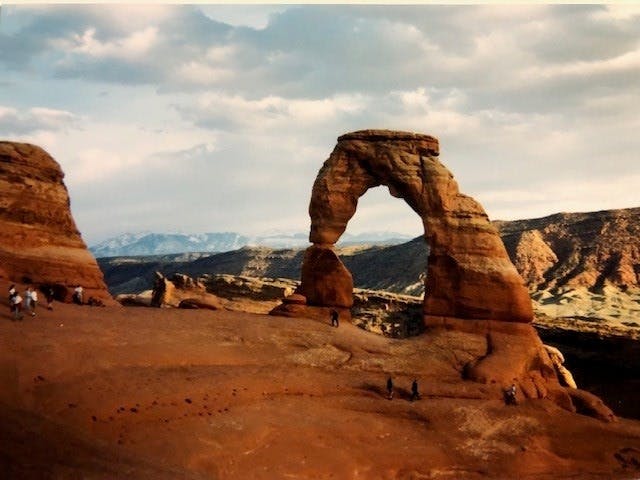
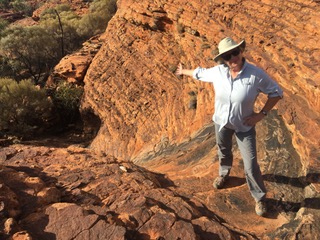
A photo from one of Katriona's favourite outcrop visits, to Arches National Park, Utah

(Image: A photo from one of Katriona’s favourite outcrop visits, to Arches National Park, Utah)


Tell us about your upcoming course with GeoLogica – what is it about and who is it for?

As we pivot to a world away from fossil fuels and move to more sustainable energy solutions, which we absolutely need to do, hydrogen is increasingly becoming recognised as a very important part of this future low-carbon energy system. It provides essential energy storage to support increased capacity for renewable energy. We’re looking to switch the energy balance from the current 70–80% fossil fuels and 20–30% renewable electricity to the opposite of that: 70–80% renewable, 20–30% another energy vector, which is most likely to be hydrogen.

My course will really highlight the role that hydrogen can play in supporting our journey to net zero – how it can support increased renewables and how it can decarbonise or tackle some of those harder-to-electrify sectors, such as industrial heat or heavy-duty transport. My hydrogen masterclass dives into the complexities and opportunities for hydrogen, looking at production, geological storage and the intricacies of the operational engineering and its integration into the energy system. It offers theoretical knowledge and practical insights.

In terms of who the course is aimed at, I would say it’s suitable for geologists, geophysicists, engineers, regulators and policymakers – anyone, really, with an interest in the emerging hydrogen economy.

We cover everything from the basics through to the more complex. The aim is for you to have a wider appreciation of the role of geoscience within the hydrogen economy and the contribution that hydrogen can make to the energy transition.

Tell us a fun fact about yourself that most people don’t know

I really like restoring old cars. So, I spend an awful lot of my time looking after my 1984 Citroen 2CVthat I am managing to keep going on the road. She has recently passed her MOT with no defects so I’m feeling pretty chuffed about that. She’s getting a bit rusty now but we’ll get there – my job for the winter!

What is the biggest challenge facing the sector today from your perspective?

From where I sit, there has certainly been a shift in awareness that we need to cut our emissions from energy. However, translating that into action is really challenging. For me, I think the most important thing we need to do is bring the public with us –change public perception– highlighting the community benefits that can come from hydrogen storage and taking away that element of fear or uncertainty.

null

What would be your advice to geoscientists who are just starting their careers?

So, I’m the careers coordinator for geosciences [at the University of Edinburgh] and I ran a careers event yesterday because a lot of the big environmental consultancies start their graduate recruitment in November–December for the following September. There are plenty of opportunities out there but it’s really just a case of understanding how you can connect with people. I suppose, therefore, the main piece of advice I give to anybody starting their career is to begin to build that professional network; join LinkedIn, join organisations, attend conferences (especially the free industry ones) and connect with your peers and with professionals who are working in that field. Don’t be frightened to reach out to someone – what’s the worst that’s going to happen? They might ignore your request but, equally, they may get back in touch with you, and once you’ve got that, it’ll open the door to job opportunities or possibilities for collaboration.

Secondly, this field is changing particularly quickly. Three years ago, nobody would have even heard of you if you’d said you worked in hydrogen, whereas now, they can’t get enough people working in hydrogen. So, from a geoscience point of view, keep up-to-date with current research and attend workshops, conferences and webinars. Maintaining that up-to-date and broad knowledge base and network will help.

Lastly, just try always to remember why you started [geoscience] in the first place. Keep passionate about the subject you do and remain adaptable in that ever-changing job market.

Give us your best/worst geology joke?

This is so bad.

Q: Did you hear about the geologist who was reading a book on helium?

No…

A: She couldn’t put it down.

That’s terrible

You asked for it!

The Hydrogen Landscape – Production, Policy and Regulgation by Katriona Edlmann will be running from 21 – 22 October 2024.

Meet the Expert: 5 minutes with Kate Giles

We sat down for a chat with Kate Giles ahead of her upcoming field course: Women in Energy Field Experience: The Role of Salt in Hydrocarbon Exploitation, Energy Storage and Carbon-Reduction Mechanisms


What is your field and specialization?

I’m a geoscientist specializing in sedimentology and stratigraphy and how they relate to tectonics. My background is primarily in carbonates, but I’ve worked siliciclastic systems as well. As for tectonics, I’ve worked a lot in both foreland and rift basins, but for the past 20 years I’ve been fascinated by all things related to salt tectonics.


Tell us a bit about your journey into teaching.

My training to be a teacher has basically been learning from watching others, starting as an undergrad at UW-Madison. I had some terrific, enthusiastic professors and grad students that were really inspiring and opened up a whole new world to me. This continued when I moved on to Iowa for my master’s and then Arizona for my PhD – just really terrific mentors and people. I took note of how they approached teaching and how they related their science to me, seeing what worked and what didn’t. Interestingly, in almost all of those cases, the teaching was field-based – I’ve found that physically seeing the relationships in the outcrop really brings it all together for me. So that’s how I like to approach teaching – by using field examples.

I started my career in the carbonate group at Exxon Production Research in Houston and, although I was in a research position, a significant part of my responsibility was teaching. The audience wasn’t just geologists, I was teaching the basic principles of carbonates and stratigraphy to engineers too. Their minds work a little differently, so it was really fun adapting my take on the science to a completely different audience.

After I left Exxon, I entered the academic realm, first at New Mexico State for 18 years and then UTEP for the past 12 years. I’ve taught at all levels – everything from highly focused technical work with PhD students, to trying to capture the interest of undergrad students who have never even thought about looking at a rock. So, it’s been a broad journey and I’ve really enjoyed relaying the science to everybody.

Tell us about a favorite memory from fieldwork or field training?

I have so many, but I’m going to tell you about one I had just over a week ago, and it’s probably the most incredible Zen moment of my whole life.

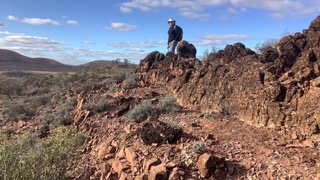
For more than 20 years, I’ve been going out to the Flinders Ranges of South Australia, doing field work on salt diapirs. A ridge of dolomite at a couple diapirs called the Rim Dolomite has been a thorn in my side from the beginning. We’ve interpreted it at least 500 different ways – we joke we’re working on hypothesis 627 now. There are a couple of issues with this bugger. Firstly, it has the whole ‘dolomite problem’ going on, but also the contacts above and below are always covered by talus from the ridge, so it’s hard to see what’s going on.

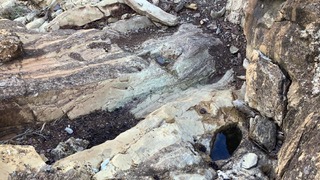
Last week we were finishing up in the field, it’s the last day and it had been raining for a couple of days and the ridge was completely covered in fog. We poked along on the talus slope looking for the outcrop one last time. At about 11:30am, the rain breaks, the sun starts to come out, and we hike to the ridge crest where we’re greeted with the most amazing view – sun rays in all directions bursting through the wall of clouds, down onto the rim dolomite ridge – casting it in the most amazing golden light. The birds start to come out and chirp; it’s sublime. Just then, I look down over the cliff and see there’s a drainage cutting across the rim dolomite and all of that talus has been stripped off. There is 100% exposure. For the first time, I can see this perfect inter-bedding of the rim dolomite and outboard mini-basin red siltstone. That little spot shreds our previous ideas on the area. To top it off, as we’re high-fiving in a total state of euphoria, the most beautiful iridescent blue-green little bird hops onto the contact and starts taking a bath in a puddle. It was just an incredible moment where everything in the universe came together in this one little spot.


Tell us about your upcoming course with GeoLogica – what is it about and who is it for?

This is a really exciting new course, which I’m delighted to be co-leading with Cindy Yielding. It’s designed to provide an opportunity for women to both learn and network out in nature. We’ve chosen to run it in the Paradox Basin of Utah and Colorado because of the exceptional exposures of salt diapirs and amazing scenery. It’s set up for women geoscientists and engineers at any level: those who want to gain some experience in looking at the fundamentals of salt tectonics, as well as those seeking high-level discussions about the intimate details of the structures. The main idea is to get out in the field to look at geologic relationships and consider how we might take these fundamental concepts and utilize them in a modern energy world.


Tell us a fun fact about yourself that most people don’t know.

I really love architectural design and gardens. I probably spend more time looking at them than actually doing geology! Geology allows me to go around the world and see architecture and gardens from all different cultures. The whole geology thing and field geology totally plays into that. And so, while I’m looking at the rocks, I’m also looking at the communities I’m going through – how they live, how they use the land, how they build their structures to tie into what they need it for. It’s really fun.

What is the biggest challenge facing the sector today from your perspective?

If I think of my sector as geoscience education, the biggest challenge is how universities need to evolve to meet the changing needs of our students and knowing where future geoscience careers are heading. We can’t even imagine all the new career options that will be available for students coming through now and in the future. We’re trying to develop curriculums that will help them be successful in these new career pathways, but we don’t have formal training in place for a lot of the topics they need. We’re scrambling now and I think the biggest challenge is the speed at which we’re trying to adjust. Obviously, the whole technological thing and being able to program and apply AI to the science is a really big deal, and so we’re changing our curriculum to be geared pretty heavily into those fields. I’m really worried, though, that we’re getting too far away from teaching the fundamentals of geoscience. But it’s so important for  our students to come out suitably equipped to move on to these new careers and have the ability to adapt to future shifts – so that is a big challenge right now.

What would be your advice to junior geoscientists starting their careers today?

In short, keep learning. You come out of university with your degree, you start a career, you think you know what you’re going to be doing and you settle in. But you need to keep learning. Keep reading, taking classes, get out in the field and experiment with new stuff. Don’t be afraid of tackling things you think you’re bad at. Go learn about it, get good at it, or at least get to the point where you’re not afraid of it anymore. You want to set yourself up to be able to pivot because things are going to keep on changing. We don’t know for certain where things are going in the future, but we do know for certain, they will go fast. Also, as you’re moving forward, don’t lose sight of the fundamentals. Keep refreshing yourself on the basics and building on them.

Final question, can you give us your favorite geology joke?

I’m really bad at remembering any jokes, good or bad, but I do remember a pun from my structure TA as an undergrad:
‘All my faults are stress related.’

Kate and Cindy’s upcoming course is scheduled to run 30th September-4th October, starting and finishing in Grand Junction, Colorado.

Meet the Expert: 5 minutes with Mark Rowan

We sat down for a chat with Mark Rowan ahead of his upcoming course: Salt Tectonics of the Gulf of Mexico 


What is your field and specialization? 

I am a structural geologist by training, by talent, by passion, by any measure. And although I’ve worked in all types of structural environments, from rift basins to fold and thrust belts to passive margins, the vast majority of my work since about 1992 has been in the area of salt tectonics. And so, whatever the depositional environment, whichever basin I’ve worked, I’ve been looking at salt movement, salt evolution, salt geometry, salt-sediment interaction and all sorts of related issues. 


Tell us a bit about your journey into teaching.
OK, let’s see, I was doing a University degree in biology and, after taking a geology class during my very last semester, I decided to switch to geology, taking classes part time, while being a ski bum for four years. Then I went to grad school where I was supposed to do a PhD on carbonate turbidites but turned it into a Master’s because I saw all these amazing folds and decided I’d rather become a structural geologist! 

I worked in the industry for about four years, then went to get my PhD in structure, which is where I first started doing some teaching as a teaching assistant. After working at a consultancy in Scotland for three years, I went back to university as a research professor and that’s where I started teaching classes on my own for both undergraduate and graduate students. I left there in ‘98, started my own business and I’ve been teaching courses for industry ever since. 

It turned out to be a move for the better because, although I always enjoyed teaching students, I discovered that I much prefer to teach professionals. They’re taking the class because they want to, because they need it, rather because it’s required for the major or their degree, so I’ve always found they tend to be more invested in the class. They have their own experience to bring along with them, they can see the applications right away, and so it’s just generally more rewarding in terms of that feedback loop. 

I still do a ton of research, too, which informs my teaching. And the teaching informs my research and consulting; it all goes together. I hate to use a buzzword, but it is rather synergistic. 

Tell us about a favourite memory from fieldwork or field training?
Well, I can’t think of one specific course or experience, but I can tell you what my favorite part of training is more generally – when something you’ve been struggling with comes together. You might be walking around mapping, having a conversation with a course participant, doing this and that, when suddenly things fall into place – those light bulb moments. Some people like to really sort things out in their head before they say what they think. But I’ve always been one of those people who figures out what I’m thinking by talking it through with people first – that’s part of the value in of in-person courses; it’s being able to have those conversations. Now, that doesn’t just happen in the field – it can be in the classroom, while having conversations with people in the office, or while looking at seismic. It can happen in a variety of ways. But, there’s no question that being out in the field is more fun! 
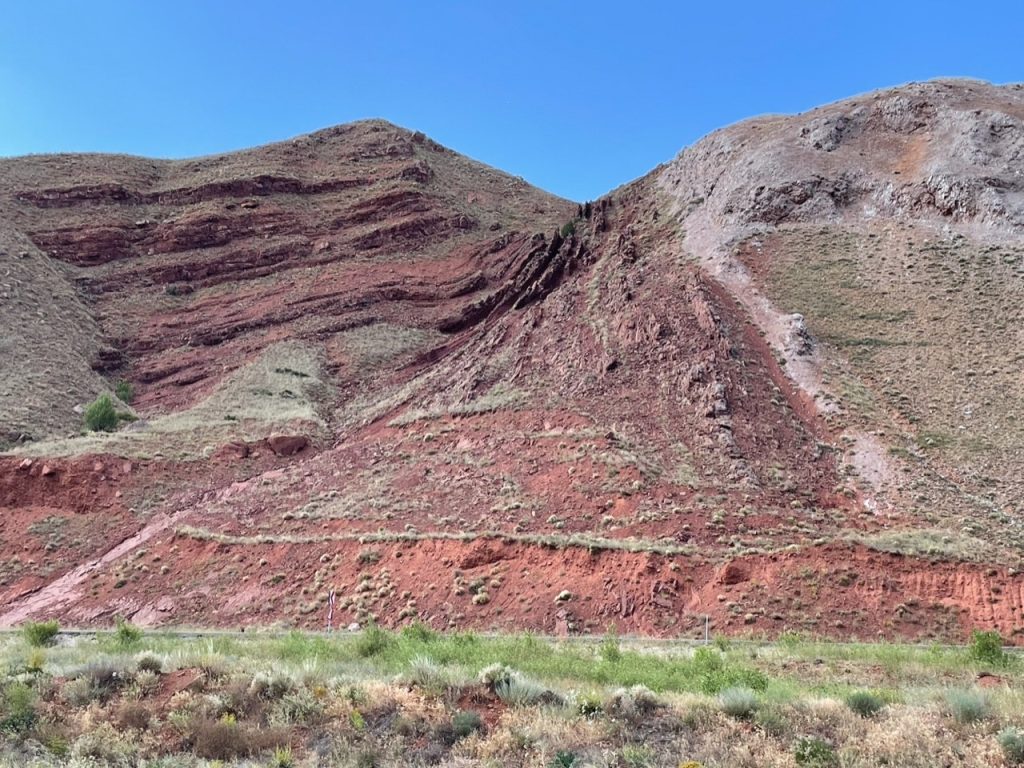
(Above: Contact between a flaring diapir (grey gypsum) and continental redbeds in the Sivas Basin, Turkey)


Tell us about your upcoming course with GeoLogica – what is it about and who is it for? 

It’s about salt tectonics in general – the fundamentals, the styles, the processes, the implications for other aspects of petroleum systems and the salt basins, but with a particular emphasis on the Gulf of Mexico, both northern and southern. So, it really covers everything. The learnings are applicable to working other salt basins, but this course goes into a little more detail on some aspects that are most germane to the Gulf of Mexico. It is lecture based primarily, with time set aside for questions, discussion and, importantly, exercises (about two per day), which gives participants a chance to get their eyes on some real data and assimilate some of the concepts we’ve been working through. 

It’s aimed for anybody working in salt basins, from people who just started working there last month and really know nothing about salt and the Gulf of Mexico, to people who are internal salt experts! On the whole, it’s an intermediate course, but that categorization is only so useful – really, we’ll go from the basics right up to more complex things. So, yeah, it’s for anybody working salt basins. 

Tell us a fun fact about yourself that most people don’t know
Because I tend to give out too much information, most people already know all these things about me! But the one that comes to mind relates back to a conversation I had with my wife, from when we first met. She said to me, ‘So, Mark, what’s your dark side, because everyone has a dark side…’ Yep, that’s my wife! She’s a philosopher. So, at first I said, ‘I don’t really have one.’ But then I realized that I do.  

My dark side, or perhaps just my ‘deep secret’, is that at heart I’m really a climbing, skiing, surfing bum . . . but one whose brain isn’t challenged enough by those things. I thrive on solving problems and, well, ‘doing the geology’. In reality, I don’t do nearly enough of those other things that I love because I’m a workaholic, but yeah that’s me at heart. 

What is the biggest challenge facing the sector today from your perspective? 

I’d say the biggest thing is the transition to clean energy – it’s thrown everything into a bit of turmoil, certainly in the world of salt tectonics. Standard exploration for traditional plays in salt basins has definitely slowed down, with both major and minor oil companies moving more towards oil shale and gas and so forth. It’s funny, there are more people doing research now on salt tectonics than at any time in the past because it has become better known, more data sets have become available and so more and more students are going into it. But, at the same time, the need and the opportunity for more fundamental research is decreasing because the focus is shifting. Right now, the biggest new issue on salt is hydrogen storage in salt diapirs, which I touch on a little in the class. 

The world is changing, but I’m nearly 70 and approaching the end of my career, so it’s not so much a problem for me but for the younger researchers, explorers and students trying to fit in and find out how they can match their interests (which might be salt) to where things are going in the future. And there’s a lot of uncertainty. I think that’s the biggest challenge right now. 

What would be your advice to junior geoscientists starting their careers today?
1. Keep taking classes and keep going in the field – if you can convince your companies to let you go on a field course. I find the field absolutely invaluable because if one person learns just one thing that makes them put a well in a better place or take the decision to not drill a specific well, or just see things differently in the seismic, then it has more than paid off the cost of sending ten people to a class. And there is always someone who’s going to learn something like that. But it’s an easy one for the companies to cut because it’s seen as a line-item budget issue. Often the true cost of that “cost-saving” isn’t realized at the time. 

2. Keep going to conferences! It’s easy for us to get stuck in our offices but even just attending a conference can give you some fresh insights into stuff you’ve been struggling with.


Any closing thoughts Mark?
Well, I always say that ‘Geology, just like food, goes better with a pinch of salt.’ 

And at the end of the day, to quote some sage, ‘Geology is mostly guesswork; the rest is alcohol . . .’ 
Salt Tectonics of the Gulf of Mexico by Mark Rowan will be taking place in Houston from 13-15th August