World-class training for the modern energy industry

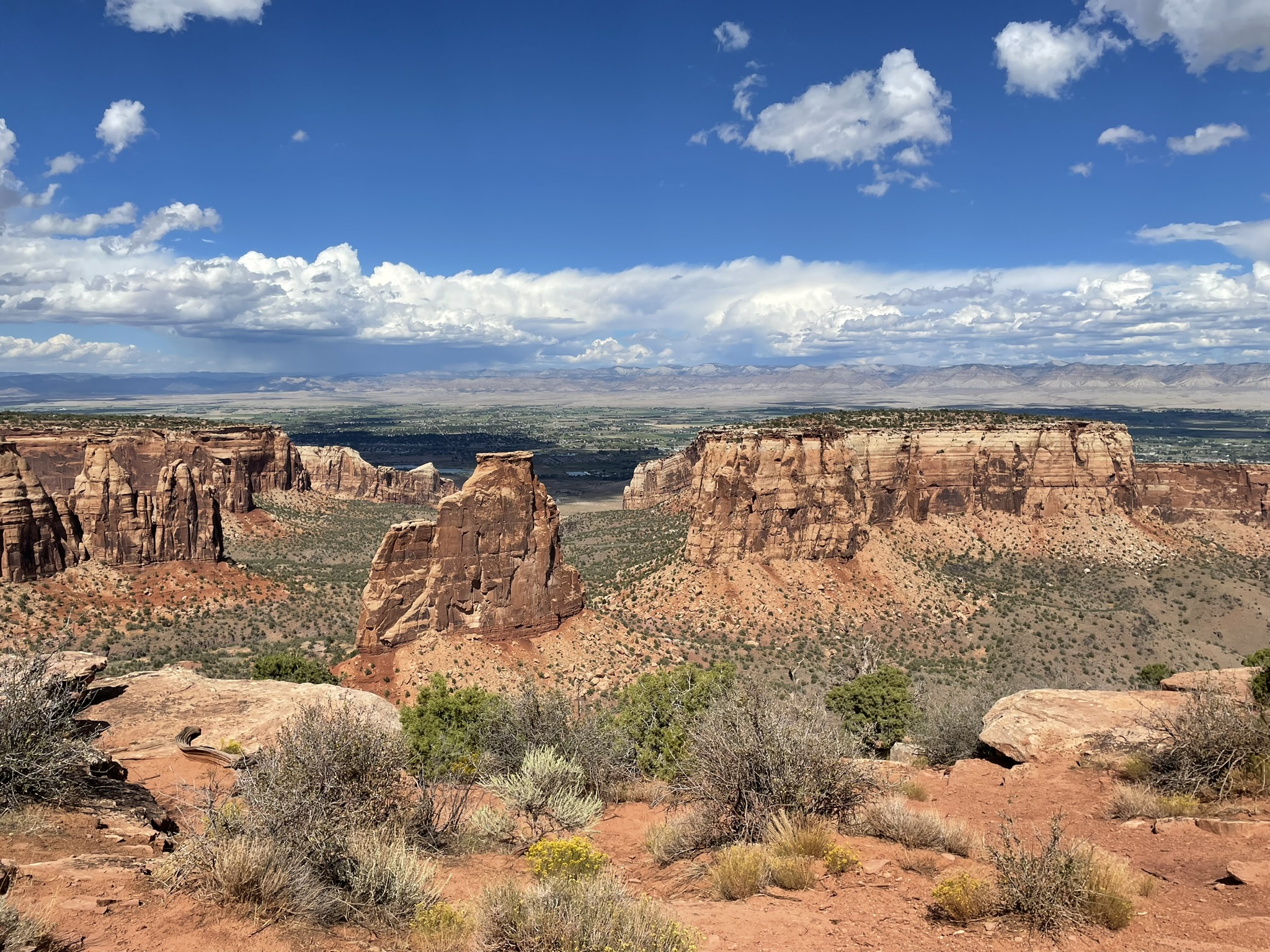
Geologic Carbon Storage at Outcrop: Lessons for Subsurface Characterization, Modeling, Risk and Monitoring, Utah (G579)

Tutor(s)

Alex Bump: Research Science Associate, University of Texas at Austin.

Michael Sweet: Co-Director and Research Scientist, University of Texas at Austin.

Overview

Using outcrops from the Cretaceous and Jurassic of Utah, this course will analyze some of the major subsurface challenges facing the storage of CO2 in subsurface formations, with particular reference to the planned Oligo-Miocene carbon stores on the Gulf Coast. It is intended to give participants the opportunity to consider the key factors of injectivity, capacity and confinement, and the range of storage play concepts available to match project needs with practically accessible storage sites. The course will explore the impact of multi-scale reservoir heterogeneity on migration and trapping of CO2, the propagation and dissipation of pressure, and the risks of unintended lateral or vertical migration of CO2 and/or displaced brine. We will also look specifically at boundary conditions and potential leakage paths, including faults and wells, using a variety of outcrops as a natural laboratory to facilitate the learning points.

Duration and Logistics

A 6-day field course comprising a mix of field activities with classroom lecture sessions and discussions. Transport will be by minivan or bus.

Level and Audience

Intermediate. This course is intended for geoscience and engineering professionals working in, or soon to transfer to, CCS projects.

Exertion Level

This class requires a MODERATE exertion level. There will be some short hikes to outcrops with some of these over uneven and rocky ground. The climate in southern Utah during the spring and fall is variable, with temperatures from 50°F (10°C) to 100°F (38°C). The elevation is between 4,000 and 5,000 feet (1200 and 1500 meters).

Objectives

You will learn to:

  1. Describe the subsurface requirements for a successful storage project, including similarities and differences with oil and gas exploration.
  2. Illustrate the CCS reservoir details of proposed Gulf Coast carbon stores and the state-of-play of these projects.
  3. Characterize the main depositional features that influence reservoir properties and CCS reservoir development, as well as likely performance, with special reference to clastic coastal/shallow marine depositional systems.
  4. Gauge fluid transport parameters, including the impact of geological heterogeneity and permeability on CO2 injection and plume migration.
  5. Evaluate sustainable injection rates for different carbon stores, including pressure propagation and interference, and factors such as loss of injectivity and pressure build-up.
  6. Manage containment risks with respect to both structural and depositional heterogeneities.
  7. Validate models for plume migration and integrate the key uncertainties.
Reservoir Characterization and Subsurface Uncertainties in Carbon Stores, Cheshire, UK (G578)

Tutor(s)

Richard Worden: Professor in the Department of Earth Ocean and Ecological Sciences, University of Liverpool, UK.

Overview

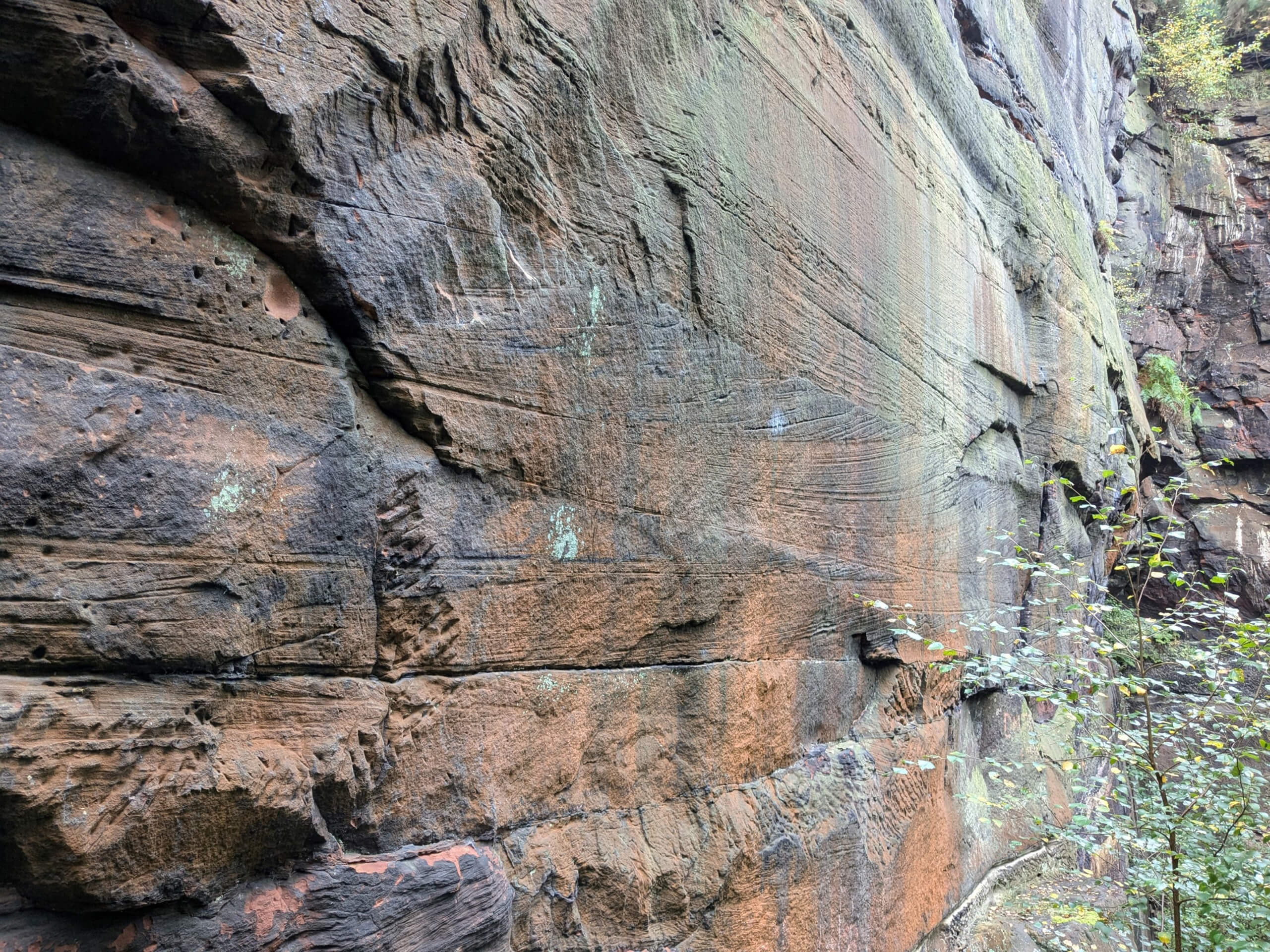
This course will give participants the opportunity to see some of the rocks at outcrop that are planned UK CO2 storage sites and to analyze the associated range of subsurface challenges. Visiting these outcrops will allow subsurface geoscientists, who generally use logs and limited core to build models, the opportunity to see the larger and smaller scale architecture and heterogeneity of the rocks they are working on and to consider the key processes of injectivity, migration and trapping of CO2. The course will also discuss post-depositional changes to sandstones, including petrophysical and geomechanical property evolution (pre- and post-CO2 injection), and some of the risks (migration and leakage) associated with developing saline aquifers and depleted gas fields as CO2 storage sites in these sandstones.

Duration and Logistics

A 5-day field course comprising a mix of field activities with classroom lectures and discussions. Transport will be by bus.

Exertion Level

This class requires an EASY exertion level. Field locations are mainly relatively easy walks of less than 1km (0.6 mile) along paths from road access points, although there is some walking down and up gentle slopes. One outcrop involves a 6km (3.7 miles) round trip walk over an intertidal sandflat.

Level and Audience

Intermediate. This course is intended for geoscience and engineering professionals working in CCS projects, especially those with an active interest in the Triassic Bunter/Sherwood Sandstones.

Objectives

You will learn to:

  1. Appraise the main depositional and diagenetic features that influence Triassic Sandstone (Bunter/Sherwood) reservoir properties and CCS reservoir development and likely performance.
  2. Validate the CO2 storage volumetrics from the micro (pore-scale) to the macro (aquifer volumes).
  3. Predict CO2 flow away from injector wells controlled by permeability and aquifer architecture with reference to injection rates and subsurface pressure.
  4. Assess the range of effects that CO2 can have on the host aquifer, from geomechanical to geochemical.
  5. Create plume migration models with respect to compartmentalization risk, pressure barriers, faults and fractures.
  6. Assess the role of top-seal and fault-seal properties and how they will influence CO2 storage, from risk of fracking, or induced seismicity, to mineral dissolution.

Lessons Learned from Carbon Capture and Storage Projects to Date (G577)

Tutor(s)

Matthew Healey: Managing Director, PACE CCS.

Overview

This course is designed to provide information vital to anyone involved with CCS project design. It will provide an introduction to CCS design with a focus on sharing lessons learned from CCS projects in design and operation today. Technical analysis, useful references and practical solutions will be provided.

Duration and Logistics

A 1-day in-person classroom course. An electronic copy of the manual will be provided by the tutor at the end of the course.

Level and Audience

Advanced. This course is suitable for all management and technical staff engaged in carbon capture and storage design and operations. It will provide clear, actionable, technical information that will be immediately applicable to CCS project design.

Objectives

You will learn to:

  1. Understand the key elements in the CCS chain, from capture to disposal.
  2. Understand the unique challenges faced by CCS, and how these are different from oil and gas, CO2-EOR and midstream projects, with primary reference to project experience and lessons learned.
  3. Apply fundamentals of CO2 design, including thermodynamics, chemical reactions, carbon capture, dehydration and compositional control.
  4. Understand the risk to CCS pipeline and well integrity due to corrosion, with primary reference to project experience and lessons learned.
  5. Review the behavior of CO2 and challenges associated with very low temperatures during operation, with primary reference to project experience and lessons learned.
  6. Understand the challenges related to design in order to manage planned and unplanned CO2 releases to atmosphere from CCS projects, with primary reference to project experience and lessons learned.
  7. Review the key commercial drivers and risks for CCS that inform design, and understand how these are managed, with primary reference to project experience and lessons learned.
  8. Review lessons learned from application of project management and organizational processes to CCS deliver teams, in order to understand how best to deliver CCS project design and execution.

Geochemical effects of CO2 on Reservoir, Seals and Engineered Environments during CCS (G544)

Tutor(s)

Richard Worden: Professor in the Department of Earth Ocean and Ecological Sciences, University of Liverpool, UK.

Overview

The geochemistry of saline aquifers, depleted oil/gas fields in the context of CO2, and other waste gas, injection is considered. The reactions of CO2 with different reservoir rocks and top-seals, and their constituent minerals, and the cement and metal work used in the construction of wells are central to this course. The course includes reference to numerous CCS and CO2-EOR case studies, CCS-pilot sites, experiments, geochemical modelling, reaction-transport modelling, monitoring of CCS sites, microbiological processes in CCS systems, and the risk of halite scale formation.

Duration and Logistics

Classroom version: A 3-day course comprising a mix of lectures, case studies and exercises. The manual will be provided in digital format, and participants will be required to bring a laptop or tablet computer to follow the lectures and exercises.

Virtual version: Five 3.5-hour interactive online sessions presented over 5 days. Digital course notes and exercise materials will be distributed to participants before the course. Exercises will be used throughout the course; these will include calculations, largely based on spreadsheets. Quizzes will be used to test knowledge development.

Level and Audience

Advanced. The course is largely aimed at specialist geoscientists, but petroleum engineers and petrophysicists who are working on, or plan to work on, CCS projects will also find the course instructive. A foundation knowledge of geochemistry is assumed.

Objectives

You will learn to:

  1. Appraise the types and sources of information needed to define geochemical aspects of CCS sites.
  2. Evaluate the role of CO2 pressure in influencing reactions at CCS sites.
  3. Assess the information that can be gathered from natural analogues of CCS projects.
  4. Evaluate the role of composition of the injected gas (role of contaminants) in influencing reactions at CCS sites.
  5. Gauge the role of water composition in influencing reactions at CCS sites.
  6. Characterize the role of mineral composition (rock type) in influencing reactions at CCS sites.
  7. Manage examples of mineral dissolution in CCS systems.
  8. Predict possible examples of mineral precipitation in CCS systems.
  9. Gauge CO2 interaction with cements and pipes used in well completions.
  10. Assess how experimental simulation, geochemical reaction modelling and reaction transport modelling can help predict if dissolution or precipitation will occur.
  11. Validate the links between geochemical processes and geomechanical and petrophysical properties in CCS systems.
  12. Use geochemical tracers to track process in CCS systems.
  13. Characterize the microbiological processes that may occur at CCS sites.
  14. Predict the geochemical formation damage in CCS.
  15. Quantify the role of CCS in basalt hosts in comparison to sedimentary hosts.

Seals, Containment and Risk for CCS and Hydrogen Storage (G570)

Tutor(s)

Richard Swarbrick: Manager, Swarbrick GeoPressure.

Overview

This course examines the nature and properties of seals as they relate to containment for permanent storage of CO2 and cyclical storage of hydrogen and/or compressed air. The course will provide a grounding in the geomechanics of seals and how seals and their properties are created in the subsurface. While most data and analysis relating to seals has been acquired from and applied to the containment of oil and gas, this course will show how such data can be applied to CCS and gas storage. Particular attention will be given to the different sealing requirements of CO2 and hydrogen relative to oil/gas and water.

Duration and Logistics

Classroom version: A 3-day course comprising a mix of lectures, case studies and exercises. The manual will be provided in digital format and participants will be required to bring a laptop or tablet computer to follow the lectures and exercises.

Virtual version: Five 3.5-hour interactive online sessions presented over 3 to 5 days comprising a mix of lectures and exercises. The course manual will be provided in digital format.

Level and Audience

Advanced. This course is aimed at geoscientists and engineers working in energy transition with responsibility for projects to assess and manage gas storage

Objectives

You will learn to:

  1. Evaluate the nature of containment seals and their properties in the deep earth (>1km/0.62 miles below surface).
  2. Apply knowledge of seal integrity to estimates of column heights and associated storage volumes.
  3. Assess the concepts of seal integrity and how to predict risk of seal breach/failure.
  4. Appraise current knowledge of seal behaviour using case studies.
  5. Manage the requirements for permanent CO2 storage using CCS versus short-term/cyclic storage for hydrogen air.
  6. Characterize data requirements and limitations to assess seal integrity and risk (data sourced mainly from oil/gas boreholes).
  7. Evaluate different trapping requirements for gas storage (currently data-poor) relative to oil/gas (historically data-rich).
  8. How geochemical fluid-rock reactivity may impact seals to gas storage over time.

Carbon Capture and Storage Value Chain: Network Design and Operational Technologies (G571)

Tutor(s)

Matthew Healey: Managing Director, PACE CCS.

Overview

This course is designed to provide awareness of the design and operation of CCS systems. Participants will gain knowledge and understanding of technical issues (flow assurance, process, safety, etc.) encountered in the design and operation of whole-chain CCS systems.

Duration and Logistics

Classroom version: A 2-day in-person classroom course. An electronic copy of the manual will be provided by the tutor at the end of the course.

Virtual version: Four 3.5-hour interactive online sessions presented over 4 days, including a mix of lectures and discussion. The course manual will be provided in digital format.

Level and Audience

Advanced. This course is suitable for all technical staff engaged in carbon capture and storage with an emphasis on the operations, facilities and engineering side of the business. Project managers and engineers will also find many aspects of the course useful.

Objectives

You will learn to:

  1. Compare the primary CO2 capture technologies.
  2. Review the fundamental subsurface geoscience aspects of CCS, including reservoirs, leakage and monitoring.
  3. Establish how CO2 can be transported safely and efficiently via ship and pipeline.
  4. Assess the thermodynamic behavior of CO2 including the impact of impurities in CO2 streams.
  5. Describe the operating philosophy and modes of CO2 transport networks, both single and multiphase.
  6. Outline the design specifications of CCS networks with a focus on pipelines.
  7. Manage safety and technical risk, including using a consequence-based risk assessment for CCS.
  8. Evaluate the thermal-hydraulic modelling of CO2 transport networks with a focus on best practices.
  9. Analyze the shipping options for CO2, including port to port or port to storage.
  10. Characterize CCS metering and associated technologies.

Carbon Capture and Storage: Legal, Regulatory, Finance and Public Acceptance Aspects (G566)

Tutor(s)

Mike Stephenson: Director, Stephenson Geoscience Consultancy Ltd.

Overview

Carbon Capture and Storage (CCS) is a new technology that has a vital place within global efforts to decarbonise. It has a unique set of challenges, opportunities and risks to be understood and accommodated within appropriate legal, regulatory, and social and public licence frameworks. The course will provide up to date and relevant information to help in understanding opportunities and in managing risk. The course will cover: the role of CCS within a decarbonised energy system; risks of capture, transport and storage; aspects of monitoring; the importance of test and demonstration sites; legal and regulatory; finance; and public acceptance and social licence.

Duration and Logistics

Classroom version: A 1-day course comprising a mix of lectures, case studies and exercises. The manual will be provided in digital format and participants will be required to bring a laptop or tablet computer to follow the lectures and exercises.

Virtual version: Two 3.5-hour interactive online sessions presented over 2 days. A digital manual will be distributed to participants before the course, which will be a mix of lectures and exercises.

Level and Audience

Fundamental. This course will cater for in-company legal specialists, project managers, marketing and communications specialists; as well as planners and environmental scientists in regulatory roles in regions considering the development of CCS.

Objectives

You will learn to:

  1. Understand the place of CCS within a decarbonized energy system.
  2. Demonstrate the basics of the science and risk in capture, transport and storage.
  3. Illustrate the role of monitoring and MMV (Measurement, Monitoring and Verification).
  4. Examine how legal and regulatory frameworks respond to the challenges of CCS.
  5. Establish how CCS could be financed.
  6. Relate to and understand public opinion and social licence in relation to CCS.

Geomodelling for CO2 Storage (G560)

Tutor(s)

Matthew Jackson: Chair in Geological Fluid Dynamics, Imperial College London.

Overview

This course provides an overview of all subsurface aspects of geomodelling relevant to CO2 storage. The course includes an introduction to the principles and practice of geomodelling; reservoir characterization for CO2 storage, including geological, geophysical and petrophysical considerations; methods used to produce 3-D geomodels; approaches to uncertainty characterization and quantification; and an overview of available software tools. The course does not provide hands-on training in these software tools, but rather provides the background understanding for software tool selection and associated training from vendor(s). The concepts and methods are illustrated using numerous practical examples of geomodelling studies.

Duration and Logistics

Classroom version: A 3-day course comprising a mix of lectures, case studies and exercises. The manual will be provided in digital format and participants will be required to bring a laptop or tablet computer to follow the lectures and exercises.

Virtual version: Five 3.5-hour interactive online sessions presented over 5 days. A digital manual and exercise materials will be distributed to participants before the course. Some reading and exercises are to be completed by participants off-line.

Level and Audience

Advanced. The course is intended for professionals with experience of, or background in, a related subsurface geoscience area and those directly working on CO2 storage projects.

Objectives

You will learn to:

  1. Characterize the underlying aims and concepts of ‘fit for purpose’ reservoir geomodelling.
  2. Prepare different types and associated applications of geomodels for CO2 storage.
  3. Validate reservoir characterization data for CO2 storage, including geology, geophysics and petrophysics.
  4. Assess methods for quantitative 3-D geomodel construction, including advantages and disadvantages of each.
  5. Manage performance metrics for geomodels.
  6. Appraise the importance of, and methods for, quantitative uncertainty assessment.
  7. Rate the different software tools used for geomodelling.
  8. Evaluate practical examples of geomodelling for CO2 storage.

The Fundamentals of Carbon Capture and Storage (G902)

Tutor(s)

Richard Worden: Professor in the Department of Earth Ocean and Ecological Sciences, University of Liverpool, UK.

Overview

The aim of this course is to provide an overview of what carbon capture and storage is, how it works and its role in decarbonization and the energy transition.

Duration and Logistics

Classroom version: A half-day course comprising a mix of lectures, case studies and exercises. The manual will be provided in digital format and participants will be required to bring a laptop or tablet computer to follow the lectures and exercises.

Virtual version: One 3-hour interactive online session. A digital manual and exercise materials will be distributed to participants before the course.

Level and Audience

Awareness. The course is aimed at non-technical staff and those who do not have a scientific background but want a basic introduction into the topic. The subject matter will be covered from very basic principles and be of interest to staff from a range of departments, including legal, graphics, administration and technical support.

Objectives

You will learn to:

  1. Understand what carbon capture and storage is.
  2. Appreciate why carbon capture and storage is needed to reduce emissions.
  3. Outline how carbon capture and storage works.
  4. Discuss carbon capture and storage project risks and uncertainties.

Reservoir Characterization for Carbon Capture and Underground Storage, Devon and Dorset, UK (G556)

Tutor(s)

Gary Hampson: Professor of Sedimentary Geology, Imperial College London.

Matthew Jackson: Chair in Geological Fluid Dynamics, Imperial College London.

Overview

This course provides a field-based overview of reservoir characterization relevant to carbon capture and underground storage (CCS) and focuses on widely exploited reservoir depositional environments and their associated heterogeneity. The course links geological heterogeneity observed in well-exposed outcrop analogues with flow and transport processes during CO2 injection and plume migration, and also discusses the characterization and modelling of heterogeneity using typical subsurface datasets. The concepts are illustrated using numerous practical examples.

Duration and Logistics

A 5-day field course with a combination of field activities and exercises, plus classroom sessions. A manual and exercise materials will be distributed to participants on the course. Transport is by small coach.

Level and Audience

Intermediate. The course is intended for professionals with experience of, or background in, a related subsurface geoscience area, and / or recent graduates in a relevant topic.

Exertion Level

This class requires an EASY exertion level. Field locations are mainly accessed by hikes of 1–2km (roughly 1 mile) across some irregular terrain, including sandy beaches, coastal paths and pebbly / rocky beaches.

Objectives

You will learn to:

  1. Describe and explain types of geological heterogeneity associated with reservoirs, storage units and aquifers developed in common depositional environments.
  2. Evaluate how these heterogeneities can be characterized and quantified in the subsurface and represented in static and dynamic reservoir models.
  3. Consider the impact of these heterogeneities on fluid flow and transport in the context of CO2 storage.
  4. Understand reservoir characterization requirements for the prediction of CCS.