World-class training for the modern energy industry

Deepwater Clastics: Source-to-Sink Studies in the Exploration of Turbidite Reservoirs, San Diego, California (G103)

Tutor(s)

Zane Jobe: Research Professor, Colorado School of Mines and the Director of the Geology Center of Research Excellence (CoRE).

Overview

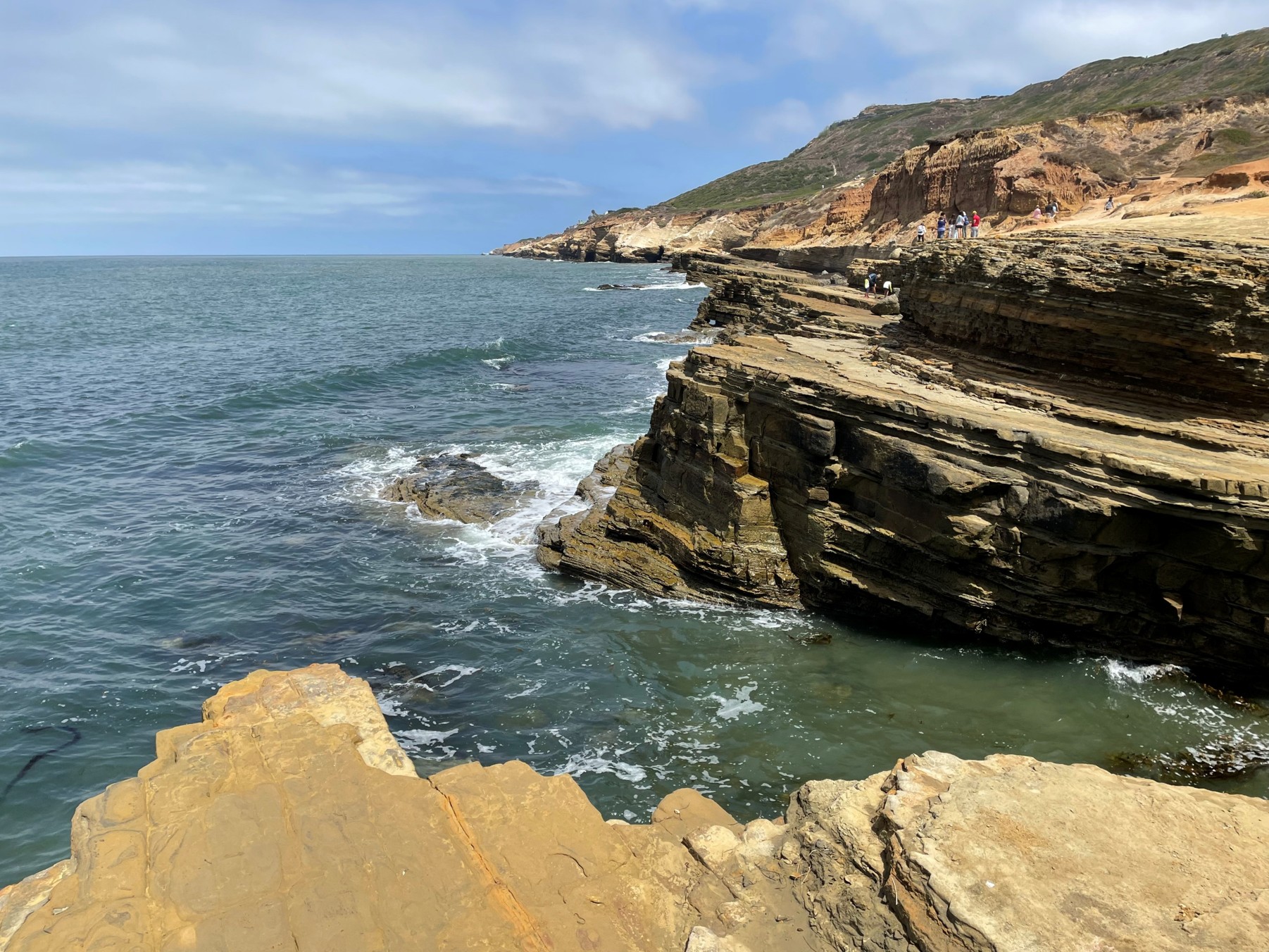
The course will visit spectacular outcrops along the California coastline just north of San Diego. Field work will follow a source-to-sink approach and will focus on specific deepwater architectural elements, including canyons, slope channels, channel-lobe-transition-zones and lobes. The course will provide insights into exploration and development themes and challenges in deepwater depositional systems, with direct analogs to Gulf of Mexico reservoirs.

Duration and Logistics

A 6-day field course based in La Jolla, California. Training will take place through in-class presentations, field observations, printed exercises and discussions in the field. Transport will be by coach.

Exertion Level

This class requires a MODERATE exertion level. Access to the coastal cliff outcrops is via sandy beaches with walks no more than 3km (1.9 miles). Field stops are all at approximately sea level and some are tide dependent. There are some steep steps to negotiate to reach some beach sections.

Level and Audience

Intermediate. The course is aimed at geoscientists, engineers, petrophysicists, geophysicists and managers who are working deepwater reservoirs or would like to improve their knowledge of these systems.

Objectives

You will learn to:

  1. Characterize the sedimentary processes and facies of turbidite systems and mass-transport deposits, and the broad nature of submarine depositional architecture.
  2. Evaluate submarine-channel systems, including scales/dimensions, axis-to-margin architecture, evolution, heterogeneity and potential baffles/barriers to flow.
  3. Predict connectivity in channelized systems from their seismic-geomorphic and well-log expression.
  4. Assess submarine canyon forming-and-filling processes, including mass wasting, bypass, sandy and muddy fill, and up-dip trapping mechanisms.
  5. Illustrate the importance of source-to-sink studies in the exploration of turbidite reservoirs.
  6. Evaluate submarine lobe/sheet systems, including scales/dimensions, axis-to-fringe architecture, compensational stacking, hierarchy and heterogeneity (e.g. hybrid-event-beds).
  7. Analyze channel-lobe-transition-zone deposits and supercritical-flow bedforms.
  8. Assess faulting in lobe deposits and impacts on connectivity.
  9. Appraise the facies variability in proximal/axial and distal/fringe lobe deposits, and the implications for connectivity between these sub-environments.
Slope-Channel Depositional Systems: Brushy Canyon Formation, SE New Mexico and West Texas​ (G091)

Tutor(s)

Art Saller: Independent Geological Consultant.

Overview

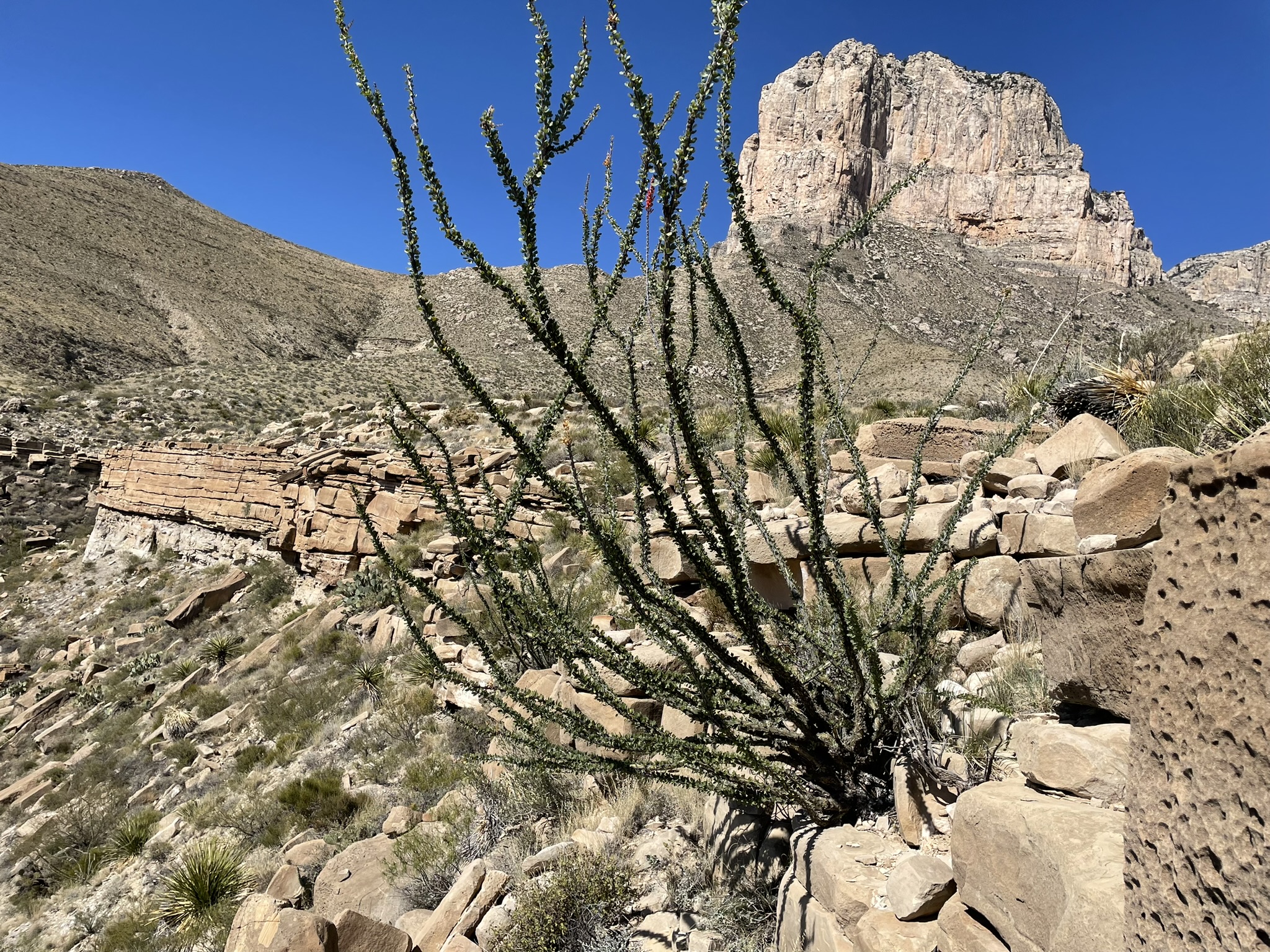
This field course is designed for geoscientists and engineers exploring and developing deepwater clastic reservoirs anywhere in the world. The course examines excellent (classic) exposures showing depositional facies and stratal geometries developed in deepwater slope and channel environments and their controls on reservoir presence, quality and production. Outcrop description and exercises with subsurface data are integrated into the course. Analog fields from West Africa, Gulf of America/Mexico, southeast Asia and the Permian Basin are discussed on outcrops.

Duration and Logistics

A 6-day field course beginning and ending in El Paso, Texas. Most training will take place through observation and discussion in the field.

Level and Audience

Advanced. The course is aimed at geoscientists, petrophysicists, reservoir engineers and production engineers working deepwater siliciclastic reservoirs. Basic principles are presented on the first morning to bring participants to a common level of understanding. Outcrop viewing, description and exercises will give even advanced level participants improved understanding of these systems.

Exertion Level

This class requires a DIFFICULT exertion level. The outcrops are in west Texas and southeast New Mexico, where the weather is arid with hot summers and cool winters. This trip is run in spring or fall when temperatures are more moderate, although hot, cold or wet weather is possible. Daily temperatures can range from 5–30°C (40–90°F). The course includes a hike of around 6 km/4 miles with an ascent of 400m (1300 ft), and shorter hikes, frequently over very steep and uneven ground. Transport on the course will be by coach. Most of the driving is on black-top roads, with some driving on graded dirt roads.

Objectives

You will learn to:

  1. Visualize the seismic-scale geometries of major slope channel systems including incised upper slope valleys, amalgamated mid-slope channel-complexes, and middle to lower slope channel-levee complexes for use in subsurface interpretation.
  2. Assemble a predictive model for those different sand geometries relative to slope position.
  3. Describe different deep-water (turbidite) facies and understand variations in their distribution and reservoir characteristics in different architectural elements (channel, levees, splays).
  4. Relate outcrop and core scale variations of deepwater sands to wireline log characteristics within channel complexes to help interpret facies in logs.
  5. Predict how turbidites and their characteristics change laterally which can be applied to static and dynamic reservoir models for appraisal and development.
  6. Assess thin turbidite sand beds and understand where they occur deep-water systems and how their continuity can vary from relatively limited areal continuity in levees to sheets in thin-bedded basin floor fans.
  7. Evaluate variation in grain size and lateral continuity of sand bodies, understand why they can cause large variations in permeability, production rates and oil recovery.
  8. Relate characteristic of outcrops to analogous oil fields along the West African margin, Gulf of America/Mexico, southeast Asia and the Permian Basin
 

Carbonate Depositional Systems: Reservoir Sedimentology and Diagenesis (G105)

Tutor(s)

Paul Wright: Independent Consultant.

Overview

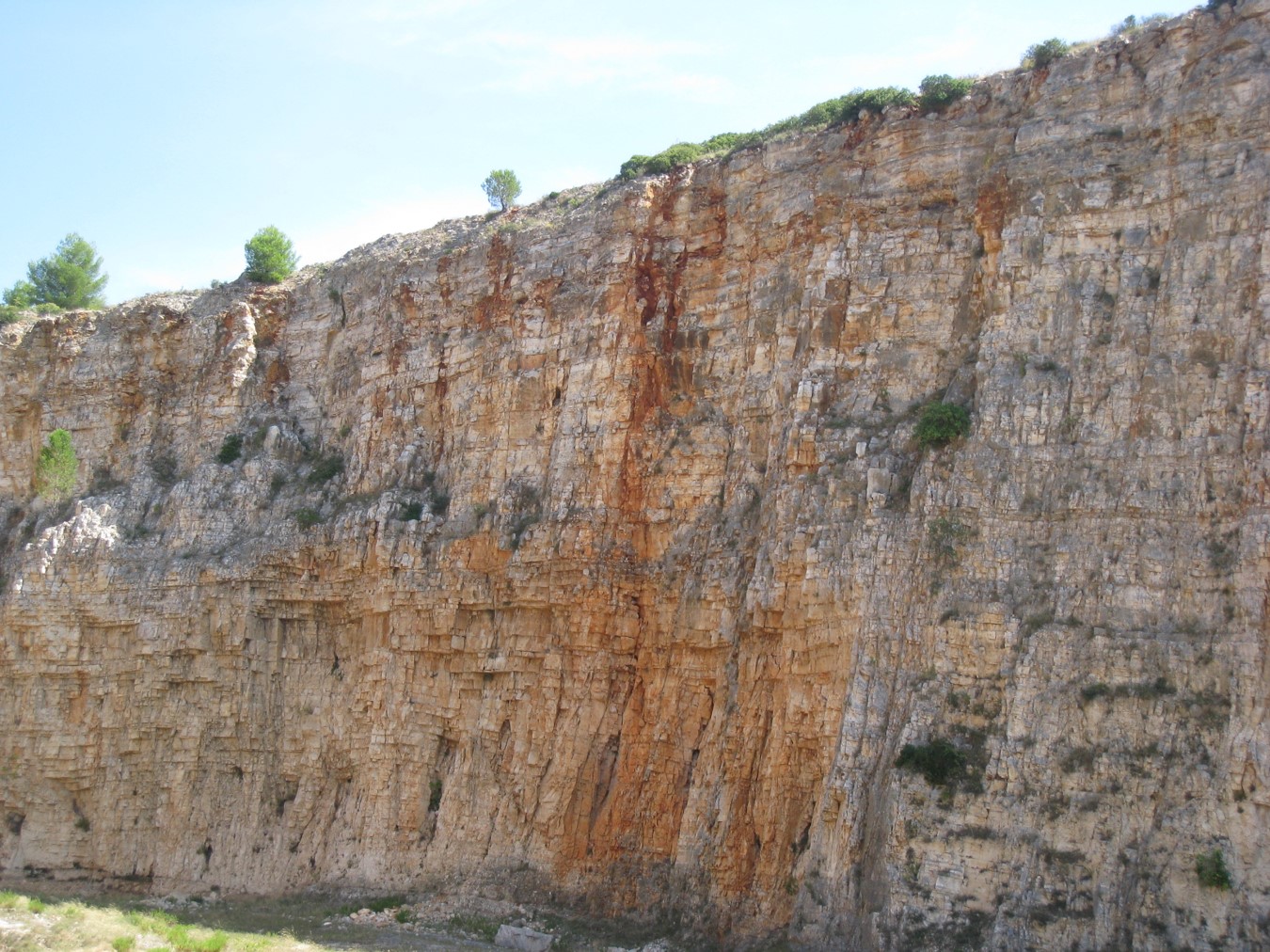
This course is aimed at those with little or no previous experience with carbonate rocks as reservoirs or aquifers. A broad introduction to carbonate systems is presented, with multiple case examples interspersed throughout the course, in order to illustrate the different types of carbonate deposition, stratigraphy and diagenesis. Besides reviewing the essential components and origins of such rocks, it also illustrates how key characteristics are identified from seismic data and the issues relating to flow behaviour. Participants will attain a broad understanding of carbonate rocks – their components, depositional models and diagenetic variation – to better assist in the prediction of carbonate reservoirs from seismic to pore scale.

Duration and Logistics

Classroom: A 4.5-day in-person classroom course. Digital course notes and exercise materials will be distributed to participants before the course.

Virtual version: Nine 3.5-hour interactive online sessions. Digital course notes and exercise materials will be distributed to participants before the course.

Level and Audience

Fundamental. The course is intended for geoscientists (geologists and geophysicists) and petroleum engineers with little or no experience of carbonate reservoirs.

Objectives

You will learn to:

  1. Understand and describe the principal carbonate sediment components and systems of carbonate classification.
  2. Describe the primary controls on carbonate deposition temporally and spatially, and discuss the contrasts between the controls on siliciclastic deposition.
  3. Describe the main types of carbonate platform, their variability, scale, main seismic features and distribution of likely reservoir units.
  4. Demonstrate sequence stratigraphic aspects of carbonate build-ups, their differing response to SL change compared to clastic sediments and discuss their seismic characters.
  5. Review principal types of likely reservoir facies (platform interior, carbonate sands, reefs, slope systems and chalks), their recognition, architecture, sequence stratigraphy and porosity types.
  6. Identify the diverse pore types in carbonates and how these relate to reservoir quality.
  7. Understand how the development of primary and secondary porosity has varied through geological time and how these changes impact reservoir quality.
  8. Explain how the variety of diagenetic environments affects primary and secondary porosity in carbonate rocks and understand the implications for reservoir quality.
  9. Understand the uses of the main techniques for deciphering diagenetic sequences in carbonates.
  10. Discuss the principal modes of formation of dolomites and the predictive uses of different dolomite models.
  11. Understand the diverse origins of palaeokarstic macroporosity, its subsurface recognition, and different strategies for developing palaeokarstic systems for geothermal energy and hydrocarbon reservoirs.

Sand-rich and Confined Turbidite Systems: Annot, France (G048)

Tutor(s)

Mark Bentley: TRACS International Consultancy and Langdale Geoscience.

Overview

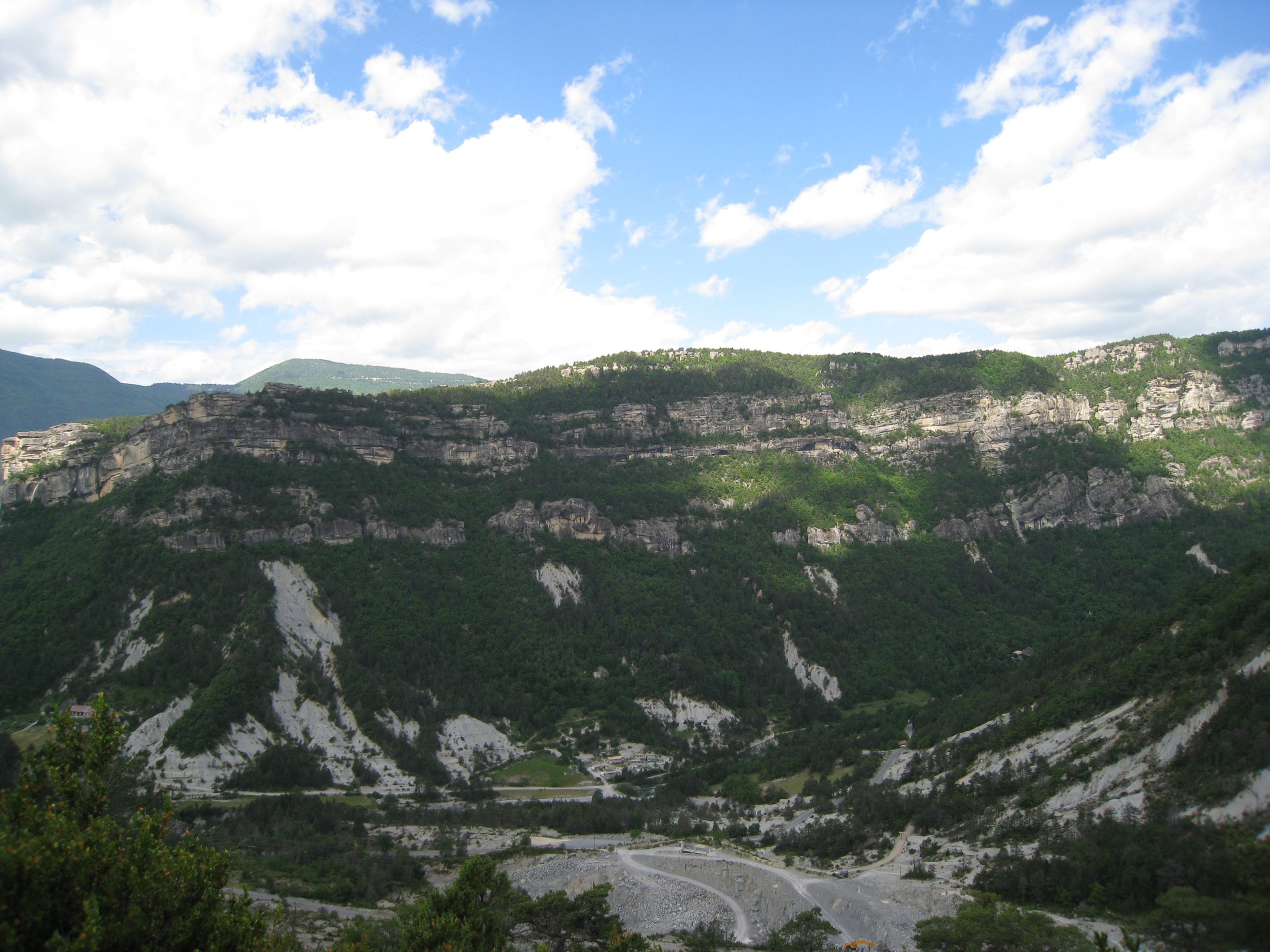
Experience the classic, well-exposed Grès d’Annot turbidite outcrop area in the French Alps, an excellent analogue for deepwater exploration and development targets in structurally active slope and basin settings. This course will provide insights into field development challenges in relatively confined, high-net, submarine fan systems by using the world-class exposures along with static/dynamic models of the outcrops to support discussions. Seismic forward-models of 3-D and 4-D responses to waterfloods in these systems add to the conversation. The setting allows reservoirs to be observed at a range of scales from seismic- and field-scale, to the scale of a core plug, and is intended for a cross-discipline, geoscience and petroleum engineering audience.

Duration and Logistics

A 7-day field course in the French Alps, comprising field activities and exercises on-site, unless weather doesn’t allow. The manual will be provided in paper format, with a digital copy available as a take-away.

Level and Audience

Advanced. The course is designed for integrated teams (geologists, geophysicists and reservoir engineers) evaluating development opportunities for fields in deepwater confined basins. The ideal group would be an asset team, who would be encouraged to bring their own field issues (and data where possible) to discuss live on the analogue.

Exertion Level

This class requires a DIFFICULT exertion level. The Grès d’Annot is quite comfortable in the early summer, with temperatures of 10–25°C (50–80°F) and occasional rain showers. Some field locations require path-based hillwalking involving ascents up to 600m (2000 feet). The longest excursion involves a full-day hike and will be conducted at a leisurely pace.

Objectives

You will learn to:

  1. Assess discrete, structurally controlled sediment transport pathways into bathymetrically complex deepwater basins.
  2. Assess the role of relative structural and flow confinement on turbidite reservoir architecture.
  3. Characterize internal reservoir architecture in different parts of the system and assess the impact of heterogeneities on fluid flow.
  4. Formulate reservoir and simulation modelling requirements, in order to forecast production performance from reservoirs of these types.
  5. Determine the level of detail required for reservoir characterization under a range of fluid fills and production mechanisms.
  6. Understand how much of the observed heterogeneity would be detectable on seismic, and predict how fluid-sensitive heterogeneities would be visible on 4-D seismic for a field on production.

Introduction to Clastic Facies (G073)

Tutor(s)

Howard Feldman: Consultant Geologist, Feldman Geosciences LLC; Affiliate Faculty, Department of Geosciences, Colorado State University.

Overview

This course provides an introduction to siliciclastic facies in all aqueous settings, focusing on sand deposition for application to conventional reservoirs. The course begins with an overview of sedimentary structures and their recognition in outcrop and core. Observations of sedimentary structures and facies stacking patterns are then used to interpret depositional environments and make predictions about sand body geometry, size, and compartmentalization. The course makes extensive use of large-format (50% scale) core photos and outcrop photopans from a wide range of environments. Subsurface data sets, including seismic and well logs, are used to illustrate the application of these concepts to subsurface mapping. We will also cover an introduction to core description workflows.

Duration and Logistics

Classroom: A 2-day course comprising a mix of lectures and exercises. The manual will be provided in digital format and participants will be required to bring a laptop or tablet computer to follow the lectures and exercises.

Virtual session: Four 3-hour interactive online sessions presented over 4 days. Digital course notes and exercise materials will be distributed to participants before the course.

Level and Audience

Fundamental. The course is intended for subsurface geoscientists who would like an introduction to siliciclastic facies and their interpretation from core, well logs and seismic. There is no assumption of previous knowledge of clastic systems, and simple concepts are built up into sophisticated depositional models. Skills are built through a series of exercises using outcrop photopans, high-resolution core photos, well logs and seismic. There is abundant opportunity for interaction.

Objectives

You will learn to:

  1. Interpret basic depositional models of siliciclastic systems with a focus on sandy facies, and prediction away from control at a range of scales.
  2. Collect basic observations from core that can be used to constrain depositional models.
  3. Integrate cores, well logs and seismic, in order to make predictions about the distribution of reservoir, source and seal.
  4. Interpret genetic stratigraphic units in core, well logs and seismic.

Workshop on the Seismic Expression of Carbonates (G080)

Tutor(s)

Gene Rankey: Professor, University of Kansas.

Overview

The aim of this course is to provide a general overview of the basic principles of carbonate systems and their expression in seismic data, and to demonstrate its utility for exploration and production. The course will include conceptual models, practical hands-on exercises, and demonstrations of the utility of seismic data and derived products. Key examples will illustrate how seismic stratigraphy and seismic attribute analysis can be used to assess reservoir fairways, subdivide a reservoir, constrain reservoir models, and generate high-resolution, geologically constrained predictions of reservoir systems. An important part of this course will be to draw attention to unique aspects of carbonates and how they might differ from siliciclastic from pore to basin scales.

Objectives

You will learn to:

  1. Establish a working knowledge of carbonate sediment and depositional systems.
  2. Assess carbonate seismic attributes, their general classes, and situations in which different types of attributes are most appropriate.
  3. Evaluate quantitative applications of seismic attributes to map seismic facies and porosity in carbonate reservoirs.
  4. Recognize the expression of carbonates in three-dimensions, how these patterns reflect dynamic stratigraphic evolution, and how these patterns can be related to reservoir trends.
  5. Identify the variation and controls on carbonate reservoir architecture in different system tracts.
  6. Appreciate how carbonate petrophysics influences the seismic response of carbonates.
  7. Appraise the different types of carbonate platform on seismic data and assess the presence of key seismic facies.
  8. Illustrate the seismic geometries of carbonate ramps and rimmed shelves and their possible reservoir character.

Level and Audience

Intermediate. The course is aimed at geologists and geophysicists working on carbonate exploration and production projects. No prior knowledge of carbonates is assumed but participants should have some background in the geosciences.

Duration and Logistics

Classroom version: 2 day classroom course comprising presentations, exercises and case studies. Course notes and exercise materials will be distributed to participants during the course. The manual will be provided in digital format and participants will be required to bring a laptop or tablet computer to follow the lectures and exercises

Virtual version: Four 3.5-hour interactive online sessions presented over four days. Digital course notes and exercise materials will be distributed to participants before the course. Some exercises may be completed by participants off-line.

Cretaceous Lacustrine Carbonate Reservoirs of the South Atlantic (G045)

Tutor(s)

Paul Wright: Independent Consultant.

Overview

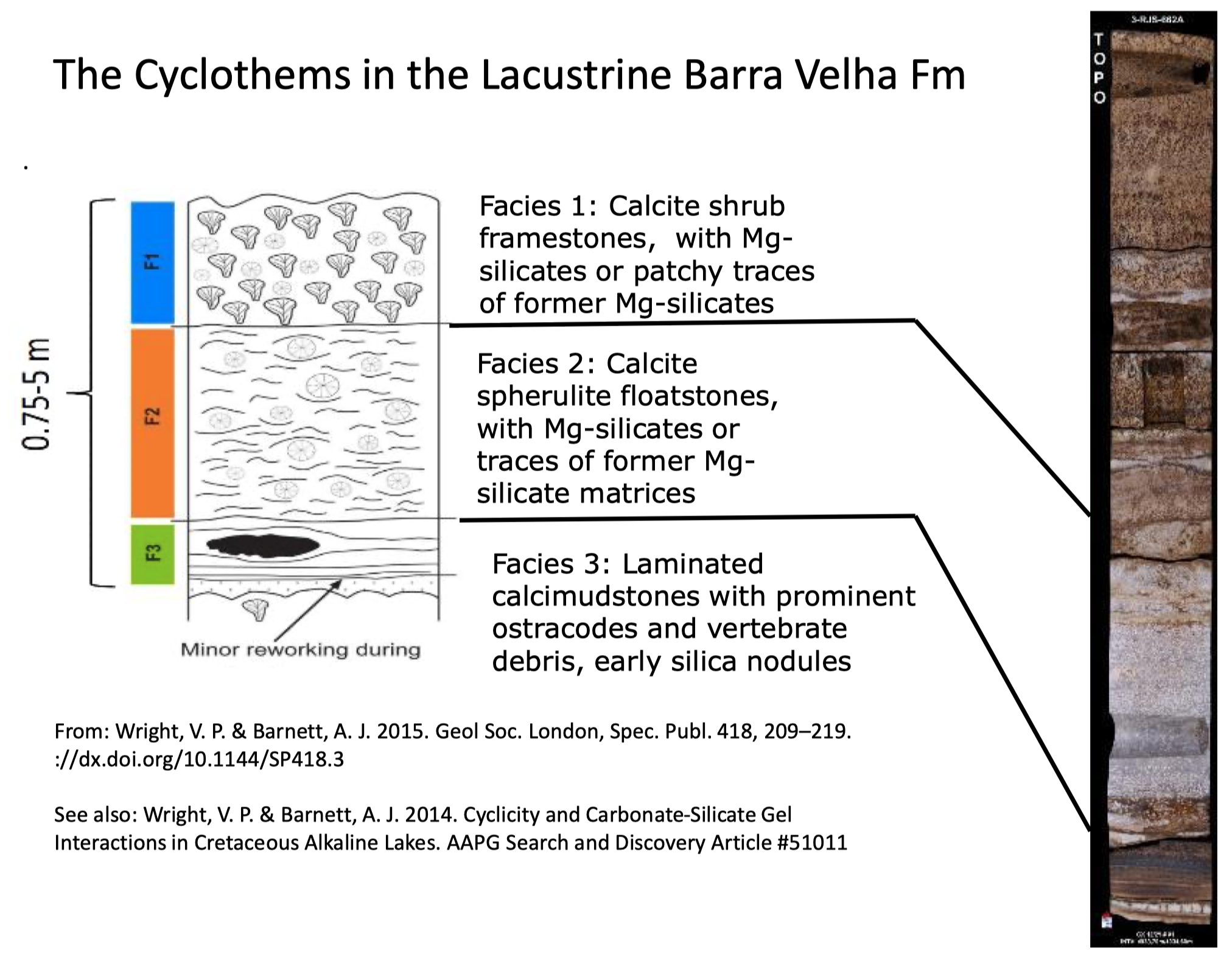
This course provides a description of the highly unusual carbonate reservoirs deposited in the Santos Basin (offshore Brazil) during the rift to sag stages of Atlantic opening, and a discussion of the controversies surrounding their origin. Particular emphasis will be given to the Aptian so-called microbialite reservoirs (Barra Velha Formation and equivalents), reviewing both of the main models for their development and evaluating the seismic and sedimentological models. A practical approach to characterizing these complex rock types will be provided. The course will include an introduction to non-marine carbonate systems in extensional settings, as well as a review of the South Atlantic coquina reservoirs.

Duration and Logistics

Classroom version: A 2-day classroom course. The manual will be provided in digital format and participants will be required to bring a laptop or tablet computer to follow the lectures and exercises.

Virtual version: Four 3-hour interactive online sessions presented over 4 days. A digital manual will be distributed to participants before the course. Some reading is to be completed by participants off-line.

Level and Audience

Advanced. Intended for technical staff and managers who are involved in exploration for or exploitation of carbonates along the margins of the South Atlantic, or are interested in furthering their understanding of carbonate reservoirs in general.

Objectives

You will learn to:

  1. Recognize the range of carbonate systems that develop in extensional settings.
  2. Describe the highly unusual and prolific Aptian carbonate reservoirs of the Santos Basin.
  3. Contrast the models for the formation of these chemogenic rocks and discuss their differences.
  4. Evaluate the strikingly different reservoir characteristics that emerge from the two models.

Key Concepts in Clastic Reservoir Performance (G044)

Tutor(s)

Mike Boyles: Retired Shell Oil; Affiliate Faculty, Colorado School of Mines.

Overview

This course presents the concepts and terms used to describe the sedimentology, stratigraphy and structure of clastic units, and introduces the environments of deposition of clastic sediments. The awareness of these topics and their heterogeneities allows participants to understand their role in predicting reservoir performance in exploration projects, in development planning and in managing field performance.

This course presents a stand-alone overview of clastic reservoirs and would be beneficial for any subsurface team member. It also serves to provide the framework for the geologic concepts that are examined in Clastic Reservoirs Field Seminar: Stratigraphic and Structural Heterogeneities That Impact Exploration and Production Reservoir Performance (G012). Attending G044 will allow G012 participants to maximize the benefit of spending time in the field. For a more detailed approach to the subject in the classroom, consider the 5-day Introduction to Clastic Reservoirs: Stratigraphic and Structural Heterogeneities That Impact Performance (G047).

Duration and Logistics

Classroom version: A 1-day classroom course comprising a mix of lectures (75%) and hands-on exercises (25%). The manual will be provided in digital format and participants will be required to bring a laptop or tablet computer to follow the lectures and exercises.

Virtual version: Two 4-hour interactive online sessions presented over 2 days. A digital manual and exercise materials will be distributed to participants before the course. Some reading and an exercise are to be completed by participants off-line.

Level and Audience

Fundamental. This is a refresher course for geoscientists and an overview of geologic basics for reservoir engineers, petrophysicists, managers and support staff.

Objectives

You will learn to:

  1. Understand the basic terminology of sedimentology, stratigraphy and sequence stratigraphy.
  2. Describe key characteristics of eolian, coastal plain, delta and deepwater reservoirs.
  3. Understand how subsurface reservoirs can be divided into flow units that capture key reservoir flow characteristics.
  4. Describe heterogeneities that can impact flow unit properties.
  5. Understand how sequence stratigraphic concepts are applied in a practical and predictive way.

Introduction to Clastic Reservoirs: Stratigraphic and Structural Heterogeneities that Impact Performance (G047)

Tutor(s)

Mike Boyles: Retired Shell Oil; Affiliate Faculty, Colorado School of Mines.

Overview

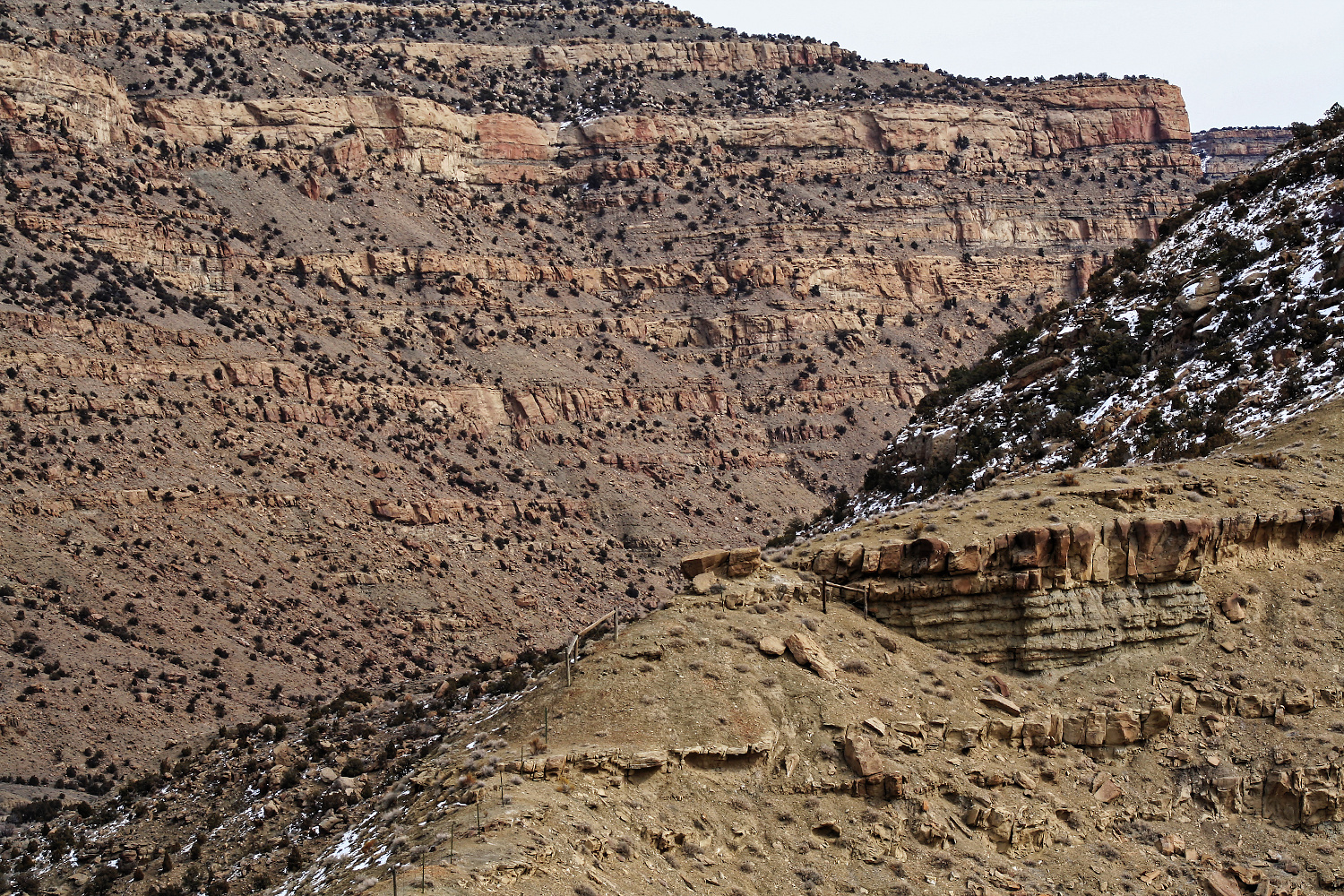
This is a 5-day in-depth introduction to clastic reservoirs, with a focus on stratigraphic and structural heterogeneities that impact reservoir prediction and production. The course will benefit any subsurface team member that is concerned about how variations in the geology might impact reservoir performance. Taking this course will allow one to better interpret subsurface data sets and outcrop exposures, resulting in a better understanding of the impact of stratigraphic and structural heterogeneities on reservoir performance.

It is recommended that you take this class before taking Clastic Reservoirs Field Seminar: Stratigraphic and Structural Heterogeneities That Impact Reservoir Performance, Colorado and Utah (G012) in order to make better outcrop observations and understand the terminology used in field discussions. This will maximize the benefit of time spent in the field for G012 participants.

Duration and Logistics

Classroom version: 5 days; a mix of lectures (75%) and hands-on exercises (25%). The manual will be provided in digital format and participants will be required to bring a laptop or tablet computer to follow the lectures and exercises.

Virtual version: Five 4-hour interactive online sessions presented over 5 days. A digital manual and exercise materials will be distributed to participants before the course. Some reading and several exercises are to be completed by participants off-line.

Level and Audience

Fundamental. It is a background course for subsurface team members to teach geologic basics that are often missed when predicting/understanding reservoirs. These basics can be applied to better predict reservoir performance for estimating reservoir productivity in exploration projects. It also allows for better field development planning and provides understanding of conformance issues within an existing field.

Objectives

You will learn to:

  1. Understand detailed facies analysis within deposits of wave dominated deltas, fluvial dominated deltas, fluvial systems, tidal/estuarine, eolian and turbidites.
  2. Recognize key facies in cores and logs.
  3. Use depositional models to make better reservoir geometry predictions.
  4. Divide subsurface reservoirs into flow units that capture key reservoir flow characteristics and heterogeneities at a variety of reservoir model scales.
  5. Communicate and discuss flow unit properties with subsurface team disciplines.
  6. Use key sequence stratigraphic concepts in a practical and predictive way.

Modern and Ancient Tide- and Wave-influenced Depositional Systems: Subsurface Uncertainties in Shallow Marine Reservoirs, SE England, UK (G070)

Tutor(s)

Howard Johnson: Shell Professor of Petroleum Geology, Head of the Petroleum Geoscience and Engineering Section, and Director of Petroleum Geoscience, Imperial College London.

Overview

Tide- and wave-influenced marginal marine hydrocarbon reservoirs offer a range of subsurface interpretation and development challenges. This course will use both modern and ancient systems to analyze the architecture, internal characteristics, distribution and reservoir quality of a variety of sand-dominated deposits. Modern deposits of the North Norfolk coastline will be used to explore the range of depositional processes operating and the resultant spatial distribution and internal attributes of potential reservoir units. These will be compared with Lower Cretaceous outcrops preserving a range of tidal-influenced and marine embayment deposits. Focus will be placed on the key development challenges in these marginal marine clastic systems.

Duration and Logistics

A 5-day field course comprising a mix of fieldwork, classroom lectures and practical sessions. Classroom learning and field observations will be supported and reinforced by exercise work. The course will be based in Hunstanton with easy access to the coastal field area. Transport will be by coach.

Level and Audience

Intermediate. The course is intended for geologists and reservoir engineers with a knowledge of petroleum geoscience who are working on marginal marine reservoir systems, particularly those preserving evidence of tidal influence.

Exertion Level

This field course requires an EASY exertion level. The first field day is in a quarry at Leighton Buzzard and involves a walk of about 2km (1.25 miles) to the main quarry face. The remaining field locations on the Norfolk coast are accessed by walks of less than 3.5km (2 miles) along flat sandy beaches and tidal channels that may be muddy and slippery in parts.

Objectives

You will learn to:

  1. Interpret the depositional processes and environments that occur in fluvial-, tide- and wave-influenced clastic coastal depositional systems and relate these to the recognition of their ancient equivalents.
  2. Relate individual modern environmental systems to the larger regional-scale, including modern and ancient marine embayment and coastal barrier systems.
  3. Consider the range of geological controls on the reservoir architecture of clastic coastal deposits and relate this understanding to prediction of reservoir sand presence, geometry and rock properties.
  4. Analyze shallow marine sands in outcrop, with particular focus on internal heterogeneity, including potential permeability barriers and baffles.
  5. Assess the broader scale outcrop setting, in terms of the basinal depositional framework and use this understanding to inform prediction of reservoir distribution.
  6. Place clastic coastal depositional systems into their sequence stratigraphic significance, including addressing reservoir occurrence in transgressive and regressive settings.
  7. Use the modern and ancient examples discussed in the classroom and observed in the field to consider implications for exploration and development, particularly with regards to the subsurface reservoirs of the North Sea.