World-class training for the modern energy industry

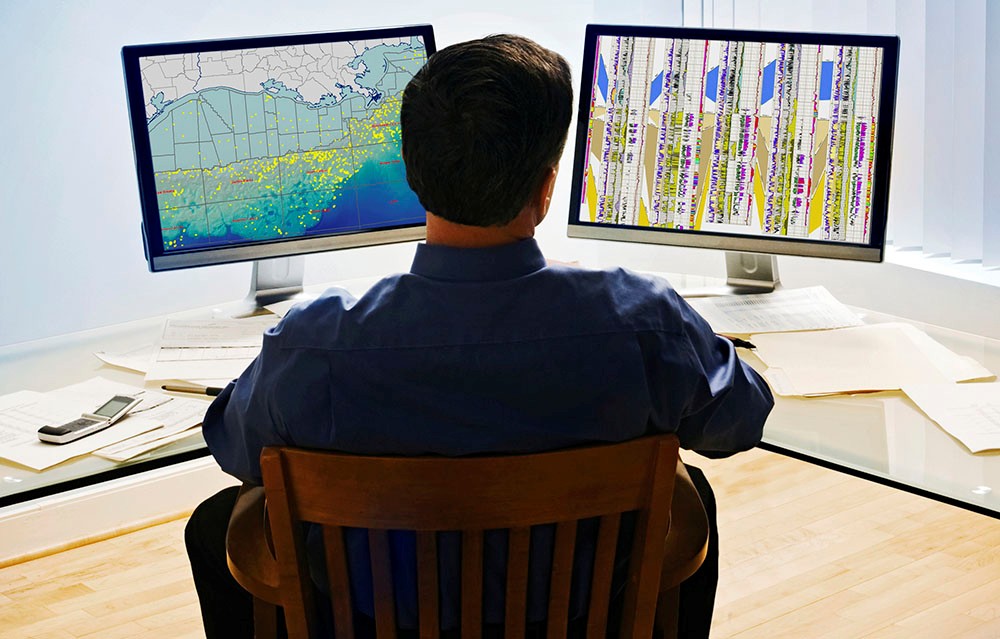
Introduction to Log Analysis and Petrophysical Characterization (G104)

Tutor(s)

Joe Landry: President, Petrophysical Solutions Inc.

Overview

This course will review basic interpretation techniques from conventional logs with a focus on key reservoir properties.

Duration and Logistics

Classroom version: A three-day classroom course comprising a mixture of lectures and exercises. The course manual will be provided in digital format.

Level and Audience

Fundamental. This course is designed for those without any experience or familiarity with logs.

Objectives

You will learn to:

  1. Introduction and review of key rock properties and terminology used.
  2. Understand the wellbore environment and how this can affect the data acquired.
  3. Review data types and acquisition technologies.
  4. Understand log types and evaluate appropriate display scales.
  5. Evaluate and QC log data.
  6. Review the Archie equation and how it is used to determine water saturation.
  7. Understand the limitations and pitfalls of the described interpretation techniques particularly with respect to deepwater reservoirs in the Gulf of Mexico.
Integration of Rocks and Petrophysical Logs (G059)

Tutor(s)

Greg Samways: Director, Geolumina.

Overview

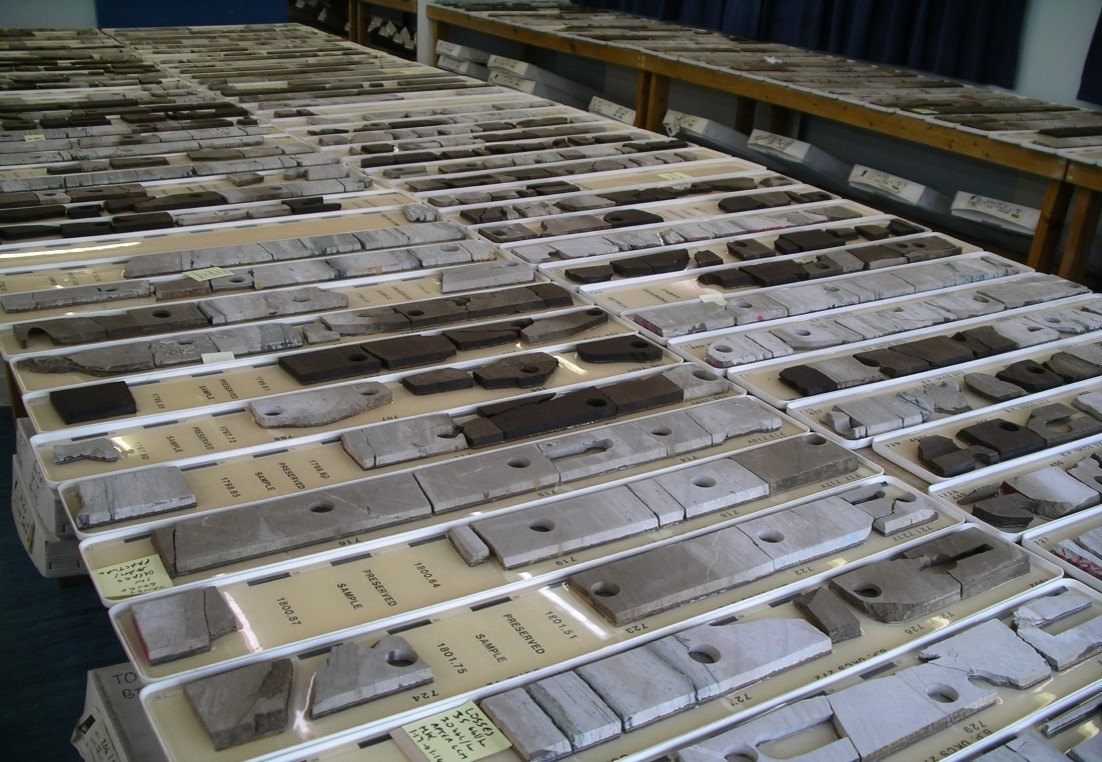
This course will focus on a simple petrophysical workflow entailing the determination of rock properties from conventional logs and core analysis data. Lithology, porosity, permeability and saturations will be determined using a variety of different analytical and simple modelling methods. Emphasis will be placed on understanding the importance of calibration, integration, and validation of the results of each method, based on a fundamental understanding of the geological controls on petrophysical properties.

Duration and Logistics

Classroom version: 3-days with a mix of lectures and exercises. The manual will be provided in digital format and participants will be required to bring a laptop or tablet computer to follow the lectures and exercises.

Virtual version: Five, 3.5-hour interactive online sessions presented over 5 days. The course will focus on problem-solving using real-world data and use a series of Excel workbooks. A digital manual and exercise materials will be distributed to participants before the course.

Level and Audience

Fundamental. This course is intended for non-petrophysicists who require a grounding in the petrophysical determination of lithology, porosity and saturation from conventional and special core analysis, and conventional open-hole logs.

Objectives

You will learn to:

  1. Understand the fundamental geological controls on reservoir properties.
  2. Describe how these properties are measured in the laboratory using conventional and special core analysis methods.
  3. Characterize the ways in which lithology and porosity are determined from well logs and calibrated with core analysis, and how permeability may be estimated in the subsurface away from core control.
  4. Evaluate how the Archie equation is used to determine saturation in cores and from well logs, and the uncertainties and limitations with this method
  5. Investigate how saturation-height models can be created from special core analysis data, thereby avoiding some of the limitations of the Archie method.
  6. Interpret typical conventional log and core analysis data using Excel spreadsheets.
  7. Experiment with the sensitivities of input parameters for various determinations, such as V-Shale, porosity and saturation.

Essential Data Science for Subsurface Geoscientists and Engineers (G065)

Tutor(s)

David Psaila: Director of Data Science for the Digital Subsurface, Analytic Signal Limited.

Overview

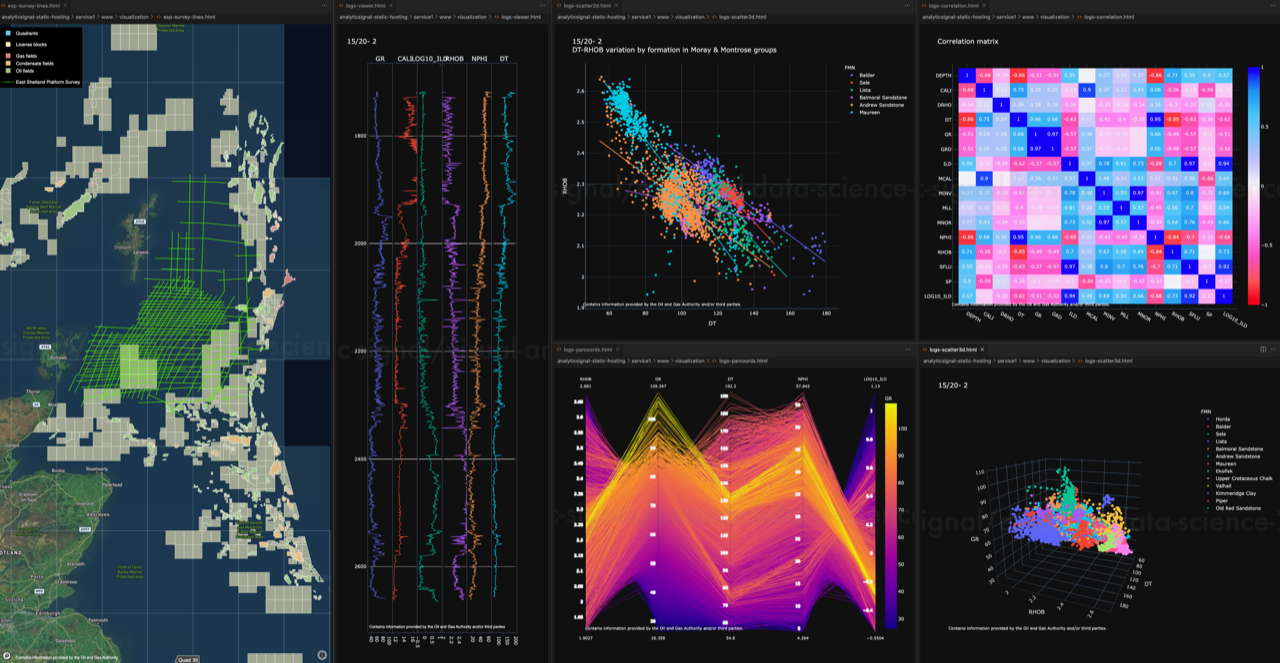
Interest in data science and machine learning is rapidly expanding, offering the promise of increased efficiency in E&P, and holding the potential to analyse and extract value from vast amounts of under-utilised legacy data. Combined with petroleum geoscience and engineering domain knowledge, the key elements underlying the successful application of the technology are: data, code, and algorithms. This course builds on public datasets, code examples written in Python, statistical graphics, and algorithms from popular data science packages to provide a practical introduction to the subject and its application in the E&P domain.

Duration and Logistics

Classroom version: 5 days consisting of lectures and computer-based exercises and practicals.

Virtual version: Ten, 3-hour online sessions presented over 5 days. The course is at an introductory level and all subject matter will be taught from scratch. No prior experience of statistics, Python coding or machine learning is required, although some basic college level knowledge of maths and statistics is useful. Hands-on computer workshops form a significant part of this course, and participants must come equipped with a laptop computer running Windows (8, 10, 11) or MacOS (10.10 or above) with sufficient free storage (4 Gb). Detailed installation instructions are provided in advance so that participants can set up their computer with the data science toolkit and course materials before the course starts.

Level and Audience

Fundamental. This is an introductory course for reservoir geologists, reservoir geophysicists, reservoir engineers, data management, and technical staff who want to learn the key concepts of data science.

Objectives

You will learn to:

  1. Analyse project data using the data science toolkit; notebooks, visualization, and communication.
  2. Perform data import and manipulation, data visualization, exploratory data analysis, and building predictive models from data.
  3. Have a working knowledge of coding in Python.
  4. Coordinate reference systems including geographic and projected coordinate systems.
  5. Use the fundamentals of machine learning including background concepts, the different types of machine learning, and the basic workflow to build and evaluate models from data.

Uncertainty and Risk in Development: Quantifying Subsurface Risk and Uncertainty for Producing Assets (G038)

Tutor(s)

Mark Bentley or Mark Cook: TRACS International Consultancy.

Overview

The quantification of risk and uncertainty is often discussed in the context of exploration and appraisal, yet most of the upstream E&P business concerns decision-making in producing assets. Handling uncertainty in development and production must deal with a growing and often imperfect production database, against a backdrop of constantly changing circumstances. As the life cycle progresses, initial uncertainties over volume and productivity narrow but are supplanted by new uncertainties, such as sweep efficiency, fine scale architecture and changing responses to new production mechanisms and techniques. These new issues demand a change in approach for the quantification of uncertainty, and vigilance is required to avoid the subsurface interpretation simply collapsing to a best guess. This short, focused workshop explores the key aspects required to manage subsurface uncertainties and associated risks during the producing field life, in terms of people, tools and approach. It will close with a set of questions to ask yourself and others, suitable for reference in informal personal or team reviews, peer reviews and peer assists.

Duration and Logistics

Classroom version: A 1-day course comprising a mix of lectures, case studies and exercises. The manual will be provided in digital format and participants will be required to bring a laptop or tablet computer to follow the lectures and exercises.

Virtual version: Two 4-hour interactive online sessions presented over 2 days. A digital manual and exercise materials will be distributed to participants before the course. Some reading and several exercises are to be completed by participants off-line.

Level and Audience

Advanced. Designed for geoscientists, reservoir engineers, petrophysicists, well technologists, team leaders and management involved in the quantification of risk and uncertainty in fields under development or in production. The class will provide an opportunity for learning, inspiration and discussion with other modelers.

Objectives

You will learn to:

  1. Resolve misunderstandings over definitions in risk and uncertainty.
  2. Understand the key differences between uncertainty and risk in development, compared to exploration and appraisal.
  3. Explain and mitigate common errors in handling probability.
  4. Describe workflows for handling risk and uncertainty in development decisions.
  5. Account for the impact of cognitive bias in E&P, and what to do about it.

Introduction to Subsurface Pressures (G085)

Tutor(s)

Richard Swarbrick: Manager, Swarbrick GeoPressure.

Overview

This course introduces attendees to subsurface fracture pressures and fluid pressures, their relevance to subsurface phenomena and assessing risk in deep boreholes. An understanding of pressure is critical for subsurface industries including oil/gas exploitation, carbon sequestration, geothermal energy, waste disposal and hydrogeology, as well as surface aspects such as slope failure. The course teaches the details of what data can be collected and how it can be visualized and interpreted, underpinning more detailed geological and engineering studies.

Duration and Logistics

Classroom version: A 2-day course comprising a mix of lectures, case studies and exercises. The manual will be provided in digital format and participants will be required to bring a laptop or tablet computer to follow the lectures and exercises.

Virtual version: Four 3.5-hour interactive online sessions presented over 4 days. A digital manual and exercise materials will be distributed to participants before the course. The course is rich in exercise material to build up participants’ understanding and confidence in a variety of techniques.

Level and Audience

Fundamental. Intended for all hydrologists, geologists, geophysicists and geomechanical and reservoir engineers. Knowledge of subsurface geology is not required but would be an advantage. Highly relevant to all who are studying the subsurface and especially those engaged in deep drilling and storage.

Objectives

You will learn to:

  1. Understand how fluid pressure and fracture pressure are relevant to subsurface geology.
  2. Evaluate the types of pressure data and measurements possible in the subsurface.
  3. Create plots and maps of pressure data to solve subsurface puzzles (e.g. compartmentalization of reservoirs; distinguishing between hydrodynamic vs hydrostatic flow conditions; and recognition of abnormal pressures).
  4. Appreciate the link between fluid pressure and fracture pressure, and appropriate coupling values.
  5. Recognize how and where pressure data relate to specific events (e.g. slope failure; surface fluid release phenomena; earthquakes and other ground movements).

Best Practices in Pore Pressure and Fracture Pressure Prediction (G043)

Tutor(s)

Richard Swarbrick: Manager, Swarbrick GeoPressure.

Overview

This course presents best practices in how data and standard techniques are combined to generate meaningful pore pressure (PP) and fracture pressure (FG) estimates from log, seismic and drilling data, and to use them to develop pre-drill predictions. The limitations are addressed, along with common pitfalls, leading to an understanding of the uncertainty and risk associated with PP and FG prediction.

The course begins by showing the types and reliability of subsurface data used to inform current knowledge, which will also calibrate PP and FG predictions at a remote location. Standard approaches to PP and FG prediction techniques are taught, with careful attention to where these have limitations on account of subsurface environment (thermal, tectonic) and data quality. A new approach to PP prediction using shales is taught as an independent guide to expected PP, especially valuable where only seismic data are available. Prediction of FG is taught by showing how to determine overburden stress and apply standard relationships, including new approaches with PP-stress coupling.

Duration and Logistics

Classroom version: A 2-day classroom course comprising a mix of lectures and discussion (90%) and exercises (10%). The manual will be provided in digital format, and participants will be required to bring a laptop or tablet computer to follow the lectures and exercises.

Virtual version: Four 3.5-hour interactive online sessions presented over 2 to 4 days. A digital manual and exercise materials will be distributed to participants before the course. Some reading and several exercises are to be completed by participants off-line.

Level and Audience

Intermediate. Intended for exploration and development geoscientists, petrophysicists, operations staff and drilling engineers. Familiarity with oilfield data and drilling practices is required. Experience shows that mixed classes of geoscientists and engineers benefit particularly from the discussions and sharing of approaches in this multi-disciplinary area of work.

Objectives

You will learn to:

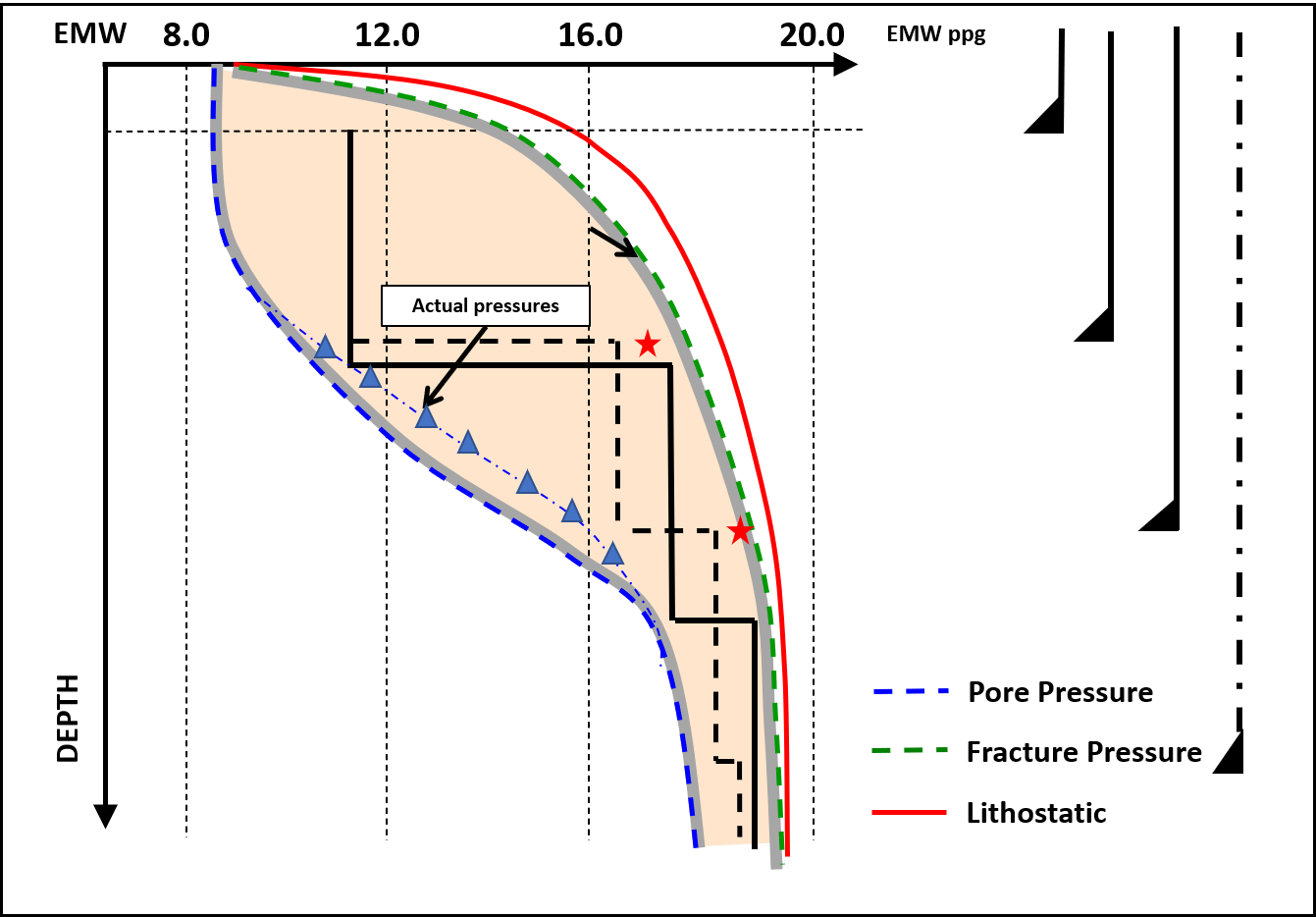
  1. Distinguish the different types and quality of data that populate pressure-depth and EMW-depth plots for display of pressure predictions and calibration data in well planning.
  2. Use best practice to create PP estimations and predictions from seismic, log and drilling data using standard porosity-based techniques, and from modelling geological systems.
  3. Use best practice to create FG estimations and predictions by generating an overburden and establishing its relationship with FG and PP.
  4. Communicate Min-Expected-Max predictions effectively to both geoscience and engineering/operations staff involved in well planning.

Creativity and Innovation Skills for E&P (G029)

Tutor(s)

Henry Pettingill: Senior Associate, Rose & Associates LLP; President, Geo Ventures International Inc.

Niven Shumaker: Independent Consultant.

Overview

This course addresses how value is created from creativity and innovation. It provides participants with practical tools and methodologies to become more creative, and to make innovation actionable. Creativity and innovation are learnable skills, with step-wise approaches possible. Participants will leave with tools that allow them to formulate an action plan that can be used when they get back to work.

The course is interactive and practical. It uses group discussions and exercises to develop creative thinking techniques, models and frameworks that can be applied to real life oil and gas industry situations. It stresses breaking away from the “business as usual” environment.

Duration and Logistics

Classroom version: 2 days; a mix of lectures, case studies and discussion groups. The manual will be provided in digital format and participants will be required to bring a laptop or tablet computer to follow the lectures and exercises.

Virtual version: Four 4-hour interactive online sessions presented over 4 days. A digital manual and hard-copy exercise materials will be distributed to participants before the course.

Level and Audience

Fundamental. Intended for oil and gas industry staff responsible for solving problems, visualizing opportunities or developing new business streams. Suitable for managers and team members in technical, financial or support positions.

Objectives

You will learn to:

  1. Apply the fundamentals of creativity and innovation to create value.
  2. Prepare for creative thinking and to improve your creative skills.
  3. Implement the concepts of creative thinking critical to innovation, such as associative thinking and disruptive thinking.
  4. Develop questioning skills, effectively employing both descriptive and disruptive questions.
  5. Apply the five critical aspects of creative thinking and determine your current state in each one.
  6. Challenge your own thinking and your “status quo” mindset.
  7. Understand the various types of innovation and how they can be applied your challenges.
  8. Assess your own level in each of the five behaviors of innovative business leaders, where you can improve on each and how to leverage other people with complementary skills.