World-class training for the modern energy industry

The Fundamentals of Hydrogen Energy (G903)

Tutor(s)

Kevin Taylor: Professor in Energy Geoscience, University of Manchester.

Overview

The aim of this course is to give an overview of the fundamental aspects of the current hydrogen energy landscape. This will include a range of topics, including what hydrogen is and why it can potentially be a significant fuel and energy carrier, the different methods in which it can be produced, its potential role in decarbonization of energy and heat, how it can be stored in the subsurface, and its place overall within the energy transition.

Duration and Logistics

Classroom version: A half-day course comprising a mix of lectures, case studies and exercises. The manual will be provided in digital format and participants will be required to bring a laptop or tablet computer to follow the lectures and exercises.

Virtual version: One 3-hour interactive online session. A digital manual and exercise materials will be distributed to participants before the course.

Level and Audience

Awareness. The course is aimed at non-technical staff and those who do not have a scientific background but want a basic introduction to the topic. The subject matter will be covered from very basic principles and will be of interest to staff from a range of departments, including legal, graphics, administration and technical support.

Objectives

You will learn to:

  1. Understand what hydrogen is and why it can be used as a fuel and energy carrier.
  2. Describe how hydrogen can be produced and the resulting different types and terminology.
  3. Appreciate the role hydrogen can play in decarbonizing energy and heat, and the competing demands in the hydrogen energy landscape.
  4. Appreciate the different storage options for hydrogen, particularly in the subsurface.
  5. Recall details of the developing hydrogen supply chains, including infrastructure and distribution networks.

The Fundamentals of Carbon Capture and Storage (G902)

Tutor(s)

Richard Worden: Professor in the Department of Earth Ocean and Ecological Sciences, University of Liverpool, UK.

Overview

The aim of this course is to provide an overview of what carbon capture and storage is, how it works and its role in decarbonization and the energy transition.

Duration and Logistics

Classroom version: A half-day course comprising a mix of lectures, case studies and exercises. The manual will be provided in digital format and participants will be required to bring a laptop or tablet computer to follow the lectures and exercises.

Virtual version: One 3-hour interactive online session. A digital manual and exercise materials will be distributed to participants before the course.

Level and Audience

Awareness. The course is aimed at non-technical staff and those who do not have a scientific background but want a basic introduction into the topic. The subject matter will be covered from very basic principles and be of interest to staff from a range of departments, including legal, graphics, administration and technical support.

Objectives

You will learn to:

  1. Understand what carbon capture and storage is.
  2. Appreciate why carbon capture and storage is needed to reduce emissions.
  3. Outline how carbon capture and storage works.
  4. Discuss carbon capture and storage project risks and uncertainties.

The Fundamentals of Wind and Solar Power (G907)

Tutor(s)

Brian Matthews: Independent Consultant, Founder and Managing Director of TerraUrsa.

Overview

The aim of this course is to provide an overview of wind and solar power technology, how it works and its role in decarbonization and the energy transition.

Duration and Logistics

Classroom version: A half-day course comprising a mix of lectures, case studies and exercises. The manual will be provided in digital format and participants will be required to bring a laptop or tablet computer to follow the lectures and exercises.

Virtual version: One 3-hour interactive online session. A digital manual and exercise materials will be distributed to participants before the course.

Level and Audience

Awareness. The course is aimed at non-technical staff and those who do not have a scientific background but want a basic introduction into the topic. The subject matter will be covered from very basic principles and be of interest to staff from a range of departments including legal, graphics, administration and technical support.

Objectives

You will learn to:

  1. Understand why there is a need to transition to renewable energy.
  2. Recall the challenges of a Net Zero energy transition.
  3. Appreciate how wind and solar power technology works and what the management of an asset looks like through its life.
  4. Describe what the business opportunities are for using, developing and investing in renewable energy.
  5. Have an awareness of what the policy and government strategies are that support a Net Zero transition.

The Fundamentals of Geothermal Energy (G904)

Tutor(s)

Mark Ireland: Lecturer in Energy Geoscience, Newcastle University.

Overview

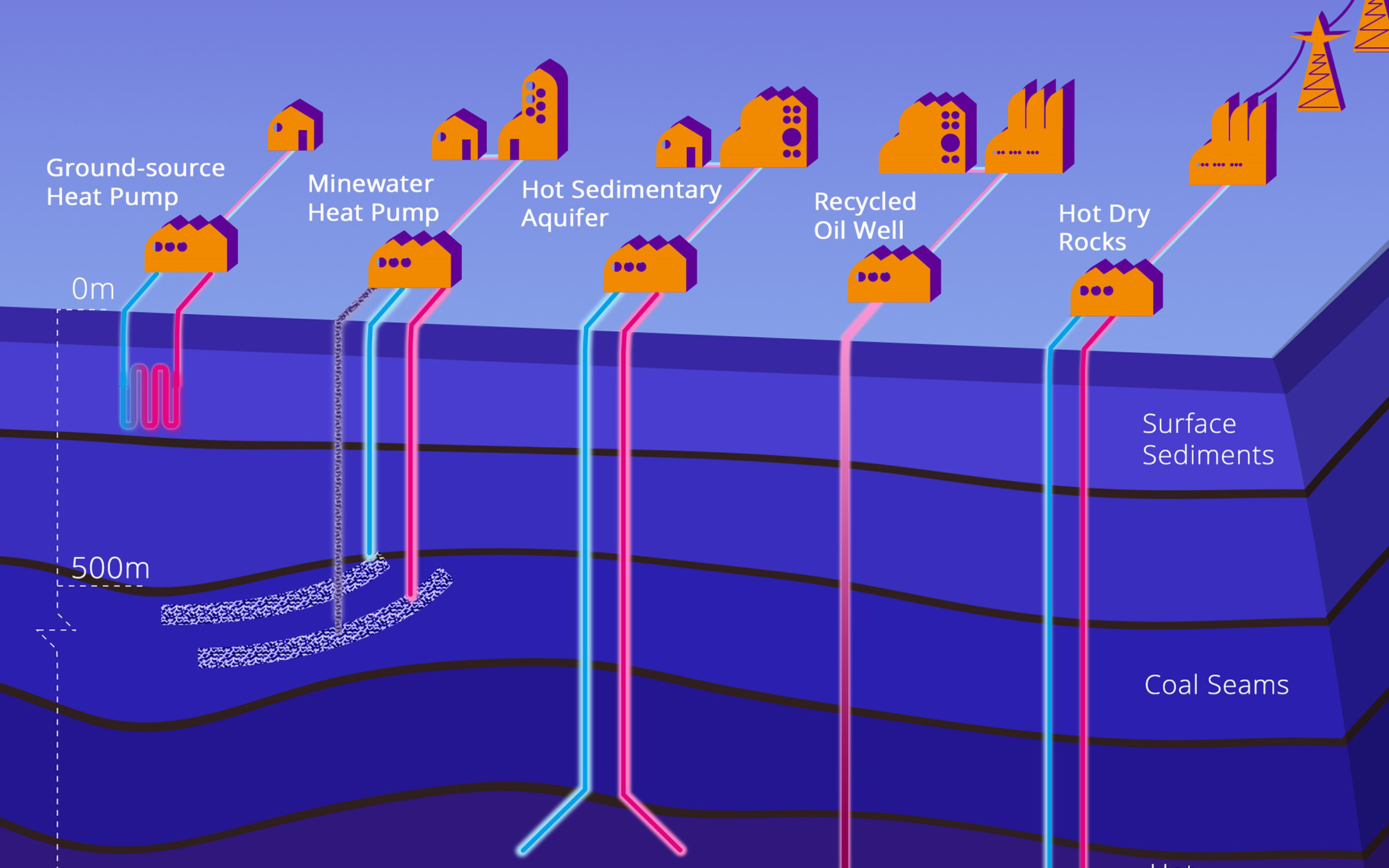
The aim of this course is to provide an overview of what geothermal energy is and how it can be used in our modern world.

Duration and Logistics

Classroom version: A half-day course comprising a mix of lectures, case studies and exercises. The manual will be provided in digital format and participants will be required to bring a laptop or tablet computer to follow the lectures and exercises.

Virtual version: One 3-hour interactive online session. A digital manual and exercise materials will be distributed to participants before the course.

Level and Audience

Awareness. The course is aimed at non-technical staff and those who do not have a scientific background but want a basic introduction to the topic. The subject matter will be covered from very basic principles and will be of interest to staff from a range of departments, including legal, graphics, administration and technical support.

Objectives

You will learn to:

  1. Understand what geothermal energy is.
  2. Outline the applications and use of geothermal energy.
  3. Describe the key characteristics of geothermal resources.
  4. Discuss geothermal project risks and uncertainties.

Principles of Subsurface Energy Storage (G564)

Tutor(s)

Kevin Taylor: Professor in Energy Geoscience, The University of Manchester.

Overview

The aim of this course is to give an overview of the requirement, and the range of subsurface solutions, for energy storage. It will cover the key aspects of energy supply and demand, the role that subsurface energy storage can play in addressing this, and the key role that subsurface energy storage will play in decarbonizing energy as a key part of the energy transition. We will cover the fundamental geological, technical, environmental and societal aspects of hydrogen storage, compressed air storage, natural gas storage and heat storage. We also will briefly cover emerging solutions, such as chemical subsurface storage and geo-batteries.

Duration and Logistics

Classroom version: A 1-day course comprising a mix of lectures, case studies and exercises. The manual will be provided in digital format and participants will be required to bring a laptop or tablet computer to follow the lectures and exercises.

Virtual version: Two 3.5-hour interactive online sessions. Some short exercises (e.g. handling some basic data, estimating energy storage capacity, etc.) will be undertaken within the course. In-course questions / polls will be included. A digital manual and exercise materials will be distributed to participants before the course.

Level and Audience

Fundamental. The course is aimed at technical staff from a wide range of backgrounds, and an understanding of specific subsurface geoscience / engineering will not be assumed. The subject matter will be covered from first principles and will be of interest to staff from a range of backgrounds, including geological, engineering and commercial.

Objectives

You will learn to:

  1. Understand the nature of energy demand and supply within the context of the energy transition and the necessity for energy storage.
  2. Recognize the different ways in which energy can be stored in the subsurface, including natural gas storage, hydrogen storage, compressed air storage and heat storage.
  3. Appreciate the specific geological and technical requirements for different energy storage solutions, along with examples of where these are being deployed.
  4. Appreciate the challenges around subsurface storage, including fluids, gas and geomicrobiology aspects.
  5. Be able to frame subsurface energy storage within environmental, social and governance (ESG) considerations.

Geothermal Drilling and Completion (G558)

Tutor(s)

Catalin Teodoriu: Mewbourne Chair in Petroleum Geology, The University of Oklahoma.

Overview

This course covers fundamental aspects of geothermal drilling and completion engineering, highlighting the differences between conventional oil and gas and geothermal activities. It encompasses the main geothermal drilling characteristics, focusing on deep geothermal well construction and completion concepts. The course also covers conventional and unconventional geothermal technologies, addressing the need of drilling and completion challenges. The last part of the course will concentrate on well integrity aspects, ranging from existing oil and gas wells to built-for-purpose geothermal wells.

Duration and Logistics

Classroom version: A 3-day course comprising a mix of lectures, case studies and exercises. The manual will be provided in digital format and participants will be required to bring a laptop or tablet computer to follow the lectures and exercises.

Virtual version: Five 4-hour interactive online sessions presented over 5 days. A digital manual will be distributed to participants before the course. Some reading is to be completed by participants off-line.

Level and Audience

Advanced. The course is intended for geoscientists wishing to learn the engineering aspects of geothermal project implementation, and oil and gas professionals transitioning towards sustainable energy opportunities.

Objectives

You will learn to:

  1. Identify key factors in streamlining geothermal project decision making processes.
  2. Understand different management styles and their impacts on geothermal planning and execution.
  3. Identify the uncertainties and risks associated with drilling geothermal wells.
  4. Assess the impact of different well construction and completion concepts on the life of the well integrity.
  5. Discuss and analyze case studies involving different geothermal well construction solutions.

An Introduction to Clastic and Carbonate Depositional Systems (G064)

Tutor(s)

Jon Noad: Senior Palaeontologist at Stantec and President of Sedimental Services.

Overview

The aim of this course is to provide an overview of clastic and carbonate depositional settings. Different systems will be analysed in terms of their sedimentary structures, architecture and subsurface character. The first section will focus on clastic settings including aeolian, fluvial and shallow marine and especially the nature of the preserved sand bodies in the subsurface. The second section will explore the diverse topic of carbonate depositional settings, including the ranges of carbonate textures and facies that can be preserved and the different types of porosity. Each section will incorporate case studies, exercises and core examples.

Duration and Logistics

Classroom version: 3 days including a mix of lectures and exercises. The course manual will be provided in digital format and participants will be required to bring along a laptop or tablet to follow the lectures and exercises.

Virtual version: Three, 3.5 hour online sessions presented over 3 days. Digital course notes and exercises will be distributed to participants before the course.

Level and Audience

Fundamental. The course is largely aimed at geoscientists who are working on subsurface projects where a wide-ranging understanding of both clastic and carbonate depositional systems is required.

Objectives

You will learn to:

  1. Recognise different clastic environments of deposition including fluvial, aeolian deltaic and shallow marine.
  2. Recognise different sedimentary structures and sedimentary architectures.
  3. Understand the types of sand bodies and associated stacking patterns that are preserved in clastic depositional settings.
  4. Describe the heterogeneities in subsurface clastic reservoirs that can impact fluid flow.
  5. Appreciate how carbonates are classified and different carbonate settings are identified.
  6. Frame the main types of carbonate platform types and corresponding deposits.
  7. Understand the wide range of carbonate textures and facies that make up carbonate reservoirs.
  8. Recognise the different types of porosity and the impact of these on reservoir quality.

Hydrogen Masterclass: Production, Geological Storage and Operational Engineering (G552)

Tutor(s)

Katriona Edlmann: Chancellor’s Fellow in Energy, The University of Edinburgh.

Overview

Future energy scenarios foresee a prominent and growing role for hydrogen. Demand is likely to rapidly exceed the capacity of typical above-ground energy storage technologies, necessitating the need for the geological storage of hydrogen in engineered hard rock caverns, solution mined salt caverns, depleted gas fields and saline aquifers. This course will firstly provide participants with an overview of the current hydrogen landscape, including its likely role in the energy transition, production and economic challenges. The course will then focus on the need for geological storage, introducing the geological storage options available for the secure storage and withdrawal of hydrogen from these different geological stores. The main body of the course will then explore the key considerations involved in geological hydrogen storage including hydrogen flow processes and thermodynamics, geomechanical responses to rapid injection and withdrawal cycles, geochemical and microbial interactions during storage, and the operational considerations and monitoring of hydrogen storage sites that may impact storage integrity, withdrawal rates and hydrogen purity.

Duration and Logistics

Classroom version: A 3-day course comprising a mix of lectures, case studies and exercises. The manual will be provided in digital format and participants will be required to bring a laptop or tablet computer to follow the lectures and exercises. 

Virtual version: Five 4-hour interactive online sessions presented over 5 days. Digital course notes and exercise materials will be distributed to participants before the course. Some exercises may be completed by participants off-line.

Level and Audience

Intermediate. The course is largely aimed at geoscientists, but engineers will also find the course instructive. Intended for sub-surface scientists, with an emphasis on geoscience topics. Participants will probably have a working knowledge of petroleum geoscience. However, the main subject matter of this course, the geoscience of hydrogen production and storage, is covered from basic principles.

Objectives

You will learn to:

  1. Appreciate the role of geoscience in the hydrogen economy and the contribution hydrogen can make to the energy transition in support of Net Zero emission targets.
  2. Describe the different processes involved with hydrogen production and the associated lifecycle carbon intensity of this production.
  3. Recall details of the developing hydrogen supply chains, including infrastructure considerations, distribution networks and pathways for market growth.
  4. Describe the different geological storage options available and their capacity and spatial constraints.
  5. Understand hydrogen as a fluid in the subsurface, including its thermodynamic and transport properties.
  6. Characterize the geomechanical considerations for storage integrity and associated risks, including caprock sealing considerations.
  7. Appreciate the impact of geochemical and microbial interactions in subsurface hydrogen stores and the relevant monitoring and management tools.
  8. Describe the operational engineering considerations and monitoring of hydrogen storage sites.

Geothermal Energy: Resources, Projects and Business Aspects (G529)

Tutor(s)

David Townsend: CEO, TownRock Energy.

Overview

This course explores the key themes of geothermal energy from the fundamentals of what a geothermal resource is and what it can offer, through to project examples and the business case. The course will explore a variety of geothermal resource types and current EU-based project examples, in addition to environmental considerations, legislation and future innovations and emerging technologies.

Duration and Logistics

Classroom version: A 2-day course comprising a mix of lectures, case studies and exercises. The manual will be provided in digital format and participants will be required to bring a laptop or tablet computer to follow the lectures and exercises.

Virtual version: Four 3.5-hour interactive online sessions presented over 4 days. A paper by the course presenter will be distributed to participants before the course, and materials for an interactive cashflow modelling exercise will be distributed during the course.

Level and Audience

Fundamental. The course is aimed at those individuals looking to transition to geothermal projects and/or who are new to the geothermal industry

Objectives

You will learn to:

  1. Understand the basics of geothermal resources and their use and applications.
  2. Recall the fundamental characteristics of geothermal resources and reservoirs.
  3. Appreciate the European potential for geothermal projects and case studies representative of the current state of active projects, as well as some case studies of unsuccessful projects.
  4. Describe the fundamentals of a geothermal project business case, including identifying the relevant stakeholders, the project development timeline and the risks and mitigations.
  5. Assess the financial framework of a geothermal project and how to create a business model and de-risk these projects.
  6. Assess the potential environmental impacts of geothermal developments.
  7. Understand how emerging technologies can be included as part of a geothermal project and how these could rewrite the way geothermal business models are developed in the future.

Geoenergy Production, Injection and Storage Engineering (G546)

Tutor(s)

Gioia Falcone: Rankine Chair of Energy and Engineering, University of Glasgow.

Overview

This course covers fundamental aspects and best practices of production, injection and storage engineering for different geoenergy applications, where the subsurface is used as a source (hydrocarbons, geothermal energy), or as a periodic/seasonal store (natural gas, compressed air, hydrogen, thermal energy), or as a sink (CO2, radioactive waste). The course focuses on an integrated system approach, to ensure compatibility between subsurface and surface engineering processes, and to understand scalability of technologies that may play a pivotal role in the transition to a sustainable energy future.

Duration and Logistics

Classroom version: A 3-day course comprising a mix of lectures, case studies and exercises. The manual will be provided in digital format and participants will be required to bring a laptop or tablet computer to follow the lectures and exercises.

Virtual version: Five 3.5-hour interactive online sessions presented over 5 days. A digital manual will be distributed to participants before the course. Some reading is to be completed by participants off-line.

Level and Audience

Advanced. The course is intended for geoscientists, geoengineers, project managers and regulators wishing to learn how to design, manage and monitor integrated geoenergy systems, from the subsurface to the surface (and vice versa), including the associated uncertainties and risks.

Objectives

You will learn to:

  1. Appreciate the different ways in which the subsurface can be exploited for different geoenergy applications.
  2. Bring together the different elements of a production/injection/storage geoenergy system towards integrated design and management.
  3. Identify the uncertainties and risks of different geoenergy projects over their lifetimes.
  4. Assess the impact of different operational requirements on overall system design and performance.
  5. Optimize system performance under constraints.