World-class training for the modern energy industry

Characterization, Modeling, Simulation and Development Planning in Deepwater Clastic Reservoirs, Tabernas, Spain (G076)

Tutor(s)

Mark Bentley: TRACS International Consultancy and Langdale Geoscience.

Overview

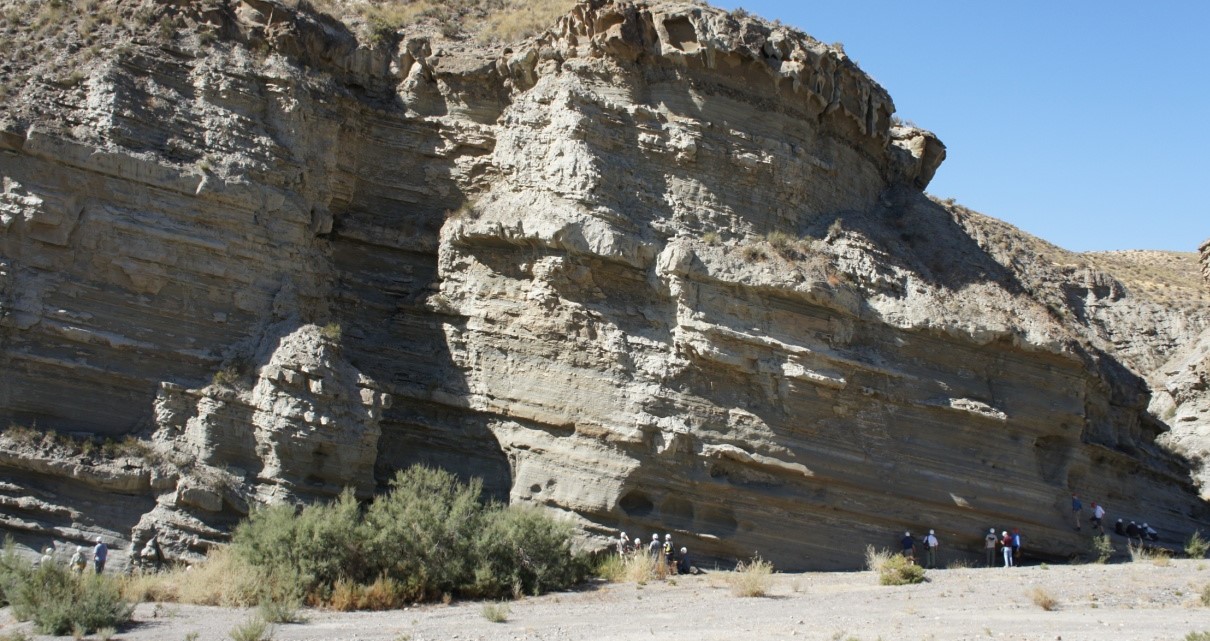
This course is led by a production geologist and reservoir engineer involved in deepwater reservoir development, and is presented as a practical reservoir discussion rather than purely a traditional geological field trip. The objective of this field course is to explore the reservoir modelling and petroleum engineering aspects of deepwater clastic reservoirs. The discussions highlight the linkage from depositional processes to geological architecture and flow heterogeneity in development planning. The Tabernas outcrops are very well exposed and offer examples of sand-rich and debris-flow-dominated reservoirs, high net:gross fan systems and classic mud-dominated facies. In particular, they give excellent insights into the reservoir heterogeneities occurring within apparently continuous ‘sand lobes’ and major channels.

Duration and Logistics

A 7-day field course based in Almeria, Spain, comprising a mix of field activities and exercises. Transport will be by SUV on paved roads and unpaved tracks.

Level and Audience

Advanced. The course is largely aimed at geologists and reservoir engineers working on deepwater developments. The course is best suited to multidisciplinary team of geologists, geophysicists, petrophysicists and reservoir engineers.

Exertion Level

This class requires a MODERATE exertion level. There will be multiple walks of up to 1km (0.5 mile) most days. The longest walk of the class is approximately 2km (1 mile), with an ascent (and descent) of 75m (245 ft). The field area is in Europe’s only desert region and participants should expect high temperatures and an arid working environment. Participants should also be prepared for sudden and heavy rain showers.

Objectives

You will learn to:

  1. Assess the genetic processes that produce slumps, slides, debrites and high/low density turbidites, and explain why the concept of confinement underpins the description of heterogeneity in deepwater clastic systems.
  2. Evaluate the extent to which pay is under-/over-estimated in mud-rich/sand-rich systems, respectively, and the resulting errors in STOIIP and PI estimation.
  3. Organise a detailed sedimentological description into key reservoir elements and build an architectural model using those elements.
  4. Assess the basic principle of flow in porous media (Darcy) and describe how flow heterogeneity varies in layered and amalgamated clastic systems.
  5. Appraise the contrasting heterogeneities in sand- and mud-rich systems and determine how much detail is required in a reservoir description based on a consideration of fluid type and production mechanism.
  6. Evaluate how kv/kh impacts recovery in typical deepwater clastic architectures; optimally locate a well to optimize sweep for a range of architectural cases.
  7. Judge length scale variations for a typical deepwater clastic system, and discuss how this would be handled in a reservoir modelling and simulation context.
Modern and Ancient Tide- and Wave-influenced Depositional Systems: Subsurface Uncertainties in Shallow Marine Reservoirs, SE England, UK (G070)

Tutor(s)

Howard Johnson: Shell Professor of Petroleum Geology, Head of the Petroleum Geoscience and Engineering Section, and Director of Petroleum Geoscience, Imperial College London.

Overview

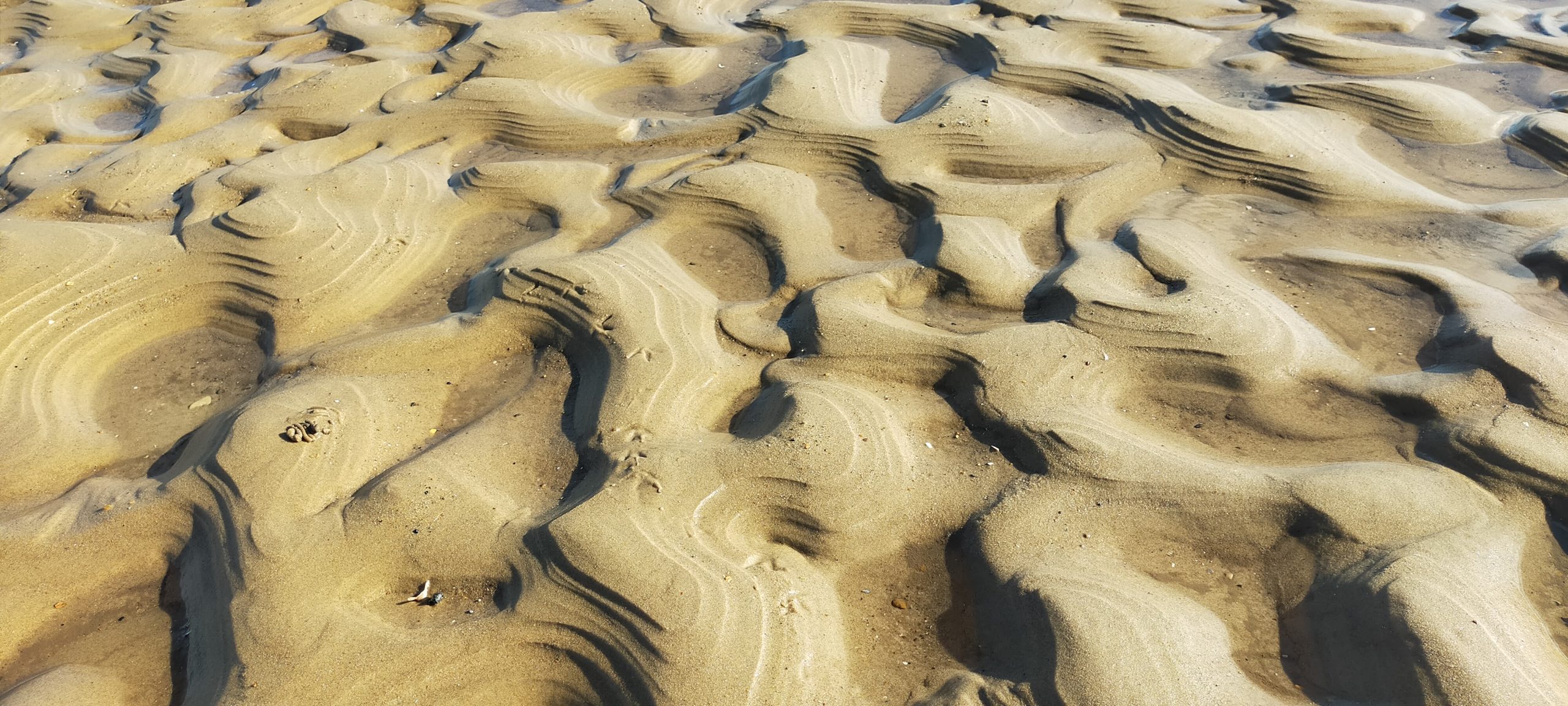
Tide- and wave-influenced marginal marine hydrocarbon reservoirs offer a range of subsurface interpretation and development challenges. This course will use both modern and ancient systems to analyze the architecture, internal characteristics, distribution and reservoir quality of a variety of sand-dominated deposits. Modern deposits of the North Norfolk coastline will be used to explore the range of depositional processes operating and the resultant spatial distribution and internal attributes of potential reservoir units. These will be compared with Lower Cretaceous outcrops preserving a range of tidal-influenced and marine embayment deposits. Focus will be placed on the key development challenges in these marginal marine clastic systems.

Duration and Logistics

A 5-day field course comprising a mix of fieldwork, classroom lectures and practical sessions. Classroom learning and field observations will be supported and reinforced by exercise work. The course will be based in Hunstanton with easy access to the coastal field area. Transport will be by coach.

Level and Audience

Intermediate. The course is intended for geologists and reservoir engineers with a knowledge of petroleum geoscience who are working on marginal marine reservoir systems, particularly those preserving evidence of tidal influence.

Exertion Level

This field course requires an EASY exertion level. The first field day is in a quarry at Leighton Buzzard and involves a walk of about 2km (1.25 miles) to the main quarry face. The remaining field locations on the Norfolk coast are accessed by walks of less than 3.5km (2 miles) along flat sandy beaches and tidal channels that may be muddy and slippery in parts.

Objectives

You will learn to:

  1. Interpret the depositional processes and environments that occur in fluvial-, tide- and wave-influenced clastic coastal depositional systems and relate these to the recognition of their ancient equivalents.
  2. Relate individual modern environmental systems to the larger regional-scale, including modern and ancient marine embayment and coastal barrier systems.
  3. Consider the range of geological controls on the reservoir architecture of clastic coastal deposits and relate this understanding to prediction of reservoir sand presence, geometry and rock properties.
  4. Analyze shallow marine sands in outcrop, with particular focus on internal heterogeneity, including potential permeability barriers and baffles.
  5. Assess the broader scale outcrop setting, in terms of the basinal depositional framework and use this understanding to inform prediction of reservoir distribution.
  6. Place clastic coastal depositional systems into their sequence stratigraphic significance, including addressing reservoir occurrence in transgressive and regressive settings.
  7. Use the modern and ancient examples discussed in the classroom and observed in the field to consider implications for exploration and development, particularly with regards to the subsurface reservoirs of the North Sea.

Progressive Deformation in the Arbuckle and Wichita Mountains: Implications for Mid-Continent and Resource Plays, Oklahoma (G083)

Tutor(s)

Kevin Smart: Manager, Earth Science Section, Space Science and Engineering Division, Southwest Research Institute.

David Ferrill: Institute Scientist, Space Science and Engineering Division, Southwest Research Institute.

Overview

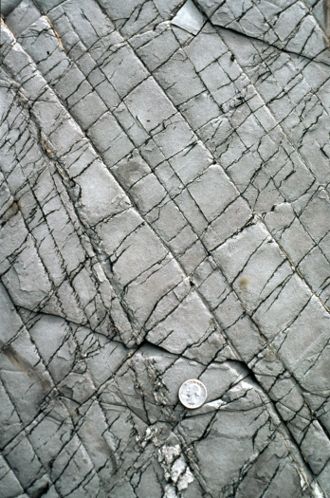
This field seminar will explore natural deformation in Paleozoic rocks in and around the Wichita and Arbuckle uplifts in southern Oklahoma. Investigating mechanical stratigraphy and the regional tectonic setting provides the context for understanding deformation features, such as joints, shear fractures, folds, faults and stylolites. Outcrop observations will be tied to the deformation conditions under which they developed, and related to the subsurface (cores, logs and stress data), to illustrate the critical importance of understanding deformation in the subsurface, including both pre-existing natural deformation and as analogs for deformation produced by induced hydraulic fracturing.

Duration and Logistics

A 5-day field course, comprising a mix of field exercises (85%) and classroom work (15%). The course will start in Lawton, Oklahoma, and end near Ardmore, Oklahoma.

Level and Audience

Intermediate. The course is aimed at geoscientists, petrophysicists, reservoir engineers and production engineers working in mechanically layered, deformed rocks in Oklahoma or other relatively gently deformed sedimentary foreland basins. It will be of particular interest to any geoscientists, petrophysicists and engineers working in unconventional reservoirs, including those in the Anadarko Basin.

Exertion Level

This course requires an EASY exertion level. Fieldwork is in southern Oklahoma, where the climate can be variable according to the season. Transportation is by SUVs. Most driving is on black-top roads, and most outcrops are adjacent to roads or within inactive quarries with uneven ground, where long strenuous hikes are not needed to access the exposures.

Objectives

You will learn to:

  1. Identify small-scale deformation features that are common in the SCOOP/STACK plays of the Anadarko basin and other unconventional reservoirs.
  2. Interpret stress conditions and stress evolution from small-scale deformation features.
  3. Characterize mechanical stratigraphy based on lithostratigraphy and rock strength information.
  4. Relate deformation styles to the tectonic setting of southern Oklahoma.
  5. Assess the role of mechanical stratigraphy, stress conditions and pre-existing deformation features on rock behavior, including fracture prediction in unconventional and conventional reservoirs.
  6. Consider, in general terms, the behavior of lithological units under different well completion strategies.
  7. Evaluate geomechanical issues for common petroleum and unconventional resource applications such as well design, borehole stability and hydraulic fracturing.

Modeling and Development Planning in Carbonate Reservoirs, Provence, France (G034)

Tutor(s)

Mark Bentley: TRACS International Consultancy and Langdale Geoscience.

Overview

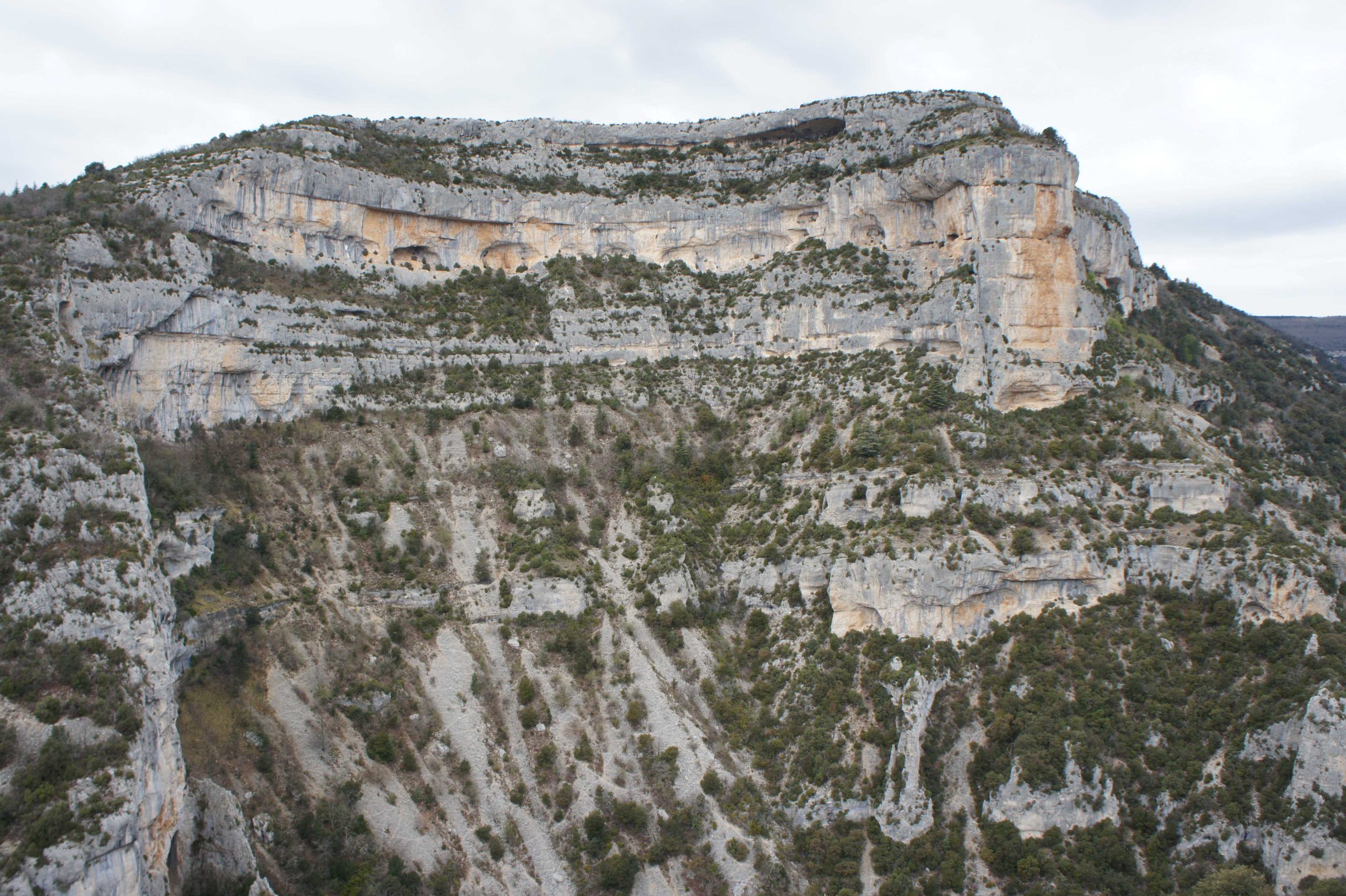
Using analogue outcrops in the Luberon and Cassis area of southern France, this course develops workflows for static and dynamic modeling in carbonate reservoirs, covering in particular the issues of conceptual reservoir characterization, the handling of scale and the representation of fracture detail in cellular models. The analogue section chosen is a direct analogue for Shuaiba/Kharaib Middle East reservoirs, including high and low energy areas of rudist platforms, inner and outer shelves, and chalks. The modeling principles are transferable to other carbonate environments.

Duration and Logistics

7 days; field activities and exercises (100%); the outdoors will be used as a classroom.

Level and Audience

Advanced. A course for technical professionals working in integrated teams who are planning development activities in carbonate reservoirs (reservoir engineers, geoscientists, petrophysicists) and all involved in reservoir and simulation modeling.

Exertion Level

This class requires an EASY exertion level. Provence is quite comfortable in the late summer to fall, with temperatures of 10-25°C (50-80°F) and occasional rain showers. The field locations are all easily accessible requiring only a short walk from the transport. The longest walk is approximately 0.5km (0.3 mile) along a road section. There will be one boat trip (weather dependent) to view key cliff exposures that can only be seen from offshore (1-2 hours duration).

Objectives

You will learn to:

  1. Describe a carbonate reservoir in terms of essential reservoir elements and the architectural arrangement of those elements.
  2. Evaluate reservoir property distributions for those elements in a form suitable for input to static/dynamic reservoir modeling.
  3. Judge the scale at which a static/dynamic modeling exercise should be conducted, including any need for multi-scale modeling.
  4. Prepare rules of thumb for effective property modeling in carbonates at a range of scales.
  5. Assess fracture systems in carbonates and explain the options for modeling them (explicit DFN vs implicit effective properties).
  6. Apply the concept of representative elementary volumes (REV) to fractured and unfractured carbonates.
  7. Discuss optimal development planning for an oil reservoir based on the outcrops seen during the course.
  8. Catch up with current research activities in carbonate reservoirs.

Reservoir Characterization of Deepwater Systems: Ross Formation, County Clare, Ireland (G023)

Tutor(s)

Rene Jonk: Director, ACT-Geo Consulting and Training; Honorary Professor, University of Aberdeen.

Overview

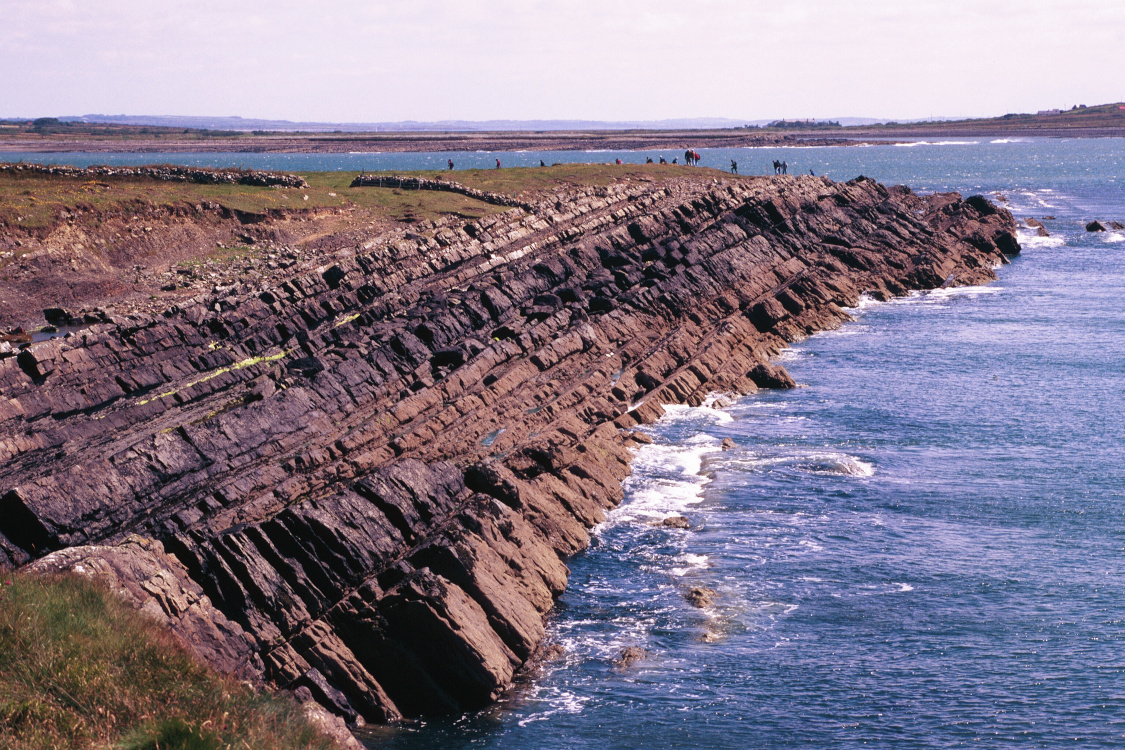
Given the high cost of exploration and development of deepwater reservoirs, it is essential to have an accurate pre-drill prediction of reservoir architecture and properties, and to integrate post-drill assessments of reservoir heterogeneity away from well penetrations. The outcrops of the Ross Formation offer a unique opportunity to observe seismic-scale exposures of a deepwater fan system with characteristics similar to the producing fields in West Africa, Brazil and the Gulf of Mexico, to name a few. The size and quality of the exposures allow the participants to observe the main building blocks of fan systems. Lobes and distributary channels can be observed from proximal to distal settings, with excellent exposures of vertical stacking and 2-D arrangements of these elements.

Duration and Logistics

A 7-day field course comprising a mix of field activities with exercises (60%) and classroom lectures with exercises (40%). Exercises emphasize practical applications and will focus on description of deepwater lithofacies, stratal geometries and recognizing key stratigraphic surfaces. The course is based in Kilkee Bay, Ireland, with participants flying in and out of Shannon, Ireland.

Level and Audience

Advanced. This course is intended for geoscientists, petrophysicists, engineers and managers who are seeking to gain a comprehensive understanding of deepwater reservoirs.

Exertion Level

This class requires an EASY exertion level. Access to the coastal outcrops is relatively easy and there will be walks of up to 2km (1.2 miles) most days, all at sea level. The longest walk on the class is approximately 3.2km (2 miles), with no ascent or descent over 50m (160 feet). Summer weather can be cool and wet, or warm and wet, with a daily temperature range of 4–24°C (40–74°F). Transport will be by van on paved roads.

Objectives

You will learn to:

  1. Interpret and map different archetypes of deepwater reservoirs using cores, well-logs and seismic lines, from exploration to production business scales.
  2. Define trap configurations and perform risk assessment for stratigraphic traps.
  3. Estimate reservoir presence risk and predict N:G.
  4. Interpret environments of deposition (EoDs) and related reservoir architecture, lithofacies associations and diversity.
  5. Evaluate reservoir geometry and connectivity in different EoDs, integrating with production data.
  6. Define depositional geometries of turbidites in seismic-scale outcrops.

Lessons from Energy Transitions: Future Integrated Solutions that Sustain Nature and Local Communities, NE England, UK (G557)

Tutor(s)

Gioia Falcone: Rankine Chair of Energy and Engineering, University of Glasgow.

Bob Harrison: Director, Sustainable Ideas Ltd.

Overview

This course considers the past and future energy transitions in the northeast of England, and their impact and legacy on the region’s industrial sector, local communities and nature conservation. It is hoped that lessons learnt from the past experiences in the region will help a sustainable energy transition. The course will cover CCS, hydrogen generation, wind and nuclear power, geothermal energy and the repurposing of legacy assets.

Duration and Logistics

A 6-day field course with site visits supported by classroom sessions. The course will be based in the town of Hartlepool, County Durham, to provide easy access to nearby coastal and inland locations.

Level and Audience

Fundamental. The course is intended for professionals working in energy transition, nature conservation and community engagement; those responsible for policy on energy and conservation matters; and energy sector investors.

Exertion Level

The course requires an EASY exertion level. Outcrops include coastal sections and inland exposures all with easy access. There will be some walks along beaches and easy paths through dunes with a maximum distance of around 5km (3 miles) or less.

Objectives

You will learn to:

  1. Describe and explain the overall potential of the region for integrated solutions with the context of the present energy transition.
  2. Characterize the locations of potential projects and explain technical factors that affect these and their feasibility.
  3. Describe how wider factors can affect feasibility of the projects including the environmental and social impacts.
  4. Evaluate strategic choices for local and regional policy makers, as well as landowners and investors.
  5. Make predictions and assessments of other regions in the UK for the potential development of similar projects.

Reservoir Characterization for Carbon Capture and Underground Storage, Devon and Dorset, UK (G556)

Tutor(s)

Gary Hampson: Professor of Sedimentary Geology, Imperial College London.

Matthew Jackson: Chair in Geological Fluid Dynamics, Imperial College London.

Overview

This course provides a field-based overview of reservoir characterization relevant to carbon capture and underground storage (CCS) and focuses on widely exploited reservoir depositional environments and their associated heterogeneity. The course links geological heterogeneity observed in well-exposed outcrop analogues with flow and transport processes during CO2 injection and plume migration, and also discusses the characterization and modelling of heterogeneity using typical subsurface datasets. The concepts are illustrated using numerous practical examples.

Duration and Logistics

A 5-day field course with a combination of field activities and exercises, plus classroom sessions. A manual and exercise materials will be distributed to participants on the course. Transport is by small coach.

Level and Audience

Intermediate. The course is intended for professionals with experience of, or background in, a related subsurface geoscience area, and / or recent graduates in a relevant topic.

Exertion Level

This class requires an EASY exertion level. Field locations are mainly accessed by hikes of 1–2km (roughly 1 mile) across some irregular terrain, including sandy beaches, coastal paths and pebbly / rocky beaches.

Objectives

You will learn to:

  1. Describe and explain types of geological heterogeneity associated with reservoirs, storage units and aquifers developed in common depositional environments.
  2. Evaluate how these heterogeneities can be characterized and quantified in the subsurface and represented in static and dynamic reservoir models.
  3. Consider the impact of these heterogeneities on fluid flow and transport in the context of CO2 storage.
  4. Understand reservoir characterization requirements for the prediction of CCS.

Plays, Prospects and Petroleum Systems, Wessex Basin, Dorset, UK (G054)

Tutor(s)

Jonathan Evans: Director, GeoLogica; Chair of Trustees, Lyme Regis Museum.

Overview

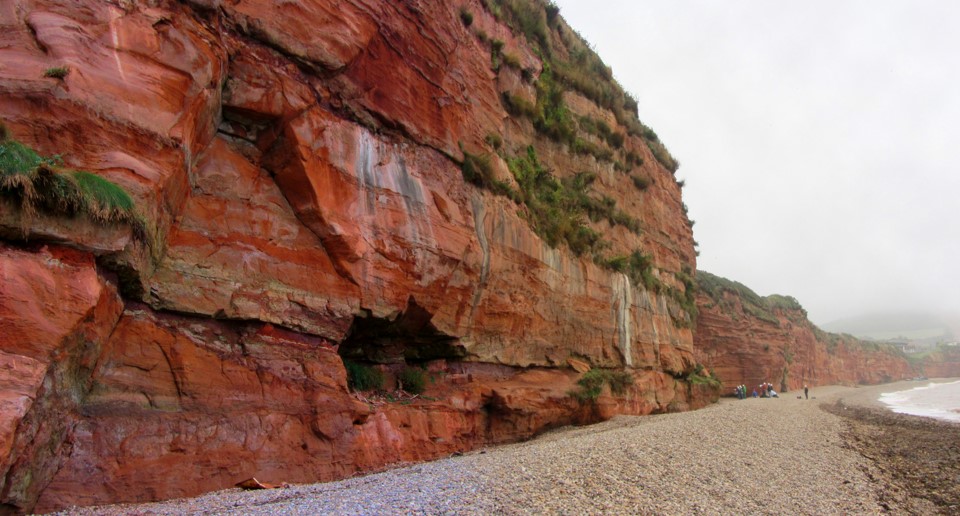
This course will illustrate the processes of play analysis and prospect evaluation using the geology of the Wessex Basin and outcrops of the Jurassic Coast of Devon and Dorset. The course will assess the elements of a working petroleum system including reservoir, source, seal and trap in the context of the Wytch Farm oilfield. Participants will have the opportunity to study a wide range of clastic and carbonate depositional systems, in addition to varying structural concepts, and visit two producing oil fields.

The manual will be provided in digital format and you will be required to bring a laptop or tablet computer to the course.

Duration and Logistics

A 5-day field course comprising fieldwork (70%) and classroom exercises (30%). The course will be based in Weymouth and transport will be by coach.

Exertion Level

This class requires an EASY exertion level. Outcrop access is easy with short walks of 1-2 km mostly across sandy beaches. Some field stops have more irregular terrain, in the form of pebbly and rocky beaches.

Level and Audience

Fundamental. The course is intended for junior-mid level geoscientists who are working in exploration as well as development and want a broad overview of key petroleum systems concepts or the chance to revise the key themes. The course would also be of value to reservoir engineers wanting to appreciate the role of, and subsurface data analysed by, the geological team.

Objectives

You will learn to:

  1. Understand the elements required in a working petroleum system and the concept of play analysis.
  2. Create play fairways maps based on fieldwork and published data.
  3. Examine the process of prospect evaluation and volumetric assessment including probability of success.
  4. Rank prospects based on the different play elements.
  5. Perform simple resource assessment and exploration risk analysis.
  6. Identify source rocks, how they form and what makes a good source rock.
  7. Compare different reservoir rocks, including sandstones and chalk, to work out how they were deposited and what controls the key reservoir properties of porosity and permeability at different scales.
  8. Describe different seals and flow barriers both above and within the reservoir intervals.
  9. Work with different types of subsurface data, as part of a team, and measure what scale of information they provide e.g. seismic, well logs, core, well tests, production tests.
  10. Analyse a series of local prospects and establish the geological chance of success.
  11. Assess the stages of a subsurface project from exploration through to development and production.
  12. Appreciate the different drilling and production technology in relation to the different reservoir types and project requirements.

Carbon Capture – Reservoir Storage and Risk Elements: Insights from the Field, NE England, UK (G550)

Tutor(s)

Richard Jones: Managing Director, Geospatial Research Ltd.

Overview

This course is framed around demonstrating the principles of CO2 storage capacity and risk elements of a prospective CCS play. Starting from basic geoscience principles, the course focuses on reservoir capacity estimation, injectivity and containment risks. The principles will be illustrated using well-exposed outcrop examples from NE England including clastic reservoirs from a variety of depositional settings (typically Carboniferous, Permo-Triassic, or Jurassic), sealing lithologies (mudrocks and evaporites) and structural controls on reservoir connectivity and containment (fractures, juxtaposition and fault zone complexity).

Duration and Logistics

A 5-day field course with fieldwork and practical sessions supported by classroom lectures. The course will be based in the historic city of Durham in NE England with easy access to coastal and inland locations in the counties of Durham, Northumberland and Yorkshire.

Level and Audience

Fundamental: The course is intended for subsurface scientists, including geologists and engineers, with a knowledge of petroleum geoscience, who are working on or new to, CCS projects.

Exertion Level

The course requires an EASY exertion level. Outcrops include coastal outcrop sections and inland exposures all with easy access. There will be some walks along beaches and easy paths to get to the outcrops with a maximum distance of around 5km (3 miles) or less, elevations vary from sea level to up to 500m (1600 ft). Temperature variations in late spring and summer are typically between 10 and 25°C (50–80°F).

Objectives

You will learn to:

  1. Characterize a variety of reservoir types (considering potential impacts of stratigraphic, depositional and structural heterogeneities, porosity and permeability) with respect to their suitability for carbon capture and storage.
  2. Estimate reservoir capacity through stratigraphic and structural analysis, and porosity estimation.
  3. Understand fluid transport parameters – injection/flow rate and reservoir permeability.
  4. Assess containment potential for CO2 (evaporitic and shale seals, faults and fractures).
  5. Evaluate fracture networks with respect to storage capacity, injection rates and containment risk.

Integrating Teams on the Rocks of the Wessex Basin, Dorset, UK (G056)

Tutor(s)

Jonathan Evans: Director, GeoLogica; Chair of Trustees, Lyme Regis Museum.

Overview

Proper integration of teams and disciplines is increasingly important in the modern energy industry. Ensuring all staff, technical, managerial and non-technical, understand the roles, concepts and language used by various disciplines as well as their requirements for data is critical for cooperation, collaboration and business success. This short course uses field observations and discussion at outcrops within the Wessex Basin to facilitate a deeper understanding of others’ roles as well as providing a refresher/reminder of the fundamental importance of rocks and the data they can provide to energy provision. The Wessex Basin provides a classic example of a working petroleum system with easily accessible outcrops to illustrate source rocks, reservoirs and trapping structures. In addition, the area also provides insights into new energy and carbon reduction methods that rely on a solid understanding of the subsurface.

Duration and Logistics

A 2-day field course in Dorset. For in-house provision the course can be extended or shortened depending on a company’s requirements.

Exertion Level

This class requires an EASY exertion level. Hikes are generally 1-2 km in length, on sandy and rocky beaches, coastal paths and with some irregular terrain.

Level and Audience

Fundamental. The level of the trip however, can be tailored to cater for the target audience: subsurface teams, integrated project teams or raising awareness for a generalist audience.

Objectives

Your team will learn to:

  1. Appreciate what elements are required for a working Petroleum System.
  2. Identify source rocks, how they form and what makes a good source rock.
  3. Compare different reservoir rocks, including sandstones and chalk, to work out how they were deposited and what controls the key reservoir properties of porosity and permeability at different scales.
  4. Understand what different types of subsurface data measure and what scale of information they provide e.g. seismic, well logs, core, well tests, production tests.
  5. Describe different seals both above and within the reservoir intervals.
  6. Understand the Petroleum Geology of the Wessex Basin including the giant Wytch Farm oilfield.