

Tutor(s)
Katriona Edlmann: Chancellor’s Fellow in Energy, The University of Edinburgh.
Overview
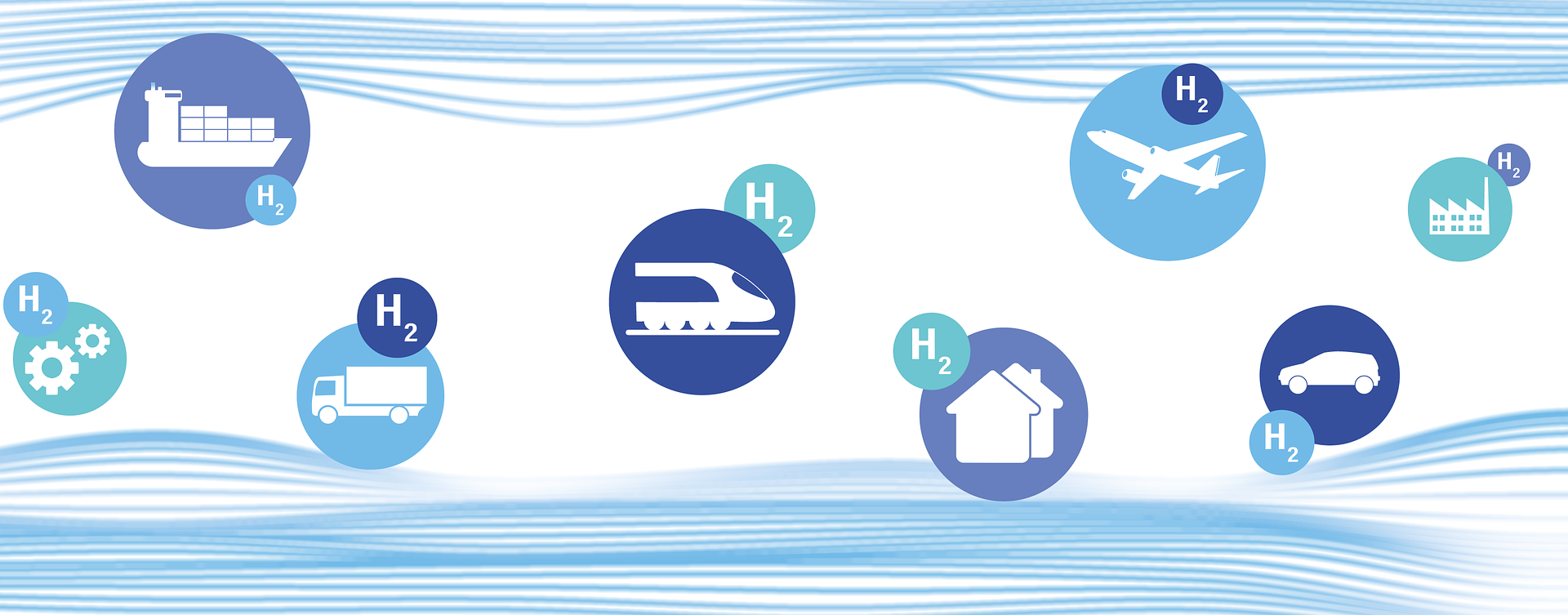
Future energy scenarios foresee a prominent and growing role for hydrogen. Demand is likely to rapidly exceed the capacity of typical above-ground energy storage technologies, necessitating the need for the geological storage of hydrogen in engineered hard rock caverns, solution mined salt caverns, depleted gas fields and saline aquifers. This course will firstly provide participants with an overview of the current hydrogen landscape, including its likely role in the energy transition, production and economic challenges. The course will then focus on the need for geological storage, introducing the geological storage options available for the secure storage and withdrawal of hydrogen from these different geological stores. The main body of the course will then explore the key considerations involved in geological hydrogen storage including hydrogen flow processes and thermodynamics, geomechanical responses to rapid injection and withdrawal cycles, geochemical and microbial interactions during storage, and the operational considerations and monitoring of hydrogen storage sites that may impact storage integrity, withdrawal rates and hydrogen purity.
Duration and Logistics
Classroom version: A 3-day course comprising a mix of lectures, case studies and exercises. The manual will be provided in digital format and participants will be required to bring a laptop or tablet computer to follow the lectures and exercises.
Virtual version: Five 4-hour interactive online sessions presented over 5 days. Digital course notes and exercise materials will be distributed to participants before the course. Some exercises may be completed by participants off-line.
Level and Audience
Intermediate. The course is largely aimed at geoscientists, but engineers will also find the course instructive. Intended for sub-surface scientists, with an emphasis on geoscience topics. Participants will probably have a working knowledge of petroleum geoscience. However, the main subject matter of this course, the geoscience of hydrogen production and storage, is covered from basic principles.
Objectives
You will learn to:
- Appreciate the role of geoscience in the hydrogen economy and the contribution hydrogen can make to the energy transition in support of Net Zero emission targets.
- Describe the different processes involved with hydrogen production and the associated lifecycle carbon intensity of this production.
- Recall details of the developing hydrogen supply chains, including infrastructure considerations, distribution networks and pathways for market growth.
- Describe the different geological storage options available and their capacity and spatial constraints.
- Understand hydrogen as a fluid in the subsurface, including its thermodynamic and transport properties.
- Characterize the geomechanical considerations for storage integrity and associated risks, including caprock sealing considerations.
- Appreciate the impact of geochemical and microbial interactions in subsurface hydrogen stores and the relevant monitoring and management tools.
- Describe the operational engineering considerations and monitoring of hydrogen storage sites.