World-class training for the modern energy industry

Subsurface Pressures for Injection of Fluids and Gases (G504)

Tutor(s)

Richard Swarbrick: Manager, Swarbrick GeoPressure.

Overview

This course covers all aspects of subsurface pressures with particular emphasis on pre-drill estimates and the conditions for injection and storage of fluids and gas, including hydrogen and CO2. Methods for estimating pressures from rock and fluid properties will be reviewed, as well as the processes that determine them in the subsurface prior to drilling. The impact of rock strength relative to fluid pressure at depth will also be discussed, in relation to injection rate limitations and storage volumes.

Duration and Logistics

Classroom version: A 3-day course comprising a mix of lectures, case studies and exercises. The manual will be provided in digital format and participants will be required to bring a laptop or tablet computer to follow the lectures and exercises.

Virtual version: Five 3.5-hour interactive online sessions presented over 5 days. A digital manual and exercise materials will be distributed to before the course. Some reading and are to be completed by participants off-line.

Level and Audience

Advanced. Intended for geoscientists and engineers who are involved in drilling into reservoirs for the purpose of injecting, storing and producing fluid. Some knowledge of subsurface geology and the basics of drilling wells would be an advantage.

Objectives

You will learn to:

  1. Understand how subsurface pressures determine safe injection, storage and production from deep reservoirs.
  2. Appreciate the processes that govern safe drilling, with particular emphasis on pore fluid and fracture pressures.
  3. Describe how to analyze subsurface pressure data and calibrate to estimate pore pressures from a variety of drilling and logging data.
  4. Relate regional and local rock stress magnitudes to failure of seals.
  5. Evaluate how to assess volumes that can be safely sequestered in underground storage.
  6. Interpret typical pressure profiles, in terms of subsurface fluid processes, such as lateral drainage (open aquifers) and lateral transfer (enhanced pressures and a drilling surprise).
  7. Perform basic pressure prediction calculations and estimate storage volumes.
  8. Review and critique relevant case study material.

Critical Minerals for the GeoEnergy Transition (G503)

Tutor(s)

Lucy Crane: ESG and Sustainability Consultant.

Overview

This course covers all aspects of the crucial role that mineral extraction will play in the energy transition. Building the low-carbon technologies required to combat climate change, such as wind turbines, electric vehicles and batteries, will be hugely mineral intensive. The impact of this increased extraction is often overlooked, yet it’s vital that these materials are sourced and extracted in the most responsible manner possible. This course explores where certain critical raw materials are currently produced and the impacts of their global supply chains, as well as examining how new technologies are aiding exploration for and extraction of new deposits. It also discusses challenges faced by responsible sourcing, and the growing importance of ESG within the mining industry.

Duration and Logistics

Classroom version: A 1.5-day course comprising a mix of lectures, case studies and exercises. The manual will be provided in digital format and participants will be required to bring a laptop or tablet computer to follow the lectures and exercises.

Virtual version: Three 3.5-hour interactive online sessions presented over 3 days. A digital manual and exercise materials will be distributed to participants before the course. Some reading and exercises are to be completed by participants off-line.

Level and Audience

Fundamental. The course is intended for industry professionals, though it is suitable for penultimate year undergraduate university students and above.

Objectives

You will learn to:

  1. Understand the wider context behind the mineral intensity of the energy transition.
  2. Define what is a ‘critical’ raw material.
  3. Describe how new technologies are ‘unlocking’ mineral deposits which have previously been considered unconventional.
  4. Understand the technical challenges associated with production of certain critical raw materials.
  5. Describe how environmental, social and geopolitical factors can also influence an element’s ‘criticality’.
  6. Begin to evaluate the environmental and social impacts of current global supply chains.
  7. Understand the role mineral extraction has to play in delivering the UN Sustainable Development Goals, alongside various industry operating codes and principles.
  8. Assess the importance of Environmental, Social and Governance (ESG) factors in project success.

Carbon Capture and Storage Masterclass (G502)

Tutor(s)

Richard Worden: Professor in the Department of Earth Ocean and Ecological Sciences, University of Liverpool, UK.

Overview

This course will provide participants with awareness of the geoscience needs for CCS projects; namely subsurface CO2 storage volumetrics, CO2 flow in the subsurface away from injector wells, the goal of safe and permanent storage of CO2 and cost-benefit issues linked to aquifer depth, well design, etc. The course will establish basics, such as how much CCS is needed to make a difference to global warming, and explore what types of CO2 injection are already happening, including information from CO2-enhanced oil recovery projects. The course will deal with CO2 as a fluid phase and how much CO2 can be stored per cubic meter in terms of porosity and over entire aquifers. It will deal with how quickly CO2 can be injected and the role of aquifer permeability. The course then moves on to the all-important geomechanical effects of CO2 injection and feedbacks between induced mineral dissolution and rock strength and other rock properties. The full range of possible interaction between CO2 and both aquifer and top-seal will be covered, as will the range of possible leakage mechanisms that need to be assessed. The course will conclude with consideration of monitoring strategies.

Duration and Logistics

Classroom version: A 3-day course comprising a mix of lectures, case studies and exercises. The manual will be provided in digital format and participants will be required to bring a laptop or tablet computer to follow the lectures and exercises.

Virtual version: Five 3.5-hour interactive online sessions presented over five days. Digital course notes and exercise materials will be distributed to participants before the course. Some exercises may be completed by participants off-line.

Level and Audience

Intermediate. The course is largely aimed at geoscientists, but engineers will also find the course instructive. Intended for sub-surface scientists, with an emphasis on geoscience topics. Participants will probably have a working knowledge of petroleum geoscience. However, the subject matter of this course, the geoscience of carbon capture and storage, is covered from basic principles.

Objectives

You will learn to:

  1. Develop awareness of the role of geoscience in CCS and of CCS in CO2 emissions reductions.
  2. Appreciate what CO2 injection projects have occurred so far and how they differ from industrial CCS.
  3. Understand CO2 as a fluid in the subsurface and the fluid injection pressure and effective stress regimes that CO2 injection will involve.
  4. Build awareness of the volumetrics of CO2 storage from the micro (pore-scale) to the macro (aquifer volumes).
  5. Gain an appreciation of the question of CO2 flow away from injector wells controlled by permeability and aquifer architecture.
  6. Understand the range of effects that CO2 can have on the host aquifer, from geomechanical to geochemical.
  7. Assess the role of top-seal and fault-seal properties and how they will influence CO2 storage, from risk of fracking, or induced seismicity, to mineral dissolution.
  8. Understand the range of ways that CO2 could escape from the planned storage sites.
  9. Develop an awareness of the range of monitoring strategies that could be employed to ensure safe and long-term storage of CO2.

Best Practices in Pore Pressure and Fracture Pressure Prediction (G043)

Tutor(s)

Richard Swarbrick: Manager, Swarbrick GeoPressure.

Overview

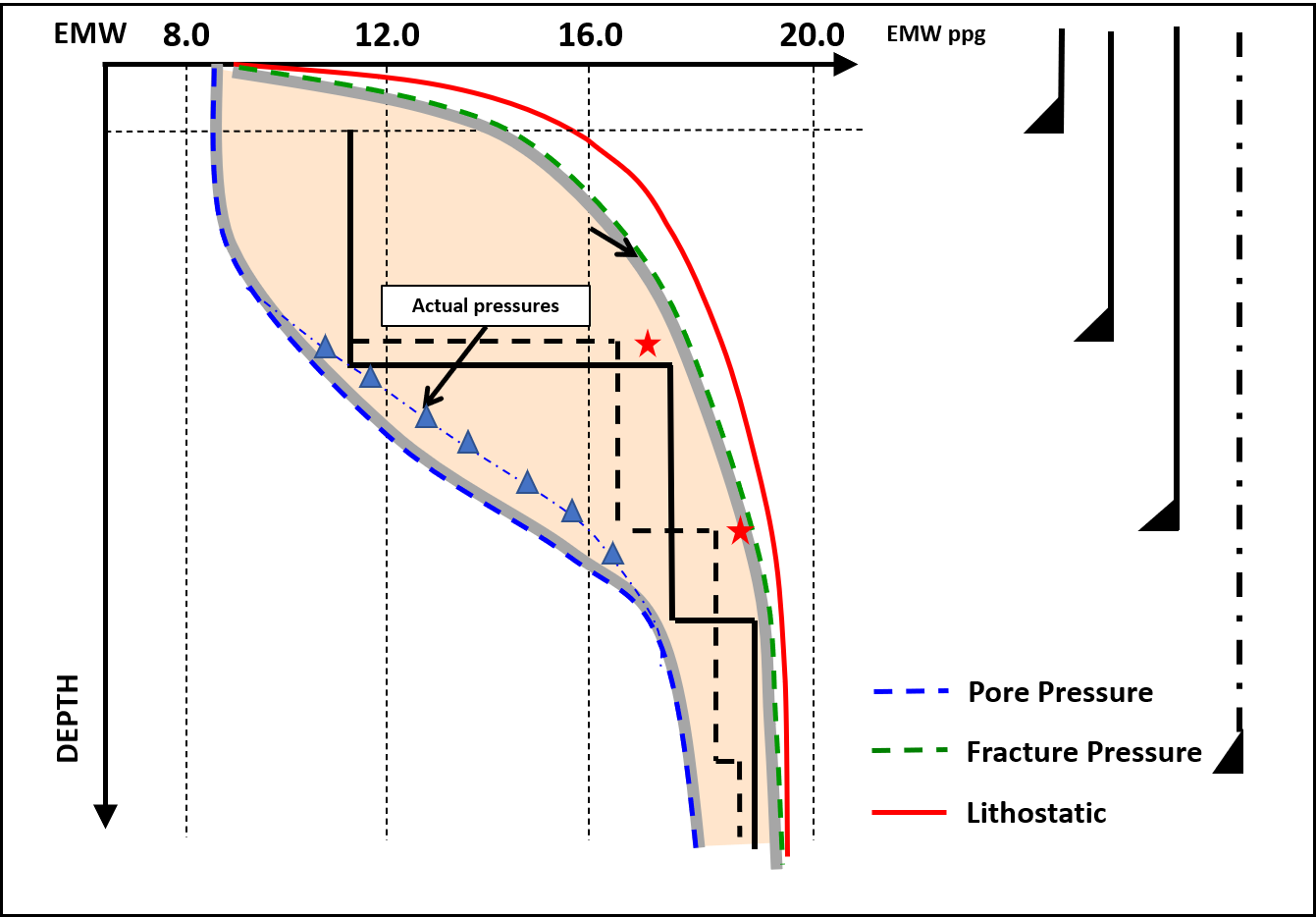
This course presents best practices in how data and standard techniques are combined to generate meaningful pore pressure (PP) and fracture pressure (FG) estimates from log, seismic and drilling data, and to use them to develop pre-drill predictions. The limitations are addressed, along with common pitfalls, leading to an understanding of the uncertainty and risk associated with PP and FG prediction.

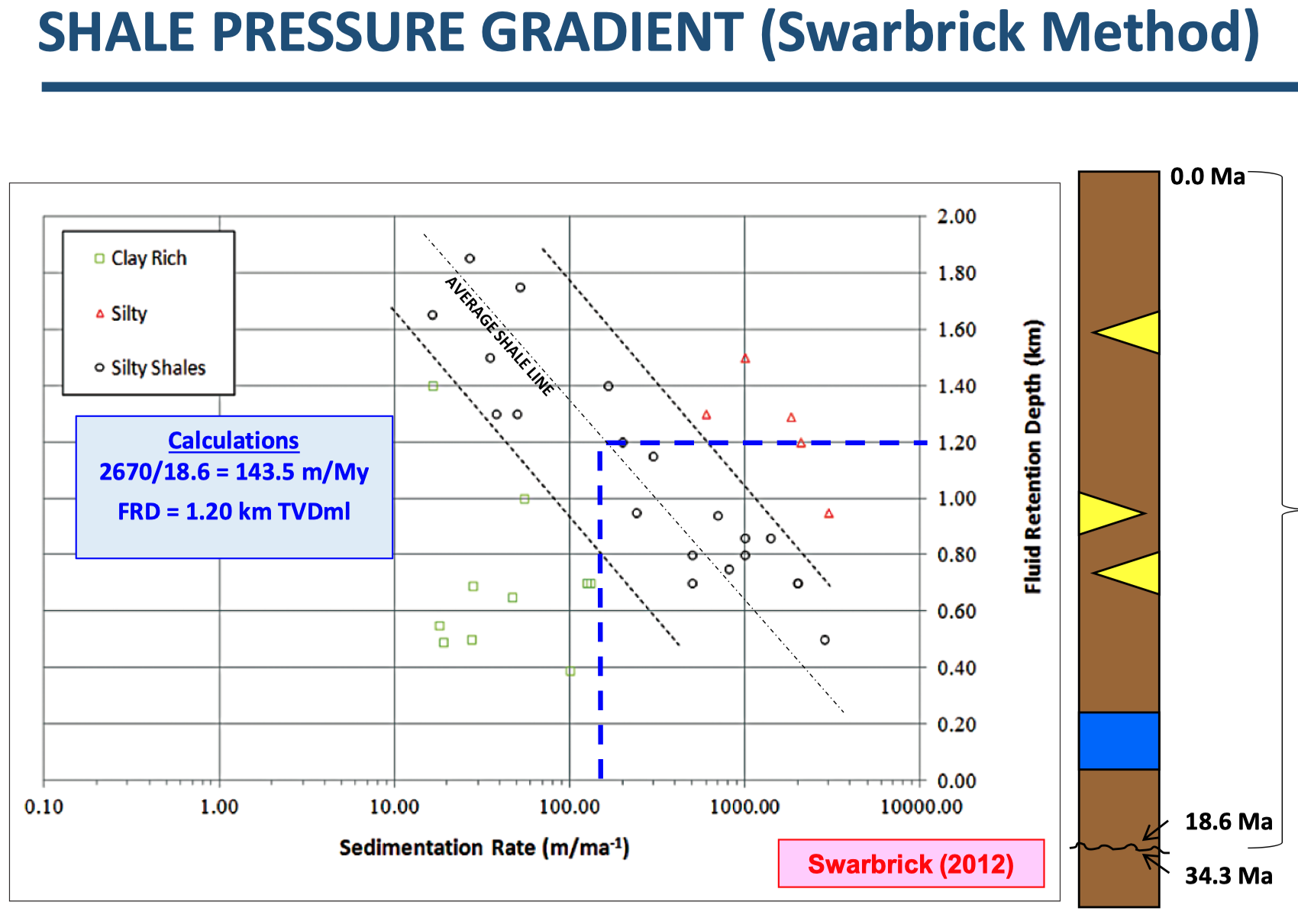
The course begins by showing the types and reliability of subsurface data used to inform current knowledge, which will also calibrate PP and FG predictions at a remote location. Standard approaches to PP and FG prediction techniques are taught, with careful attention to where these have limitations on account of subsurface environment (thermal, tectonic) and data quality. A new approach to PP prediction using shales is taught as an independent guide to expected PP, especially valuable where only seismic data are available. Prediction of FG is taught by showing how to determine overburden stress and apply standard relationships, including new approaches with PP-stress coupling.

Duration and Logistics

Classroom version: A 2-day classroom course comprising a mix of lectures and discussion (90%) and exercises (10%). The manual will be provided in digital format, and participants will be required to bring a laptop or tablet computer to follow the lectures and exercises.

Virtual version: Four 3.5-hour interactive online sessions presented over 2 to 4 days. A digital manual and exercise materials will be distributed to participants before the course. Some reading and several exercises are to be completed by participants off-line.

Level and Audience

Intermediate. Intended for exploration and development geoscientists, petrophysicists, operations staff and drilling engineers. Familiarity with oilfield data and drilling practices is required. Experience shows that mixed classes of geoscientists and engineers benefit particularly from the discussions and sharing of approaches in this multi-disciplinary area of work.

Objectives

You will learn to:

  1. Distinguish the different types and quality of data that populate pressure-depth and EMW-depth plots for display of pressure predictions and calibration data in well planning.
  2. Use best practice to create PP estimations and predictions from seismic, log and drilling data using standard porosity-based techniques, and from modelling geological systems.
  3. Use best practice to create FG estimations and predictions by generating an overburden and establishing its relationship with FG and PP.
  4. Communicate Min-Expected-Max predictions effectively to both geoscience and engineering/operations staff involved in well planning.

Transition Skills: From Oil and Gas to Geothermal (G573)

Tutor(s)

Malcolm Ross: Consultant Geoscientist.

Overview

This course will offer geoscientists an understanding of how they can use and adapt their expertise gained in the oil and gas industry to the growing geothermal industry. Participants will be introduced to the fundamentals of a variety of geothermal system styles and be guided through the exploration and development of a project, focusing on subsurface workflows based on those used for oil and gas. The course is intended as an introduction to the entire lifecycle of a geothermal resource, covering aspects of geoscience and some engineering.

Duration and Logistics

Classroom version: A 3-day in-person classroom course comprising a mixture of lectures, exercises and discussion with a focus on geothermal project case studies and examples.

Virtual version: Five 3.5-hour interactive online sessions presented over five days. Digital course notes and exercise materials will be distributed to participants before the course.

Level and Audience

Fundamental. This course is designed specifically for geoscientists wanting to transition from the oil and gas industry to the geothermal sector.

Objectives

You will learn to:

  1. Describe the fundamentals of geothermal energy and how it is harnessed and used.
  2. Understand the key subsurface characteristics of geothermal resources and reservoirs.
  3. Understand what exploration tools (seismic, potential fields, geochemistry), exploration data (bottom hole temperatures, gradient surveys) and exploration approaches (basin modelling, play-based exploration) are used in geothermal exploration, which ones are in common with oil and gas, and how their uses differ.
  4. Define the subsurface geoscience requirements for a geothermal project, including the key similarities and differences with an oil and gas project.
  5. Appreciate the data types and subsurface workflows involved in a geothermal project.
  6. Examine the key project risks and uncertainties in developing geothermal resources and how they are mitigated.

Geologic Carbon Storage for Geoscientists and Engineers (G551)

Tutor(s)

Alex Bump: Research Science Associate, University of Texas at Austin.

Seyyed Hosseini: Research Professor, University of Texas at Austin.

Katherine Romanak: Research Scientist, University of Texas at Austin.

Overview

This course empowers attendees to develop and apply their skills to the growing industry of Carbon Capture Utilisation and Storage (CCUS). Attendees will be guided through the lifecycle of a CCUS project with an emphasis on key concepts, processes and workflows of the CCUS industry. Focus will be on developing the geoscience and engineering skills needed to progress a project.

Duration and Logistics

Classroom version: A 3-day course comprising a mix of lectures, case studies and exercises. The manual will be provided in digital format and participants will be required to bring a laptop or tablet computer to follow the lectures and exercises.

Virtual version: Five 4-hour interactive online sessions presented over 5 days.

Level and Audience

Intermediate. The course is intended for petroleum geoscientists, reservoir engineers and first-level leaders looking to adapt their skills to carbon capture and storage.

Objectives

You will learn to:

  1. Outline the regulatory, policy and financial drivers and constraints for CCUS.
  2. Describe the subsurface requirements for a successful storage project, including similarities and differences with oil and gas exploration.
  3. Understand the workflow and perform the key tasks for defining, developing and permitting a CCUS project, including site selection, characterisation, risk assessment and monitoring for operational and post-operational phases.
  4. Apply your subsurface knowledge and skills in oil and gas development to the concepts, processes and workflows of the CCUS industry.
  5. Estimate CO2 storage capacity in saline aquifers at reservoir and basin-scales.

Working with Unconventional Petroleum Systems (G032)

Tutor(s)

Andy Pepper: Managing Director, This is Petroleum Systems LLC.

Overview

This course teaches how to use Petroleum Systems Analysis (regional geology, geochemistry and petroleum systems modeling) to evaluate unconventional/resource play reservoirs. The subject matter ranges from deposition of organic matter in the source rock (generation, expulsion, migration and accumulation processes leading to saturation of the reservoir), to the prediction of reservoir and produced fluid properties and value. This class will equip geologists and engineers with advanced capabilities to: identify, map and evaluate new plays; identify storage and production sweet spots in plays; and identify vertical/by-passed storage and production sweet spots to optimize landing zones in new and existing plays.

Duration and Logistics

Classroom version: 5 days, a mix of lectures (75%) and quizzes/exercises (25%). The manual will be provided in digital format and participants will be required to bring a laptop or tablet computer to follow the lectures and exercises.

Virtual version: Five 4-hour interactive online sessions presented over 5 days, including a mix of lectures (75%) and quizzes/exercises (10%). A digital manual and hard-copy exercise materials will be distributed to participants before the course.

Level and Audience

Advanced. Intended for exploration, exploitation and production geoscientists, reservoir and completion engineers and managers who need to understand how the petroleum system works to determine fluid saturation and composition in resource plays. A basic familiarity with resource plays is assumed.

Objectives

You will learn to:

  1. Understand modern approaches to describing source rocks: their expulsion potential and distribution.
  2. Establish the link between organic matter and petroleum: the organofacies scheme and the geochemistry and composition of oil and gas.
  3. Link the burial and thermal histories of onshore/exhumed sedimentary basins to the temperature and pressure history of the source bed/reservoir.
  4. Understand how organic matter quality kinetics control petroleum volumes and compositions expelled from organic matter.
  5. Understand the roles of pressure and capillarity in creating an unconventional reservoir: that petroleum migration and accumulation are flip sides of the same coin, controlling reservoir saturation patterns.
  6. Evaluate the strengths and weaknesses of current core analysis techniques and use geochemical concepts to differentiate between potentially producible fluid vs immobile sorbed petroleum in organic-rich reservoirs.
  7. Identify sweet spots in well rate performance from a pressure and fluid perspective, and fluid prediction using advanced pyrolysis methods in well samples.
  8. Understand the properties of produced fluids that contribute to/detract from well stream value.

Creativity and Innovation Skills for E&P (G029)

Tutor(s)

Henry Pettingill: Senior Associate, Rose & Associates LLP; President, Geo Ventures International Inc.

Niven Shumaker: Independent Consultant.

Overview

This course addresses how value is created from creativity and innovation. It provides participants with practical tools and methodologies to become more creative, and to make innovation actionable. Creativity and innovation are learnable skills, with step-wise approaches possible. Participants will leave with tools that allow them to formulate an action plan that can be used when they get back to work.

The course is interactive and practical. It uses group discussions and exercises to develop creative thinking techniques, models and frameworks that can be applied to real life oil and gas industry situations. It stresses breaking away from the “business as usual” environment.

Duration and Logistics

Classroom version: 2 days; a mix of lectures, case studies and discussion groups. The manual will be provided in digital format and participants will be required to bring a laptop or tablet computer to follow the lectures and exercises.

Virtual version: Four 4-hour interactive online sessions presented over 4 days. A digital manual and hard-copy exercise materials will be distributed to participants before the course.

Level and Audience

Fundamental. Intended for oil and gas industry staff responsible for solving problems, visualizing opportunities or developing new business streams. Suitable for managers and team members in technical, financial or support positions.

Objectives

You will learn to:

  1. Apply the fundamentals of creativity and innovation to create value.
  2. Prepare for creative thinking and to improve your creative skills.
  3. Implement the concepts of creative thinking critical to innovation, such as associative thinking and disruptive thinking.
  4. Develop questioning skills, effectively employing both descriptive and disruptive questions.
  5. Apply the five critical aspects of creative thinking and determine your current state in each one.
  6. Challenge your own thinking and your “status quo” mindset.
  7. Understand the various types of innovation and how they can be applied your challenges.
  8. Assess your own level in each of the five behaviors of innovative business leaders, where you can improve on each and how to leverage other people with complementary skills.

Reservoir Model Design (G025)

Tutor(s)

Mark Bentley: TRACS International Consultancy and Langdale Geoscience.

Overview

This course offers a software-independent view on the process of reservoir model design and simulation model-building, addresses the underlying reasons why some models disappoint and offers solutions that support the building of more efficient, fit-for-purpose models.

Considerable time is dedicated to reservoir model and simulation exercises in many companies but the results often disappoint: the time taken to build models is often too long, the models too detailed and cumbersome and the final model is ultimately not fit-for-purpose. This course examines the reasons why and offers remedies to fix these problems.

Duration and Logistics

Classroom version: 4 days; a mix of classroom lectures (60%), case studies (20%) and exercises (20%). The manual will be provided in digital format and participants will be required to bring a laptop or tablet computer to follow the lectures and exercises.

Virtual version: Four 4-hour interactive online sessions presented over 4 days, including a mix of lectures (60%), case studies (20%) and exercises (20%). A digital manual and hard-copy exercise materials will be distributed to participants before the course.

Level and Audience

Advanced. The course is aimed at geoscientists with knowledge of reservoir modeling software, petrophysicists who provide input to static reservoir models and reservoir engineers involved in simulation work who deal with the static-dynamic interface on a regular basis. The course is also of benefit to team leaders who wish to have a deeper understanding of the principles behind modelling and how to QC models made by others. The ideal group is an asset team who can join the course together.

Objectives

You will learn to:

  1. Create a fluid-sensitive conceptual model for a heterogeneous reservoir, built from a selection of elements and placed in a realistic architectural framework: the “sketch”.
  2. Guide the use of geostatistical tools intuitively, balancing deterministic and probabilistic components with awareness of the limits of the tools.
  3. Select appropriate methods for modeling of matrix properties, including the handling of net (cut-off’s vs total property modeling).
  4. Evaluate fracture properties, covering both faults and fault seal, and also flow through open fracture systems – understand how to model these practically.
  5. Understand issues surrounding permeability modeling and why this differs from the handling of other properties.
  6. Learn a rule of thumb (“Flora’s rule”) to help assess what level of static model detail matters to flow modeling and forecasting.
  7. Review how to use well test analysis to constrain models.
  8. Review options for model-based uncertainty handling (base case led, multi-deterministic scenarios, multi-stochastic ensembles), learn how to post-process the results and how to select an appropriate workflow which minimizes impact of behavioral bias.

Reservoir Engineering for Geoscientists (G024)

Tutor(s)

Mark Cook: Associate Reservoir Engineer at TRACS International Consultancy and Independent Engineer at Delta-T Energy Consultancy.

Overview

The course examines reservoir engineering processes, techniques and terminology, particularly those that interface with geoscience activities. The material is structured around the three-part process of building a reservoir model: (1) building a static model to identify the main flow units, (2) developing a dynamic model to predict fluid flow in the reservoir, and (3) implementing a life-of-field reservoir management plan to maximize economic recovery. Numerous examples illustrate the use of subsurface data and the techniques employed during the construction of a reservoir model. The focus is on the principles rather than the detailed work of the reservoir engineer; the use of complex mathematics is avoided.

Duration and Logistics

Classroom version: 5 days; a mix of classroom lectures (60%), case studies (20%) and exercises (20%). The manual will be provided in digital format and participants will be required to bring a laptop or tablet computer to follow the lectures and exercises.

Virtual version: Five 4-hour interactive online sessions presented over 5 days, including a mix of lectures (60%), case studies (20%) and exercises (20%). A digital manual and hard-copy exercise materials will be distributed to participants before the course.

Level and Audience

Fundamental. The course is aimed at geoscientists, petrophysicists and others who interface with reservoir engineers on a regular basis, as well as anyone who wishes to obtain an understanding of reservoir engineering techniques.

Objectives

You will learn to:

  1. Effectively interact with reservoir engineering colleagues.
  2. Interpret original fluid contacts, understand saturation vs height relationships and estimate original hydrocarbon in-place volumes for oil and gas reservoirs.
  3. Differentiate the physical and chemical properties of hydrocarbons and their description through phase diagrams.
  4. Recognize the strengths and weaknesses of well tests and their analysis.
  5. Analyze production performance and describe production enhancement techniques.
  6. Contrast static and dynamic reservoir models and assess the merits of reservoir numerical simulation.
  7. Assess the value of reservoir management for forecasting production profiles and maximizing economic hydrocarbon recovery from a producing field over the complete life cycle.
  8. Examine the controls on fluid flow in the reservoir and reservoir drive mechanisms.